Carrot Planting Season: Spring and Fall Dates
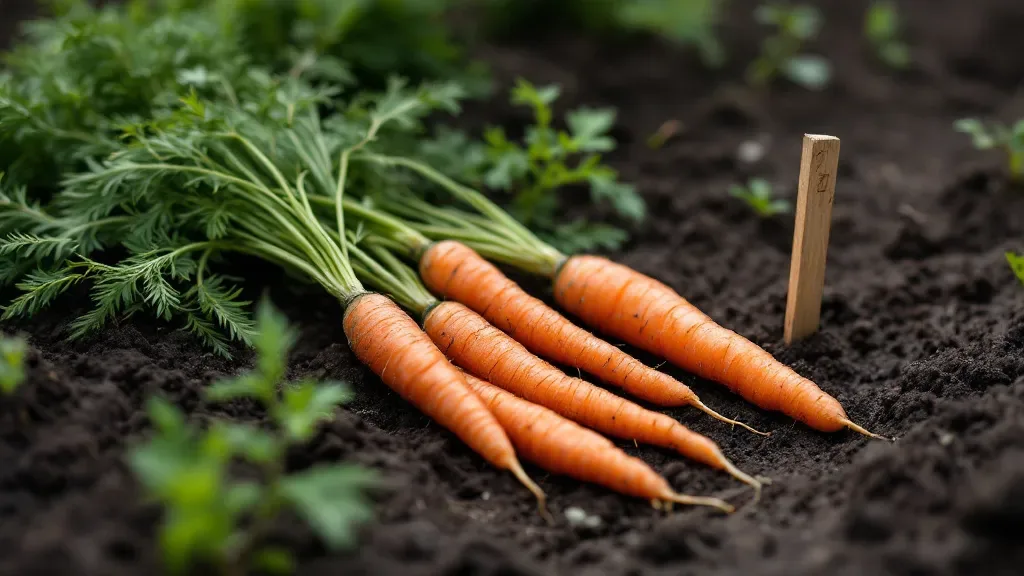
You have carrot seed and a bare bed, and you want sowing weeks you can write down. Carrot planting season has two windows, 2 to 4 weeks before your last spring frost and 10 to 12 weeks before your first fall frost.
Published
Step 1: Read the soil to find your carrot planting season
Carrots are sown straight into the bed. The University of Maryland Extension says to plant when the soil has reached at least 45 degrees F, and its carrot fact sheet calls carrots semi-hardy. That means they take light frost, and the roots handle cold better than the tops.
The three universities give three different soil numbers, and that is normal. Maryland gives 45 degrees F as the minimum. A Purdue table lists 45 to 85 degrees F as the range for good germination, with 80 degrees F as the best, and 40 degrees F as the floor. Kansas State puts the best temperature at 55 to 70 degrees F and says seed takes 10 to 12 days to come up.
So the safe reading is simple. Sow once the soil is at least 45 degrees F, and expect the seed to sprout slowly while the soil is cool. A soil thermometer settles the question.
Soil texture decides whether the roots come out straight. Direct seed into deep, loose, well-drained soil that is free from rocks, clods or debris, says Maryland. Stump-rooted or round carrots suit heavy clay soil or containers, and the Chantenay type is better than long, skinny Imperator types for shallow, heavy soil.
Carrots also stop doing well in hot weather. The Maryland sheet says they are best planted in spring and fall, which is why the season has two windows and a gap in the middle.
| Step | What you decide | Rule from the sources | Source |
|---|---|---|---|
| 1 | Is the soil ready? | At least 45 degrees F, up to 12 days to sprout | Maryland, Kansas State |
| 2 | Spring sowing dates | 2 to 4 weeks before the last spring frost | Purdue |
| 3 | Fall sowing dates | 10 to 12 weeks before the first fall frost | Maryland |
| 4 | How many rows | Several plantings, or one in the middle of the range | Purdue |
| 5 | Care and winter | Thin to 1 to 2 inches, mulch to keep roots in the ground | Maryland, Kansas State |
Step 2: Count the spring window from your last frost
Purdue's Indiana planting calendar puts carrot in its semi-hardy group, planted 2 to 4 weeks before the average last spring frost. The sheet notes that carrot is typically direct-seeded.
Take a made-up last frost of April 15. Four weeks before is March 18, and two weeks before is April 1. Your spring window runs March 18 to April 1.
Fresh carrots are ready in 65 to 75 days after planting, according to Maryland. Seed sown March 18 gives the first pull around May 22, and seed sown April 1 is ready by about June 15 at the slow end.
Frost dates differ by place, and Purdue says the best planting dates also vary from season to season. Use the date for the weather station nearest you, then check the forecast the week you sow.
Sow carrots when the soil is ready, not when the calendar says so.
Step 3: Count the fall window from your first frost
Purdue's fall table lists cool-season crops but leaves carrot off it. Maryland fills the gap. Its sheet says to plant a fall carrot crop 10 to 12 weeks before the first frost.
Take a made-up first fall frost of October 20. Twelve weeks before is July 28, and ten weeks before is August 11. Your fall window runs July 28 to August 11.
The fall window carries a trap, and the numbers show it. Ten weeks is 70 days, and a carrot that needs 75 days from seed ripens 5 days after the frost date. Twelve weeks is 84 days, and the same carrot has 9 days to spare. Pick a variety with a shorter days-to-harvest figure on the packet, or aim for the early end of the window.
Frost does not end the harvest. Roots tolerate colder temperatures than the tops, Maryland notes, so a first light frost does not finish a semi-hardy crop.
Step 4: Sow several rows to spread the harvest
Purdue says that several plantings within the date range can improve the odds and extend the harvest, and that a single planting should go in about midway through the range. For carrots in the example spring window, midway is March 25, which is 3 weeks before the last frost.
Here is a simple way to do it. Sow a row on each of three dates a week apart inside your window, and each row ripens a week after the one before. The sums below use Maryland's 65 days for the first pull.
| Sowing date | First pull at 65 days |
|---|---|
| March 18 | May 22 |
| March 25 | May 29 |
| April 1 | June 5 |
The week between rows is our choice, not a rule from the sources. Widen the gap if you cannot eat that many carrots at once, and narrow it if you want one big harvest to store.
Keep the rows in the same bed so you can water them together. A dated list of sowing weeks saves you from guessing in April, and the succession pages in The Winter Plan lay out the weeks for several crops at once.
Step 5: Water, thin and decide what stays in the ground
Cover the seed with ¼ to ½ inch of soil, as Maryland advises, and keep the seedbed evenly moist. In dry weather, water lightly each day until the plants are up. After that, steady moisture matters more than a daily routine, and Maryland says to ease off near harvest because too much water can crack the roots.
Plan to thin. Kansas State notes that for seeded crops you usually plant more seeds than the final number of plants and thin after germination, and its table gives 1 to 2 inches between carrots in the row. Maryland says to cut seedlings with scissors rather than pull them, which avoids disturbing the roots you keep.
Carrots do not come back on their own. Maryland describes them as biennial, which means two growing seasons to finish the life cycle, but you grow them as an annual and sow again each year.
You can leave fall carrots in the ground. The Maryland sheet says fall-planted carrots can be harvested throughout the winter if you mulch them with straw or shredded leaves before the ground freezes. After harvest, topped carrots keep for 4 to 5 months at 32 degrees F and 90 to 95 percent relative humidity.
Carrots in a mild climate: when your state chart is enough
If your state extension office already publishes carrot dates for your county, use them. Free extension charts are good, and the sums in this article need only a sticky note. A single bed of carrots does not need a 32-page kit.
The printable route pays off when you juggle many crops. The Winter Plan counts from your own last-frost date, and its 108-station freeze table (10, 50 and 90 % odds, 1991-2020 normals) gives you both frost dates in any US zone. After you pay you get the download link by email. The zip holds US Letter and A4 PDFs, printed at 100 % on a home printer. In winter you fill the fall countback worksheet. In spring each carrot row goes on the succession waves page, and the notes for next winter page takes what worked.
FAQ
How long does a carrot take to grow?
The University of Maryland says 65 to 75 days from seed for fresh use. Kansas State lists 54 to 80 days to first harvest, depending on the variety.
Do carrots come back every year?
No. Carrots are biennial, which means they need two growing seasons to finish their life cycle, but you grow them as an annual. Sow new seed each year.
Can I leave carrots in the ground all winter?
Yes, if you mulch them. The University of Maryland says fall-planted carrots can be harvested through the winter when you cover them with straw or shredded leaves before the ground freezes.
Do carrots need to be watered every day?
In dry weather, water lightly each day until the plants are established. After that, aim for even moisture and ease off near harvest, because too much water can crack the roots.
Does 1 carrot seed grow 1 carrot?
Not reliably. Kansas State says to plant more seeds than the final number of plants you want and thin after germination. Thin to 1 or 2 inches apart.
Conclusion
Carrots ask for cool soil, steady moisture and a start date you can count. Find your last spring frost and your first fall frost, subtract the weeks, and write both windows on the calendar. Sow two or three rows a week apart inside each window, and thin every row to 1 or 2 inches. Then leave the roots in the ground and pull what you need.
Sources
- University of Maryland Extension, Growing Carrots in a Home Garden (2023), last checked October 5, 2026
- Purdue University Department of Horticulture and Landscape Architecture, Indiana Vegetable Planting Calendar, HO-186-W (2020), last checked October 5, 2026
- Kansas State University Research and Extension, Vegetable Garden Planting Guide, MF315 (2023), last checked October 5, 2026