Chamomile Planting Guide: Sow, Space, Reseed
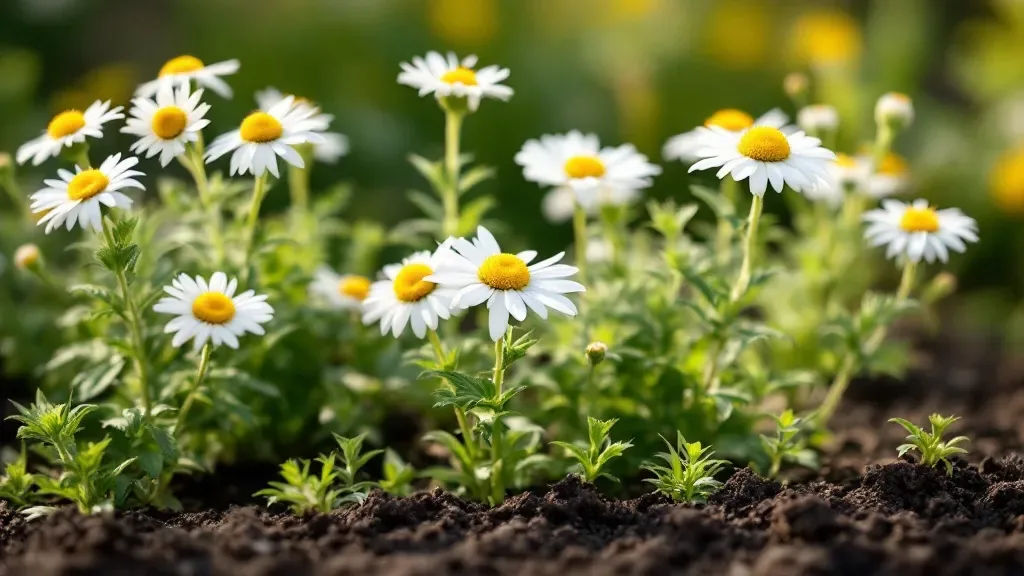
Chamomile is easy to grow once you have the dates. A chamomile planting guide comes down to three answers: you sow in fall or early spring, you thin to 4 inches apart, and you leave some flowers to drop seed if you want plants next year.
Published
Step 1: Pick the chamomile you mean
Two plants share the name, and they are planted for different jobs. German chamomile is the annual most people grow for tea. Roman chamomile is a low perennial, often used as a fragrant ground cover, according to a UC Master Gardeners of Riverside County fact sheet.
Check the packet for the Latin name. Matricaria chamomilla is German. If you want a plant that returns from the same roots, you need the Roman type, which Wisconsin Extension lists as hardy in zones 4a to 9b. The rest of this guide covers German chamomile.
| Type | Life span | Common use |
|---|---|---|
| German chamomile | Annual, reseeds readily | Tea, most common |
| Roman chamomile | Perennial | Low, fragrant ground cover |
Step 2: Set your chamomile sowing date
German chamomile is a cool-season plant. The UC fact sheet says to plant when the soil is above 55 F, or as early as 5 weeks before the last frost. Wisconsin Extension adds two more routes. You can sow directly in the garden in fall, or start seed indoors 6 to 8 weeks before the average last frost and transplant after it.
Take a last frost of May 10. Five weeks is 35 days, so outdoor sowing opens around April 5. Six to eight weeks before May 10 is March 29 back to March 15, which is your window for trays indoors.
Your own dates will differ. The sums work for any last frost: subtract 35 days for outdoor sowing, or 42 to 56 days for indoor trays. A printable plan with your dates counted back saves you doing the sums again for every crop.
Step 3: Surface sow and thin to 4 inches
Chamomile seed is tiny, and it needs light to sprout. Wisconsin Extension says to surface sow and press the seed into the soil. The Riverside fact sheet says 1/8 inch deep. Both are shallow, so press the seed in and barely cover it.
Keep the soil evenly moist until the seed comes up. Then thin the seedlings to 4 inches apart when they are 2 to 2 1/2 inches tall, as that sheet advises. A square foot is 12 by 12 inches, so 4-inch spacing gives 9 plants per square foot. A 2 by 4 foot patch of 8 square feet holds 72.
Pick a spot with full sun and well-drained soil. Poor soil is fine, and chamomile does not need much fertilizer, so skip the rich compost.
Step 4: Choose pots or the ground
Both work. North Carolina State Extension lists German chamomile as suitable for containers and gives its size as 6 inches to 2 feet in height and width. Larger plants do not transplant well, so grow them individually in containers or transplant when small.
In the ground, keep the same 4-inch spacing. In a pot, thin hard and give it full sun. The roots are shallow, so water enough to keep the top of the soil moist but not wet.
| Step | What you do | Source figure |
|---|---|---|
| 1 | Pick German or Roman | Annual or perennial |
| 2 | Set the date | 5 weeks before last frost; soil above 55 F |
| 3 | Surface sow, thin | 4 inches apart |
| 4 | Pot or bed | Pots fine; transplant small |
| 5 | Harvest or reseed | Pick at near full bloom |
Step 5: Harvest, then decide on reseeding
Pick the flowers when they are near full bloom, which Wisconsin Extension says gives the best quality. Wisconsin describes the harvest as snipping just the inflorescence (the flower head) from the stem, so leave the stem and leaves on the plant. Wisconsin says blooming starts in early to midsummer. Dry the flowers in a loose paper bag or spread on newspaper, as the UC fact sheet suggests, then store them in an airtight jar.
Then decide whether you want chamomile next year. Wisconsin says plants readily self-seed unless all flower heads are removed. Leave the last flowers on the plant and seedlings will appear in spring. Pick every head and the patch ends with the season.
A herb that seeds itself needs less from you each year than one you replant.
Chamomile planting guide limits: downsides and when to skip the printable
The sources point to four downsides. Chamomile self-seeds readily, larger plants resist transplanting, and aphids are its main pest. The same fact sheet also cautions that chamomile may worsen pollen allergies and interact with some herbal products and prescription drugs, so ask your doctor before drinking it daily.
One honest limit. Free extension sheets cover chamomile well, and if you grow it in a single pot or one corner, the dates and spacing above are all you need. A printed plan adds nothing there.
The Winter Plan pays off when you juggle many crops. It has countback charts for 24 cool and 15 warm crops plus own-crop rows, so chamomile can sit on the same page as your lettuce and peas. The charts count from your own last-frost date and a 108-station NOAA freeze table is in the file, so it works in any US zone. The download is a zip of US Letter and A4 PDFs, and a home printer set to 100 % does the job. In winter you add the own-crop row, in spring the week list holds the jobs, and the notes for next winter page records whether you let the last flowers seed.
FAQ
What month do you plant chamomile?
It depends on your last frost date. Wisconsin Extension says to sow in fall or shortly before the average last frost, and UC Master Gardeners in Riverside say as early as 5 weeks before the last frost once the soil is above 55 F. With a last frost of May 10, that means from about April 5.
Will chamomile come back every year?
German chamomile, the common tea type, is an annual, so the plant dies each year. It self-seeds so readily that it can look like a perennial, and Wisconsin Extension says plants readily self-seed unless all flower heads are removed. Roman chamomile is the perennial type.
What are the downsides of planting chamomile?
Four show up in the sources. It self-seeds readily, larger plants do not transplant well, aphids are the main pest, and the UC Master Gardeners in Riverside caution that chamomile may worsen pollen allergies.
Does chamomile spread aggressively?
It spreads by seed. Wisconsin Extension says plants readily self-seed unless all flower heads are removed, so you control the spread by deadheading. Wisconsin lists the plant at up to 2 feet tall.
Conclusion
Sow German chamomile in fall, or from about 5 weeks before your last frost once the soil is above 55 F. Press the seed into the surface, thin to 4 inches, and keep a few flower heads for next year's plants. Write the sowing date next to your last frost date this winter, and the chamomile will not be an afterthought in April.
Sources
- University of Wisconsin-Madison Extension, German Chamomile, Matricaria chamomilla (2026), last checked October 5, 2026
- UC Master Gardeners of Riverside County, Chamomile Growing Information, Annual Herb (2021), last checked October 5, 2026
- North Carolina State Extension, Matricaria chamomilla (German Chamomile) (undated), last checked October 5, 2026