Container Garden Planner: Pot Sizes by Crop
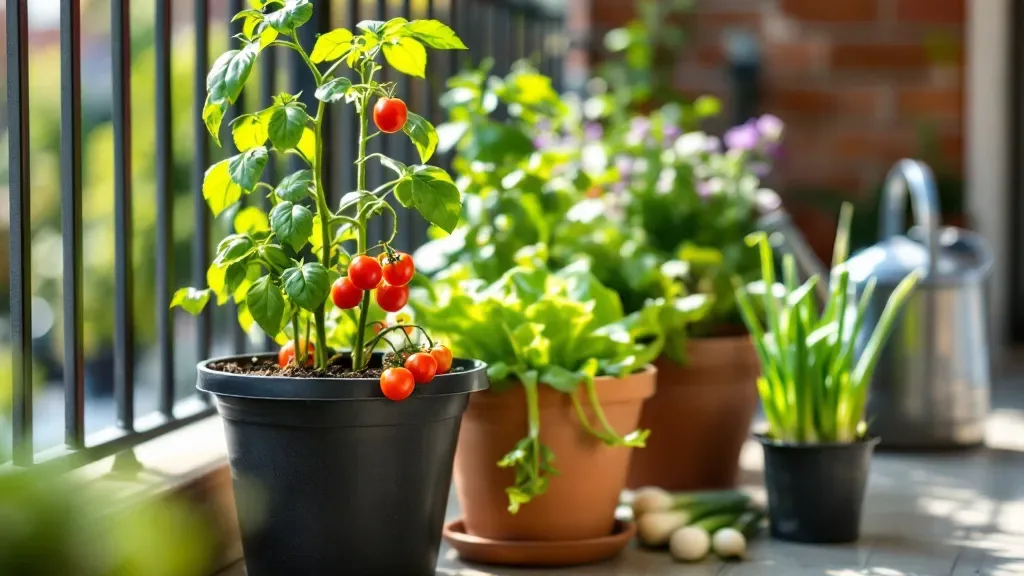
You have a balcony, a patio step or a few empty pots and no idea how many plants will fit. A container garden planner is a pot-by-pot plan that matches each vegetable to a pot size and then adds the date each one goes in.
Published
What a container garden planner has to answer
A container garden planner answers three questions for every pot. How big must it be, what goes in it, and when does it go in. The map is small. The pot size is the part most new growers guess at.
Pot size matters because roots, water and wind all depend on it. A 2009 Kansas State University Research and Extension publication says a pot of 16 to 24 inches across will go a long way toward your success. It adds that larger pots hold moisture longer and are less likely to tip over in wind. Anything under 12 inches is probably too small.
A pot is a small garden with a very short list of things it can forget.
Pot size by crop: three classes
The easiest way to size pots is to sort your crops into three classes. The University of Maryland Extension does this in a 2023 guide to containers for vegetables. It gives a minimum amount of growing mix and a minimum depth for each class.
| Class | Minimum mix | Minimum depth | Crops named by Maryland |
|---|---|---|---|
| Large | 8 to 10 gallons | 12 to 16 inches | Tomatoes, peppers, eggplant, cucumber, winter squash |
| Medium | 4 to 6 gallons | 8 to 12 inches | Dwarf pepper, eggplant and tomato, summer squash, cole crops, beans, beets, chard, larger herbs |
| Small | 1 to 3 gallons | 4 to 6 inches | Basil, cilantro, thyme, mint, radish, scallions, spinach, salad greens, peas |
Read the table from the biggest crop down. Your tomato sets the size of your largest pot, and everything else can be smaller.
The Maryland numbers and the Kansas State advice fit together. Kansas State is describing a general-purpose pot for mixed vegetables, so it asks for 12 inches or more. Maryland shows that a radish or a handful of salad greens can live in a much shallower pot.
Oregon State University Extension gives a rule of thumb for people who do not want to sort. Its 2021 container gardening guide says most vegetables do best in containers that hold 2 to 5 gallons of soil and are at least 12 inches deep. Use that for a mixed pot of ordinary crops, and use the Maryland table for tomatoes and peppers.
Plan the pots in five moves
The order of the work matters. Sun comes first, because a pot cannot move far once it is full.
Start by counting the sun. Plants should get six or more hours of sunlight a day. Leafy vegetables can take partial sun, but tomatoes, peppers, cucumbers and eggplant want full sun.
Then list only what you will eat. Sort each crop into a class from the table and count your pots. A balcony with one tomato, one pepper and a salad pot is a real plan.
Pot layouts that work: 16-inch and 24-inch examples
The Kansas State publication gives example plans for two pot sizes. They are the best layout ideas on paper, because they came from an extension service and name the plant counts.
| Pot | Season | What goes in | Plants |
|---|---|---|---|
| 16 inches | Spring or fall | 8 carrots, 8 beets | 16 |
| 16 inches | Spring or summer | 5 lettuce, 5 onions, 5 radishes, 1 tomato | 16 |
| 16 inches | Summer | 1 tomato, 2 herbs | 3 |
| 24 inches | Spring or summer | 2 dwarf tomatoes, 3 basil | 5 |
| 24 inches | Spring, summer and fall | 12 beets, 18 radishes, 5 mixed lettuce, 4 pole beans on a trellis | 39 |
The plant counts in the last column are our own sums of the Kansas State lists. The big 24-inch pot carries 39 plants because the plan is staged. Radishes and lettuce come out early, and the beans fill the pot later.
The publication says cool-season crops such as lettuce and radishes can go in before warm-season crops like tomato or pepper and be harvested before the latter reach full size. For climbing crops, set up the cage or trellis before planting. Roots hate being disturbed later.
How many plants fit in a pot, and how many you need
Spacing sets the count in each pot. The Kansas State publication lists a spacing for each crop and tells you to follow the within-row spacing on seed packages.
| Crop | Spacing in the pot |
|---|---|
| Beets, carrots, radishes | 3 inches |
| Onions | 2 to 3 inches |
| Pole beans | 4 inches |
| Leaf lettuce | 6 inches |
| Cucumber | 8 inches |
| Dwarf tomato, pepper, eggplant | 12 inches |
Fit big plants first, then fill the gaps with a fast crop that is harvested early, as the 16-inch and 24-inch layouts above do.
Household size sets the number of pots. Virginia Cooperative Extension's 2025 planting guide says to grow 2 to 4 tomato plants per person, and that children may need half as much as adults. Two adults who want the low end need 4 tomato plants. By the Kansas State layouts that is two 24-inch pots of 2 dwarf tomatoes each, which is our own arithmetic.
How many pots a balcony needs
A pot is a circle, so you can turn its width into planting area. A 24-inch pot is 2 feet across. Its radius is 1 foot, so its top area is 3.14 square feet (pi times 1 foot times 1 foot).
A standard 4 by 8 foot garden bed is 32 square feet. Ten 24-inch pots add up to 31.4 square feet. Ten big pots hold about the planting area of one raised bed, and they also need floor space for walking and watering between them.
Use that sum before you buy. If your balcony floor is 4 by 8 feet, it cannot hold ten 24-inch pots and a way to walk. Plan three or four large pots and fill the gaps with a few small ones.
Drainage, water and feeding
Every pot needs holes in the bottom. The Maryland guide says that except for self-watering types, all containers should have holes or slits to let water drain out. The same page says extra water must drain so roots do not drown and rot.
Oregon State says to check the soil each day and add water when it is dry, until it runs out the drain holes. Two tricks help. Stick a finger into the soil, or lift the pot, because a dry pot feels much lighter than a watered one. In hot summer weather, container plants dry out much faster than plants in the ground and will likely need daily care.
Fill the pots with potting mix, not dug soil. Soilless mixes are the better pick because they are light and hold water and air better than garden soil. The same publication calls fertilizer a must for good production in containers.
Mistakes to avoid, and how to fix them mid-season
| Mistake | Fix, from Kansas State and Maryland |
|---|---|
| Pot under 12 inches | Move the plant to a 16 to 24 inch pot, because small pots dry out faster |
| No drainage holes | Add holes or slits, since extra water must drain so roots do not rot |
| Soil dry between visits | Check with a finger, lift the pot, and water until it runs out the bottom |
| Plants look hungry in midsummer | Add a water-soluble fertilizer when you water, or reapply slow-release in late July |
| Full sun and wind scorch the patio | Move pots to a spot with a little protection from wind or the full afternoon sun |
| Cage or trellis added late | Set it up before planting, since disturbing roots later hurts |
Kansas State says fertilizer is a must in containers. A move to a bigger pot is easiest while the plant is small, so make that call early.
Add dates once the pots are chosen
A pot plan without dates leaves you guessing in April. Pots follow the same frost dates as a garden bed. A tomato goes out after your last frost date, and lettuce and radishes go in earlier.
Pots on a balcony: when a free page covers it
The free Kansas State and Maryland pages cover pot sizes well. If all you grow is one tomato and a pot of basil, a pot size from the table and a note on the fridge is enough. The kit has no pot diagrams, since its bed plans are drawn at 1 inch for 1 foot, so you sketch pots beside the dates.
The Garden Year bundle counts dates from your own last-frost date, with a 108-station NOAA freeze table for any US zone. It arrives as a zip of US Letter and A4 PDFs through a download link sent by email, and you print it at 100 percent. Use the Seed-Starting Countdown's indoor-start chart and transplant day log in spring. Use the Season Record's rain and watering page, feeding log and planting log through summer.
FAQ
What are some good container garden layout ideas?
Kansas State University lists tested pot plans. A 16-inch pot can hold 8 carrots and 8 beets in spring, or 1 tomato and 2 herbs in summer. A 24-inch pot can hold 2 dwarf tomatoes and 3 basil, or 12 beets, 18 radishes, 5 mixed lettuce and 4 pole beans on a trellis.
Conclusion
Start with the tomato pot, because it is the biggest decision on the balcony. Give it 8 to 10 gallons, put the small crops in shallow pots around it, and check every pot with your finger each morning in summer. Write down what you planted and when, so next year's pot plan starts from facts.
Sources
- Kansas State University Research and Extension, Growing Vegetables in Pots (2009), last checked October 5, 2026
- University of Maryland Extension, Types of Containers for Growing Vegetables (2023), last checked October 5, 2026
- Oregon State University Extension Service, Container Gardening Basics (2021), last checked October 5, 2026
- Virginia Cooperative Extension, Virginia's Home Garden Vegetable Planting Guide, publication 426-331 (2025), last checked October 5, 2026