Daikon Radish Planting Time: Late Summer Sowing
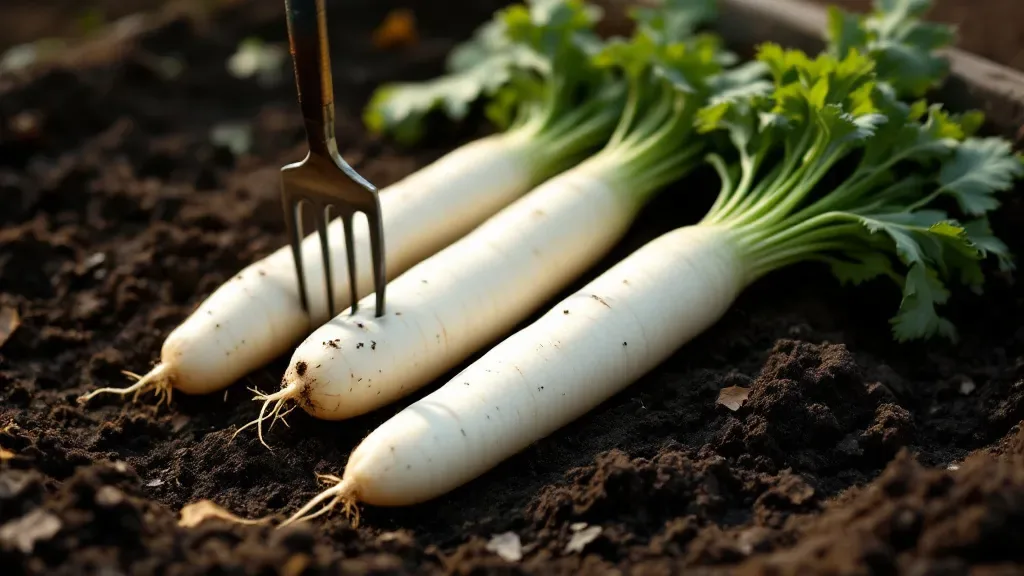
You have daikon seed and a late-summer bed, and you want the week to sow. Daikon radish planting time is late summer, 7 to 10 weeks before your first fall frost, so the roots reach size in cool autumn weather.
Published
Step 1: Choose the late-summer window, not spring
Daikon grows best in cool weather, so late summer beats spring. Iowa State University Extension says in its guide to growing radishes that daikon can be planted in early April for a mid-June harvest or in mid-August for a late-October harvest. It adds that many gardeners prefer the taste of daikon planted in late summer and harvested in fall.
Illinois agrees on the season. Its radish page says winter radishes are sown in midsummer to late summer, much like fall turnips. The University of California Master Gardeners of Santa Clara County say spring-grown daikon is more likely to bolt, which means it runs to flower, because of warm weather and longer days.
Summer heat is the problem. Radishes turn spongy, woody and hot in flavor in the warm temperatures of summer, Iowa State says, so skip that stretch.
| Step | What you decide | Rule from the sources |
|---|---|---|
| 1 | Season | Late summer, harvest in fall |
| 2 | Sowing date | Count back from your first fall frost |
| 3 | Sowing and spacing | Sow in the bed, thin to 4 to 6 inches |
| 4 | Harvest | Pull at 8 or more inches, before hard frost |
Daikon wants cool days to swell, so give it the autumn, not the summer.
Step 2: Find your daikon radish planting time from the first frost
Daikon needs weeks, not days. Iowa State says larger varieties like daikon can be harvested 7 to 10 weeks after planting. A planning paragraph on the same page says daikon is often ready after 50 to 60 days, and the California Master Gardeners give 40 to 70 days. The sources do not agree, so plan for the slow end.
Ten weeks is 70 days. Take a first fall frost of November 1 and count back. Ten weeks before is August 23, and seven weeks before is September 13. Your sowing window runs August 23 to September 13.
The dates in that Iowa guide fit the sum. Mid-August to late October is about 10 weeks, which matches the slow end. A slow daikon sown September 13 would get only 7 weeks, so use the early end for large varieties and keep September for quick ones.
| Average first fall frost | Sow by (10 weeks before) | Latest for a quick variety (7 weeks before) |
|---|---|---|
| October 15 | August 6 | August 27 |
| November 1 | August 23 | September 13 |
| November 15 | September 6 | September 27 |
Step 3: Sow in the bed and thin to 4 to 6 inches
Sow daikon where it will grow. Radishes do not transplant easily, says Iowa State, so skip the indoor trays. The California Master Gardeners agree, since the roots are easily damaged.
Radish seed details come from the Iowa guide. Sow it one-quarter to one-half inch deep in rows 12 inches apart. Seedlings usually come up in 7 to 10 days. Thin daikon to 4 to 6 inches apart.
Now do the sum for a small bed. Twelve inches of row holds 12 divided by 6, which is 2 plants, up to 12 divided by 4, which is 3 plants. That works out to 2 to 3 daikon per square foot with 12-inch rows. Illinois Extension says winter radishes must be thinned to 2 to 4 inches or even farther apart, so keep daikon at 4 inches or wider.
Loosen the bed before you sow. A University of Florida daikon guide says root crops benefit from soil loosened before planting, to help the root develop through the soil. Iowa extension adds that heavy, rocky or compacted soil gives smaller, irregular roots, and that a raised bed or compost improves poor soil. Neither page gives a loosening depth in inches, so work the bed until a fork goes in easily and judge the depth by the root length you expect. Fully grown daikon can reach about 18 inches, per Illinois.
Cool, even moisture keeps the roots sweet. Radishes do best at daytime temperatures of 70 to 75 F and nighttime temperatures of 55 to 60 F, with about an inch of water a week, according to Iowa State. Drought stress gives tough roots with poor flavor.
Step 4: Pull the roots at the right size
Check the roots, not only the calendar. Dig daikon with a spade or fork once it reaches mature size, typically 1 to 2 inches across and 8 or more inches long, says Iowa State. On the California page, daikon shows its shoulders, the top of the root, when it is ready.
Do not leave it too long. Overly mature roots turn fibrous and strong in flavor, warns Iowa State, and the California page says daikon may get woody. Per Illinois, a fully mature daikon can grow up to about 18 inches long and weigh 5 or 6 pounds, so size alone is no sign to wait.
Frost is where the sources split. Harvest all plants before frost, says Iowa State. Winter radishes, says Illinois, hold quality in cool fall weather and can be pulled before the ground freezes. Plan to pull around your first frost and treat any extra weeks as a bonus.
Daikon on a tight calendar: when a county sheet will do
Free sources cover daikon well. The Iowa and Illinois pages give the weeks, the spacing and the harvest size at no cost, and for one short row a sticky note with one date does the job. If you live where winters are mild, use your local calendar. The California Master Gardeners give February to April and September to October as their sowing months, and the sums above would not fit that.
A printed plan helps when daikon is one of many fall crops. The Winter Plan counts from the first-frost date you pick and holds the 108-station freeze table, so one set of sums covers any zone. In late summer you fill in its fall countback worksheet, and after pulling the roots you write what you saw on the notes for next winter page.
FAQ
Is daikon a radish?
Yes. Iowa State Extension calls daikon one of the other varieties of radish, with larger, more elongated roots than the round red garden type. Illinois Extension files daikon under winter radishes, which it also calls Chinese radish.
How do I plant daikon radishes?
Sow the seed directly in the garden, one-quarter to one-half inch deep, in rows 12 inches apart. Thin the seedlings to 4 to 6 inches apart. Do not start daikon indoors, because Iowa State says radishes do not transplant easily.
How many daikon per square foot?
About 2 to 3. Iowa State says to sow in rows 12 inches apart and thin daikon to 4 to 6 inches apart, so a 12-inch stretch of row holds 12 divided by 6 to 12 divided by 4 plants.
Conclusion
Sow daikon in late summer, count back 10 weeks from your average first fall frost, and put the seed straight into the bed. Thin to 4 to 6 inches, keep the soil evenly moist, and pull the roots once they are about 8 inches long. If frost is only 7 weeks away, pick a quick variety and sow the same week.
Sources
- Iowa State University Extension and Outreach, Growing Radishes in Iowa (2023), last checked October 5, 2026
- Illinois Extension, Radish, Home Vegetable Gardening (undated), last checked October 5, 2026
- University of Florida IFAS Extension, Daikon Radish Cultivation Guide for Florida, HS1370 (undated), last checked October 5, 2026
- UC Master Gardeners of Santa Clara County, Daikon (undated), last checked October 5, 2026