Garden Journal Ideas: 8 Entries That Pay Off
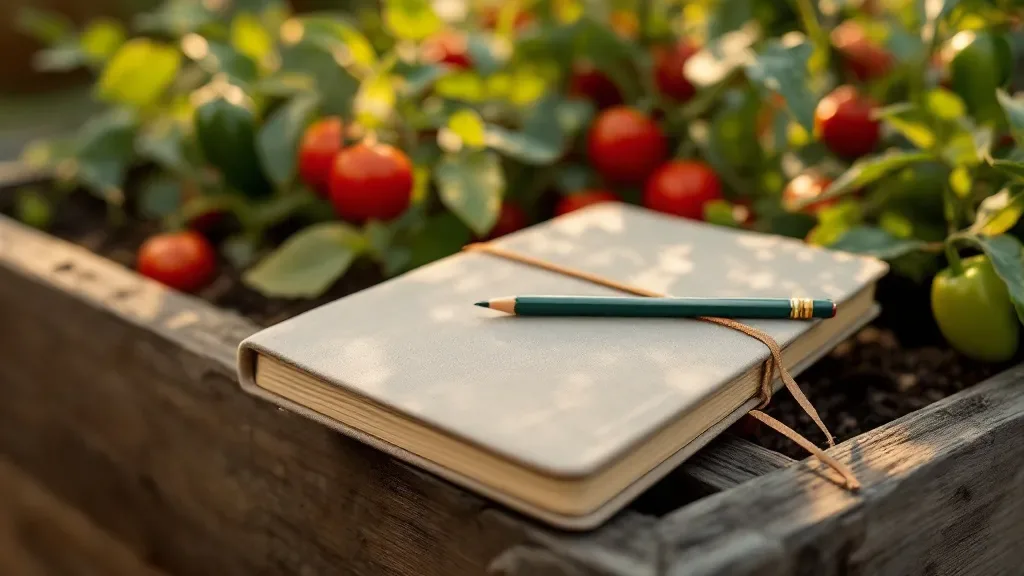
You want to keep a garden journal, but a blank page does not tell you what to write. The best garden journal ideas are short entries you can read back next winter, such as planting dates, the first pest you see and how much you picked.
Published
1. Planting dates and bed, for every crop
Write down the date and the spot for each vegetable you plant. A Penn State Extension article on keeping a garden journal says to record the date and location where each cultivar went in. That one habit makes crop rotation easy, because you can see which bed held tomatoes last year.
A quick sketch of the beds helps. The same Penn State article suggests drawing diagrams of your beds and coloring them in. Draw it once in spring and pencil in changes as you go.
Two more map items are worth keeping. An Iowa State journaling guide lists garden maps and garden dimensions among the things to record, and says to add sketches, photographs or diagrams to your written notes. Penn State suggests keeping photos of plants, pathways and structures you like. Measure each bed once, write its size on the sketch, and take one photo of the full plot each month.
2. Packet days to harvest next to your real harvest date
The author of that Penn State article also records the days to harvest from the seed packet along with the actual harvest dates. The gap between the two is the entry that pays off.
Say a packet promises 60 days and you sow on May 3. Sixty days later is July 2. You pick the first one on July 8, which is 66 days. The packet was 6 days optimistic in your yard, and next year you plan the first picking for the second week of July.
| Line to write | Example |
|---|---|
| Sown | May 3 |
| Packet says | 60 days, so July 2 |
| First pick | July 8 |
| Gap | 6 days late |
3. Seed starting notes, including what went wrong
Record when you started seed, how many came up and how many you moved outside. A University of Vermont Extension article on why a gardening journal pays off lists seed starting details among the things to track, so you can see successes, problems and lessons learned.
Include the date you set each tray outdoors. It tells you next February whether your seedlings went out too early or too late.
4. Weather, especially the odd days
Note the late frost, the heat wave and the week of rain. That article says keeping track of weather helps you understand why your garden struggled or thrived, and that over time the notes can even help predict your garden's frost dates.
You do not need a daily forecast. Penn State's list says to note major weather events. One line on the day the frost came is enough.
A journal entry is worth writing when you will want the answer next winter.
5. The first date each pest shows up
Pests keep a calendar, and your journal can learn it. The Vermont author found that tomato hornworms usually appeared during the last week of July or first week of August.
With two or three seasons of dates, you know when to start checking the plants. Write the pest, the plant and the date. That is a whole entry.
Add what you did about it. The Penn State article says to keep an inventory of insects or diseases you have seen, with possible and actual remedies. Iowa State lists problem insects or diseases, animal damage with type and date, and pesticide applications. A line like "Jul 30: hornworm on Roma, hand-picked, none on Aug 6" shows what worked.
6. Soil tests and what you added
Keep the soil test sheet and a list of the amendments you worked in. Penn State says to keep soil tests and what amendments were added.
Date each addition and name the bed. A year later you can compare the new test with the old one and see if the compost did anything.
7. Harvest amounts and your verdict on each variety
Note what you picked and when. Vermont's article says harvest times and yields help with future planning and with succession planting, and Penn State asks for your successes, failures, likes and dislikes.
End the season with one line per variety: keep, drop or try something else. The Season Record has a harvest tally, a pest and disease log and variety verdicts on separate pages, if you want those laid out already.
8. A short task list for each month
Make a basic list of what needs to be done each month. Those lists, Penn State notes, can be reused from year to year. You rewrite less each spring, and you do not forget the July jobs.
A weekly walk: what to write each week
Entries tie to events, so a quiet week needs only one line. One tip from Penn State is walking the garden with a pen and your journal and noting the tasks that come up. Our suggestion is one walk a week, with three prompts. What did I plant or pick? What did I see, a pest, a frost or a dry spell? What is the next job? The floor in that article is lower, monthly or at least once per season, which is where to start if time runs out.
Write the date at the top of each walk, even when the page holds only one line.
How to choose garden journal ideas you will keep up
Start small. The Penn State article says to schedule journaling daily, weekly or monthly until it becomes a habit, and to choose a format that means something to you. A notebook works if you carry it out to the beds. Printed pages work if you like a form with boxes to fill in.
For a DIY garden journal, give each entry its own page in a plain notebook and date every line. For a beginner, three entries are enough in the first month.
| Entry | When you write it | What it answers next winter |
|---|---|---|
| 1. Planting dates and bed | At planting | Where did each crop go? |
| 2. Packet days vs real harvest | At first pick | When should I plan the first picking? |
| 3. Seed starting notes | At seeding and moving out | Did I start too early or too late? |
| 4. Weather days | After a frost or storm | Why did the beds struggle? |
| 5. First pest dates | When you spot one | When do I start checking? |
| 6. Soil tests and amendments | After a test or feeding | Did the amendment help? |
| 7. Harvest and verdicts | At each pick, then at season end | Which varieties earn a place? |
| 8. Monthly task list | Once a month | What jobs did I forget? |
A notebook you already love may be the better journal
If you want a scrapbook with photos, sketches and poems, a blank notebook fits better. The Iowa State page on garden journaling says a journal can hold those as well as the dates and amounts. A free extension template also works if it already suits you, since it asks for the same entries as above.
If you want one page per entry for a vegetable garden, The Season Record prints them ruled and labeled, with dates counted from your own last-frost date and a freeze-date table for 108 NOAA stations, so any US zone works. Print at 100 % (actual size) so the map grids keep their scale. On planting day you fill in the planting log and an as-planted map at 1 inch to 2 feet. Each picking adds a line to the harvest tally, and each pest goes into the pest and disease log. At season end you write a keep, drop or try verdict for each variety, then use the carry forward page to start next winter's plan.
FAQ
What should be in a garden journal?
Start with the plant varieties, planting dates and where each crop went. Then add seed starting notes, weather, the date pests first show up, harvest dates and amounts, and soil tests with what you added. Entries about what worked and what did not are the ones you will use most.
What to include in a garden journal?
Include planting dates and locations, days to harvest from the packet next to the real harvest date, weather events, first pest sightings, soil test results and a monthly task list. A short note on what you would change is worth more than a long one.
How can I create my own garden journal?
Pick a notebook or printed pages you will actually open. Decide whether you will write daily, weekly or monthly, and start with planting dates and a sketch of your beds. Add other entries as you go.
How can I create a DIY garden journal?
Use a plain notebook and give each entry type its own page: planting, pests, harvest and soil. Date every line and keep the format simple enough that you will still use it in July.
Conclusion
Pick three entries and write them for one month. Planting dates, a first pest sighting and a first harvest are enough. When those feel easy, add soil, weather and a monthly task list, and read the whole journal before you plan next year's beds.
Sources
- University of Vermont Extension, Gardening Journal: A Simple Tool That Pays Off (2026), last checked October 5, 2026
- Penn State Extension, Keeping a Garden Journal (2023), last checked October 5, 2026
- Iowa State University Extension and Outreach, Garden Journaling (2025), last checked October 5, 2026