Garden Sun Planner: Plan by Sun Hours
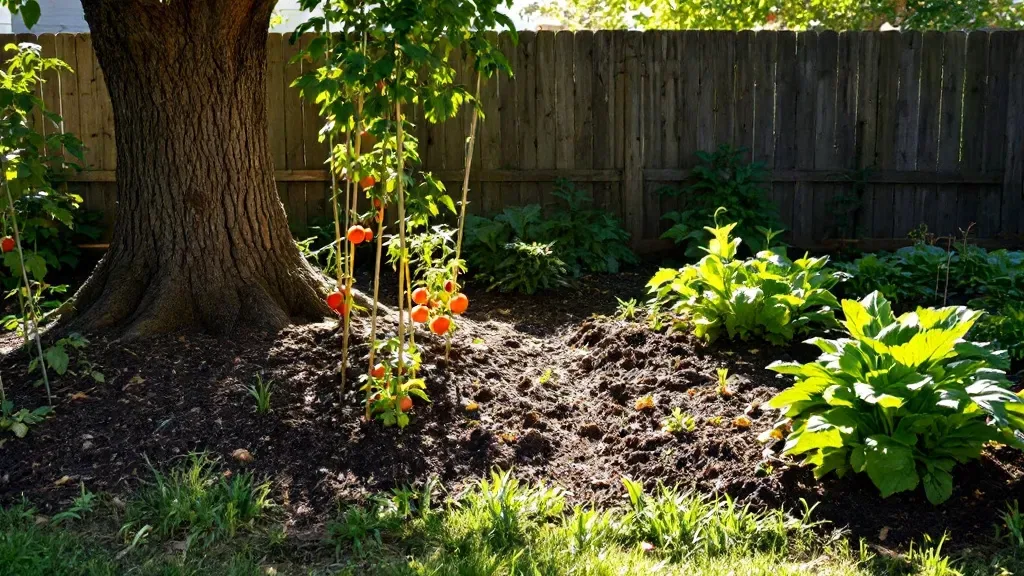
Your plot sits in the shade of a fence or a tree, and you are not sure what will grow there. A garden sun planner is a one-day tally of the direct sun hours each spot in your plot gets, matched to the crops that can live on that many hours.
Published
Build a garden sun planner from one day of checks
Start with a sketch of your plot. Mark the fence, the house wall, the trees and every spot where you might put a bed. Give each spot a letter.
Pick a clear day in the growing season. A University of Saskatchewan gardening guide says to assess sunlight during the growing season, preferably after the first frost-free day in late spring. The same guide suggests photographing the garden every hour from dawn to dusk, or filling in a chart as the day goes.
Each hour, walk out and write S for direct sun or N for no direct sun beside every letter. At the end of the day, count the S marks for each spot. One S is one sun hour. The count is rough, and it is good enough to sort a spot into a light band.
Light that bounces off a wall or a fence helps a shady spot a little, the Saskatchewan guide says. Do not count it as a sun hour. Only direct sun goes in the tally.
Sun hours each crop group needs
Most vegetables need full sun. A University of Wisconsin-Madison Extension guide says most vegetables require at least six hours of direct sunlight each day. Iowa State University Extension and Outreach agrees, and adds that no vegetable, fruit or herb will be productive in full shade.
The sources split crops by the part you eat. Leaves are the most forgiving. Fruit is the most demanding.
| Sun hours counted | Crops the sources name | Source |
|---|---|---|
| 8 or more | Tomatoes, peppers, cucumbers, squash | University of Maine |
| 6 or more | Most vegetables | Iowa State, Wisconsin |
| 4 to 6 | Radishes, kohlrabi, beets, cauliflower, broccoli (listed as possibilities for partial shade) | Iowa State |
| 3 to 4 | Leaf lettuce, spinach, collards, Swiss chard, kale | Iowa State |
A University of Maine Extension answer from 2023 calls 3 to 5 hours the bare minimum for vegetables. It says crops grown for their fruit need 8 or more hours of direct sun. Iowa State's partial-shade answer says leafy vegetables such as leaf lettuce, spinach, collards, Swiss chard and kale can be grown in 3 to 4 hours of sun.
Sources draw the lines a little differently. In Iowa State's words, 4 to 6 hours is light shade and 2 to 4 hours is moderate shade, while Saskatchewan calls 4 to 6 hours partial sun. When two sources disagree, plan on the higher number for crops you care about.
A shady plot still grows food, as long as the crops match the light.
Worked tally: four spots on a shady plot
Say your plot has four spots, A to D, and you ran 10 hourly checks. Gold boxes mark the hours with direct sun.
Now match each spot to the table above.
| Spot | Sun hours | Plant here |
|---|---|---|
| A | 8 | Tomatoes, peppers, cucumbers or squash |
| B | 6 | Most vegetables, such as broccoli or beets |
| C | 4 | Leaf lettuce, spinach, chard, kale or radishes |
| D | 2 | No bed. Iowa State's table calls 2 to 4 hours moderate shade, and Maine's bare minimum is 3 |
Tomatoes take spot A. Spot C still grows leaf lettuce and spinach. Save the brightest spot for the crops that cannot do without it.
Drawing the four spots on a dot grid helps you see them as one plot. The yard and sun map in The Garden Year bundle is a dot grid with a sun check, and the bed plans are drawn at true scale. You fill in the hours and place each crop.
How the light shifts from spring to summer
Light is not the same all year. The University of Saskatchewan guide says the angle of the sun changes dramatically with the season, with short days in December and long days in July when the sun is high. A spot that is bright in April can be dim in June once the trees have leaves.
The University of Wisconsin-Madison guide says to watch a site through the whole growing season. Check that trees or buildings do not shade it from late morning through the afternoon. Count once in late spring, as the Saskatchewan guide advises, and count again in midsummer.
Saskatchewan adds that light levels change over the years as trees and shrubs reach full height or a new fence or building goes up. Keep the first sheet. Set it beside the later one, and the difference shows which spot lost sun. Put the fruiting crops in the spot that stays brightest across all your counts.
Mistakes to avoid and how to fix them mid-season
Counting bounced light is the first one. Reflected light from a wall or fence lightens shade, Saskatchewan says, but only direct sun goes in the tally. Recount that spot with direct sun alone.
Trusting a single day is the second. One count in May misses leaf-out. Add a midsummer count, and move your plans if a spot dropped a band.
Putting a sun lover in a dim spot is the third. Saskatchewan advises transplanting plants that are not thriving to a site with the right light level. Iowa State suggests growing a plant in a container and placing it in full sun when the ground is too shaded. A potted tomato can move to the bright spot, and a lettuce row can stay put.
Planting beside a big tree is the fourth. The Wisconsin guide says tree roots can grow three to five times the height of the tree away from the trunk. A 30-foot tree can have roots 90 to 150 feet out, so shade is not the only thing a bed near it faces.
When a garden sun planner will not help
You may have a yard that is open to the sky. Then every spot scores 6 hours or more, and you do not need a tally. A sketch and a pencil do the job.
Free pages are enough here: the Iowa State, Maine and Saskatchewan links above hold everything for the tally, and scrap paper does the job. You may also have a plot where every spot scores under 3 hours. A planner cannot fix that. According to Iowa State, no vegetable, fruit or herb will be productive in full shade. Look for a sunnier spot, even a small one, before you build a bed.
The sun check and the yard map sit in The Winter Plan, so the counted hours and the crop in each bed share one sheet. Your zone does not change the tally. The kits count planting dates from your own last-frost date, with freeze dates for 108 NOAA stations in each, so any US zone works. Fill in the sun map in winter, place crops on a bed plan in spring, and record the midsummer recount on the notes for next winter page.
FAQ
How can I calculate the sun exposure in my garden?
Pick a clear day in the growing season and check each spot once an hour from morning to evening. Mark direct sun or no direct sun each time, then count the sun marks per spot. Six or more hours is full sun, and 3 to 4 hours suits leafy greens. A University of Saskatchewan guide suggests photographing the garden every hour or keeping a chart.
Conclusion
Count the direct sun hours in every spot before you buy seed. Plant fruiting crops where you counted 8 or more, most vegetables where you counted 6, and leafy greens where you counted 3 or 4. Leave any spot under 3 hours for something other than vegetables. Repeat the count in midsummer, because trees and fences change what a spot gets.
Sources
- Iowa State University Extension and Outreach, Growing Edible Plants in Shady Areas (2025), last checked October 5, 2026
- Iowa State University Extension and Outreach, Which vegetables will grow in partial shade? (2025), last checked October 5, 2026
- University of Maine Cooperative Extension, What vegetables and fruits will grow in an area that only gets three to five hours of sunlight a day? (2023), last checked October 5, 2026
- University of Wisconsin-Madison Division of Extension, Beginning Vegetable Gardening Basics: Site Selection and Soil Preparation (2021), last checked October 5, 2026
- University of Saskatchewan, Gardening in Saskatchewan, How to Assess Sunlight (2018), last checked October 5, 2026