Heirloom Garden Planner: Isolation and Seed Notes
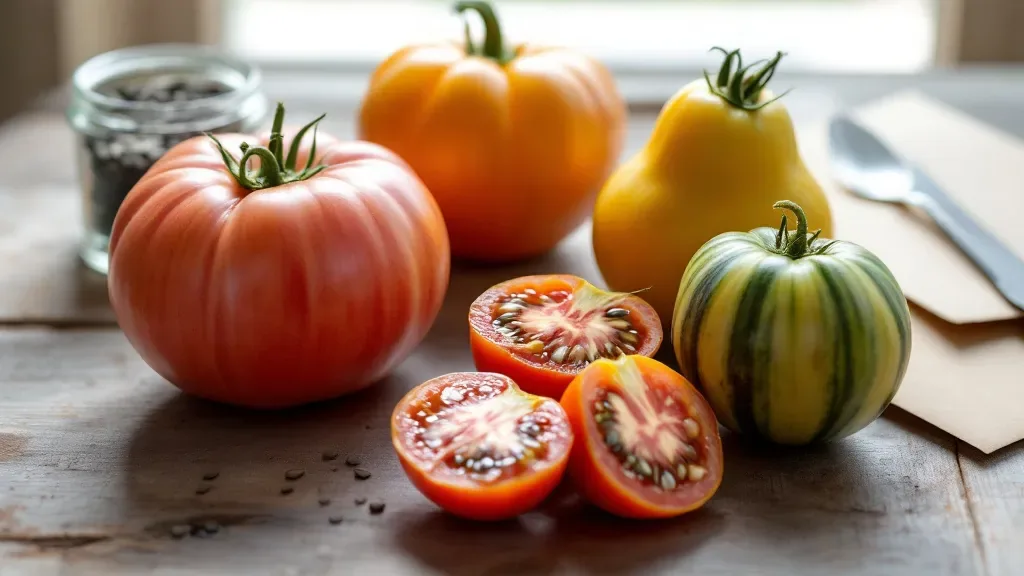
You grow heirloom varieties, and you want the same tomato or bean next year. An heirloom garden planner is a map of your plot plus a record that shows which varieties sit how far apart and which seed you saved.
Published
What makes a variety an heirloom
Heirlooms are open-pollinated varieties, and that fact drives the whole plan. A 2016 Clemson Cooperative Extension factsheet says people define heirlooms in several ways. Some mean any variety grown for a certain length of time. Others mean varieties passed down by a family or group. The same factsheet says heirlooms are always open-pollinated, since hybrid seed cannot be maintained by ordinary means.
The practical rule follows from that. Seed from an heirloom comes back like its parent. Seed from a hybrid does not, and Clemson says not to save it.
The planner you need is one that remembers more than a normal plan does. It holds where each variety grew, what stood near it, and which plants gave your seed.
An heirloom is only as old as the last gardener who saved its seed.
What an heirloom garden planner must hold
A normal garden plan holds crops, beds and dates. An heirloom plan adds three things.
First, the variety name, not just the crop. Two bean varieties in one bed are two different plans.
Second, the distance between varieties of the same crop. Different varieties of one species can cross. A 2021 University of Illinois Extension guide says crops of different species do not cross, even in the same family. Cucumbers, squash and watermelon, for instance, will not cross with each other, but two squash varieties of one species can.
Third, a seed note per plant. Write which plant you chose, the date you harvested its seed and where the jar went.
Your plot map is where distance becomes visible. If you draw beds at 1 inch to 1 foot, a 10-foot gap is a 10-inch strip of paper. That is easy to see before you plant two bean varieties in neighboring beds.
When you want that map pre-ruled, the Garden Year bundle includes bed grids at true scale and a seed-saving record page. You still write the distances yourself, from your own crops.
Isolation distances for eight common crops
The Illinois guide prints a chart of isolation distances for seed saving, credited to Seed Savers Exchange. Clemson lists how long the seed lasts. The table puts both side by side.
| Crop | Isolation distance for seed saving | How long saved seed lasts |
|---|---|---|
| Bean | 10 to 20 feet | At least 3 years |
| Pea | 10 to 20 feet | At least 3 years |
| Lettuce | 10 to 20 feet | 5 years or more |
| Tomato | 10 to 50 feet | 5 years or more |
| Pepper | 300 to 1,600 feet | 5 years or more |
| Squash | 800 feet to half a mile | At least 3 years |
| Corn | 800 feet to half a mile | Next growing season |
| Spinach | 800 feet to 1 mile | Next growing season |
The sources disagree on peppers. Clemson lists peppers with the mostly self-pollinating crops and says at least 10 feet between varieties. The Illinois chart says 300 to 1,600 feet. If peppers matter to you, take the longer figure or cover the flowers with bags.
Seed life comes with a condition. The lifespans hold when seed is dried and kept in a cool, dry place.
Why corn and squash do not fit a backyard
The distance column is the one to read twice. A backyard plot is short, and the figures for some crops are very long.
The Winter Plan's whole-plot graph covers 28 by 32 feet. Divide 800 feet by 32 feet and you get 25. You would have to line up 25 plots of that length to reach the shortest isolation distance for squash or corn.
The 25 is arithmetic, not a rule from either source. It shows why Illinois Extension lists beans, peas, lettuce and tomatoes as the easy crops for seed. Those four self-pollinate, and you only need a few plants to get good seed.
Squash, corn and most of the cabbage family are a different job. Plan them for bags or timing, or buy fresh seed.
Three ways to keep two varieties apart
Distance is only one tool. Both extension sources describe the other two as well.
Time isolation means planting varieties so they do not flower together. Time plantings so that different varieties are not flowering at the same time and cannot pollinate each other.
Containment means a physical barrier. Illinois names paper bags, floating row covers and nylon bags. Clemson adds separate screened cages, and both describe hand-pollinating a bagged flower.
Saving the seed itself
Choose the plants before you harvest the rest. Pick the healthiest, most productive and most flavorful plants and label them clearly so nobody eats them. Let the seed ripen fully on the plant, because mature seed is more likely to grow.
Wet seed, such as tomato, needs fermenting. The Illinois guide says to put the seeds in a jar with a little water for two to four days, stirring daily. Viable seed sinks, and pulp and bad seed float.
Dry the seed on paper, then store it in a closed glass jar in a cool, dry place. Most vegetable seeds stay viable three to five years that way, per the same factsheet. Test a sample between moist paper towels before you plant, and sow extra if few sprout.
Picking varieties for your climate and season
A Clemson factsheet makes the case for local seed. It says open-pollinated seed that has been grown and harvested for generations in a region or microclimate becomes adapted to that area's soil, climate and pests. A variety from a seed saver in your region has a head start over one bred far away.
The sources I opened do not rank heirloom varieties by zone or by days to harvest. Ask your county extension office or a local seed swap which varieties have done well nearby. Then check that the days to harvest on the packet fit the stretch between your last spring frost and first fall frost.
How many plants to grow for seed
Easy crops need few plants. In the Illinois guide, peas, beans, lettuce and tomatoes are the annual, self-pollinating crops where a few plants give good seed. Corn is the opposite. For corn, grow at least 200 plants in a large block when saving seed, per Clemson, and save seed from 50 ears of different plants. Neither source gives plant counts by household size, so count the seed you want to sow next year and grow enough plants to cover it.
Mistakes to avoid, and fixes while the season runs
Saving seed from a hybrid is the first mistake. Clemson advises against it, because the seed will not produce plants the same as the ones it came from. Check the packet for the word hybrid or F1 before you mark a plant.
Letting two varieties of one species flower together is the second. Different varieties of the same species can cross, such as summer squash and pumpkins, according to Illinois. If two are already blooming side by side, bag the flowers you want seed from, or hand-pollinate them with a small brush, as the same guide describes.
Forgetting to mark the plants is the third. Label your seed plants clearly so nobody picks them early, as Clemson puts it. Tie a tag on before the first fruit ripens.
Picking seed from a weak plant is the fourth. Choose the healthiest, most productive and most flavorful plants, per Clemson, and let the seed ripen fully on the plant.
A limit to this plan
If you buy a fresh packet each year and never save seed, you can skip most of this. Isolation only matters when you keep the seed. A plain notebook and a bed sketch will do for a plot of heirlooms you only eat.
When you do save seed, keep one record line per variety each season, with the fields below.
| Field | What to write |
|---|---|
| Variety and crop | The full variety name, not just the crop |
| Where it grew | The bed or strip on your map |
| Nearest relative | The other variety of the same species and the distance in feet |
| Plants kept for seed | Which plants you labeled before harvest |
| Seed stored | The date and the jar |
| Verdict | Keep, drop or try again, with a taste note |
The Winter Plan has the 28 by 32 foot whole-plot graph and a seed life and germination test page. The Season Record has the seed-saving record and a variety verdicts page scored 1 to 5 for taste and yield, and The Garden Year bundle holds both. In winter you draw varieties on the plot graph, through summer you note tagged plants, and after harvest you write the record and verdicts. Distances do not depend on your zone, and dates count from your own last-frost date with a 108-station NOAA freeze table in every kit. The free Clemson and Illinois pages already hold every distance in the table, so copying them onto scrap paper costs nothing.
FAQ
Conclusion
Start with the easy four. Grow one variety each of beans, peas, lettuce and tomatoes, or keep two varieties at least 10 feet apart, and save seed from your best plants. Label them before the harvest, and write the variety name and the year on the jar. Add squash or corn only when you have a plan for bags or timing.
Sources
- Clemson Cooperative Extension Home & Garden Information Center, Heirloom Vegetables, HGIC 1255 (2016), last checked October 5, 2026
- University of Illinois Extension, How to Save Seeds (2021), last checked October 5, 2026