How to Start Seeds: A 6-Step Indoor Guide
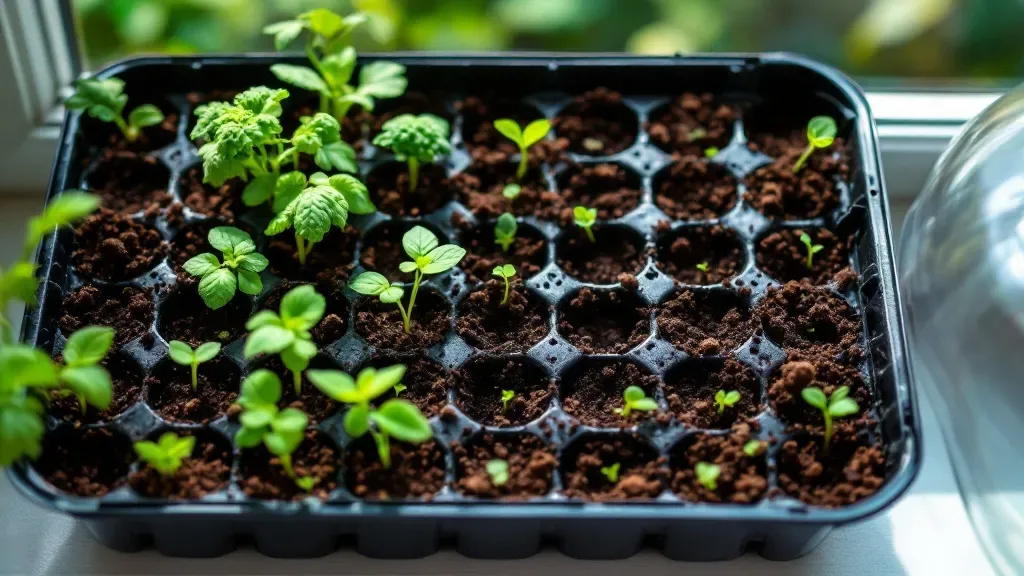
You have a windowsill, a bag of seed and a last frost date. How to start seeds indoors comes down to six jobs: pick a fine mix, use a clean draining container, count your start date back from the last frost, keep the surface moist, give light and warmth, and harden the plants off before they go outside.
Published
Step 1: Learn how to start seeds in the right mix
Seed-starting mix is a soilless blend. Utah State University Extension says these mixes contain mostly peat moss or coconut coir with additives such as vermiculite, perlite and pH conditioners, and that most leave out garden soil on purpose. Purdue Extension asks for a medium that is loose, well drained and fine in texture. A bagged seed-starting mix does that job. Garden soil packs down in a tray and carries disease.
The right mix changes a little with the seed. Ordinary vegetables take the standard bag. Strawberry and lavender seed are fussier, and the table shows what each one needs.
| Seed | Mix | What the source says |
|---|---|---|
| Ordinary vegetables | Sterile seed-starting mix, fine and well drained | Purdue: loose, well drained, fine texture |
| Strawberry | Good-quality sterile seed-starting mix, kept moist but not wet | Penn State: sow 0.25 in deep, 2 to 3 weeks to germinate, some varieties need cold treatment first |
| Lavender | Well-drained seed-starting mix, sown on the surface | Iowa State: chill the seed at 40 F for 2 to 4 weeks first |
Strawberry seed is the hard one. Penn State PlantVillage says it is generally more difficult to start strawberry plants from seed than to work with young plants. Purdue warns that seeds are quickly killed if they are allowed to dry during germination, and strawberry seed waits longest. Cover the tray and check it daily.
Lavender wants its winter first. Iowa State University Extension says to place the seeds in a moist medium such as sand or peat in a refrigerator at 40 F for two to four weeks before sowing. Then the seed can take two to four weeks or longer to come up. Add the two stretches and you get 4 to 8 weeks before a lavender seedling even exists.
Step 2: Pick a clean container that drains
Any container works if it drains and is clean. Utah State says growing containers must allow water to drain away so the roots do not sit in water. Used ones should be scrubbed free of debris and sanitized with a 10 percent bleach solution. Purdue gives the same ratio in other words: one part chlorine bleach to ten parts water, then let it dry before filling.
Before you buy anything, set out the full kit. Purdue and Utah State between them name these supplies.
- A clean container with drainage holes, such as a flat, cell pack, peat pot or recycled cup.
- A bagged seed-starting mix.
- Labels, which can be as simple as craft sticks, carrying the crop and the planting date.
- Clear plastic film or a piece of glass for a cover.
- A light source. Simple shop lights with fluorescent or LED bulbs are affordable and sufficient, says Utah State.
- A heat mat under the tray if the room is cool, and a small fan, which Utah State says builds stem strength and helps prevent damping-off.
- A spray bottle for watering.
Flats and trays save space. Individual pots save a transplanting step. The Purdue sheet lists peat pots, peat pellets and plastic cell packs, and says large seeds such as cucumber and squash go straight into individual pots because they do not transplant well.
Fill the container to within 3/4 inch of the top with moist mix, level it and press it down lightly. Purdue warns against pressing hard, because that cuts air in the mix and slows root growth.
Step 3: Count your start date back from your last frost
Your start date is your last frost date minus the weeks the crop needs indoors. Colorado State University Extension says most seeds should be started four to eight weeks prior to the last killing frost. Purdue's table is more exact. It says 10 weeks for broccoli, cabbage and cauliflower, 7 weeks for tomato, eggplant and pepper, and 4 weeks for cucumber, cantaloupe, squash and watermelon.
Take a last frost of May 10. Ten weeks back is 70 days, so broccoli goes in on March 1. Seven weeks is 49 days, so tomato goes in on March 22. Four weeks is 28 days, so squash goes in on April 12. Three crops, three dates, and six weeks between the first and the last.
Where the seed packet gives its own number, use the packet. The Purdue range runs from 4 to 14 weeks and tells you to read the label. Strawberry has no single week to quote here, so take the packet's date and add any cold treatment on top.
You can do this sum on a scrap of paper. If you would rather have it done for all your crops, The Seed-Starting Countdown lays out the weeks from 14 before frost to the frost week itself, counted from your own date.
Step 4: Sow and keep the surface moist
Sow thinly and evenly. Purdue's method is shallow rows 1 to 2 inches apart, with the seed dropped in slowly from the packet. Cover most seeds with mix to about two times their diameter. Very fine seeds, such as petunia and begonia, are not covered at all.
Water gently. Moisten the surface with a fine mist, Purdue says, or set the container in a pan of warm water so it soaks up moisture from below. Bottom watering keeps the surface dry, which helps against damping-off. Utah State says the same about keeping the mix evenly moist but not waterlogged.
Purdue gives no number of days between waterings. Its rule is to never over-water a flat, to let the mix dry a little between waterings, and never to let a seedling wilt. Check the surface each morning and water when it is just dry.
Cover the container with clear plastic film or a piece of glass. No extra watering is then needed, per Purdue, until the seeds come up. Label each row with the crop and the date, in pencil or waterproof pen.
A seed that dries out once while it is germinating rarely gets a second chance.
Step 5: Give warmth to sprout, then light and cool air
Most seeds sprout best at 65 to 75 F. Purdue and Utah State agree on that range. Cabbage, broccoli and cauliflower do better near 55 F, and Colorado State says nightshade seeds such as tomato need soil close to 80 F. Keep covered containers out of direct sun.
Take the cover off as soon as germination is well underway and move the tray into bright light. Seedlings need bright light promptly, per Purdue. Under fluorescent tubes, set the plants 3 to 4 inches from the tubes and run the lights 14 to 16 hours a day. Colorado State gives 12 to 16 hours, and Utah State gives 12 to 14, so aim for about 14.
After sprouting, cool beats warm. Purdue puts the best night temperature for most vegetables at 60 to 65 F, and warmer rooms make leggy plants. Too much moisture, high heat and poor light also open the door to damping-off, a fungus that makes seedlings fall over at the soil line.
Damping-off is the one disease to watch for. Seedlings that fall over at the soil line are being attacked by a fungus, Purdue explains, and the best control is cleanliness and prompt action. If only a few fall, dig out the dead plants and the soil around them and throw both away. Purdue adds that high temperature, poor light and excess moisture help the disease spread, so a clean container, bottom watering and a fan are the cheapest defenses.
| Stage | Temperature | Light |
|---|---|---|
| Sprouting | 65 to 75 F for most seeds, about 55 F for cabbage family, near 80 F for tomato family | None needed under the cover, except light-needing seeds |
| After sprouting | Night 60 to 65 F, day about 10 F warmer | Bright window or lights 3 to 4 inches above, 12 to 16 hours |
Step 6: Thin, harden off and move the plants outside
Give seedlings room once the first true leaves show. Purdue says to move them into individual pots or spread them out in flats as soon as they have at least one set of true leaves, because crowded seedlings turn spindly. If you sowed two seeds in a pot, cut the weaker one with scissors instead of pulling it.
Feed lightly once true leaves appear. Use a soluble houseplant fertilizer, Purdue advises, at about half strength, then every 2 weeks at the label dilution, because tender seedlings are easily burned.
Begin hardening off about two weeks before planting out. Start with the plants in a shady spot, then move them into sun a little longer each day. Purdue says to keep them in on windy days or when it is below 45 F. Cold-hardy plants such as cabbage are hurt by freezing temperatures before they have hardened.
Planting day has its own rules. Transplant on a cloudy day if you can, per Purdue. In warm sunny weather, shade the new plants with newspaper tents for 2 or 3 days. Dig the hole about twice the size of the root ball, set each plant at the depth it grew in the tray, and water gently. Tomatoes can go deeper than they grew if they have turned leggy. Peat pots can go in whole, but the rim must be buried or torn off so it cannot wick water away from the roots.
| Step | What you do | Source figure |
|---|---|---|
| 1 | Fill a clean container with fine, sterile mix | Bleach rinse of 1 part to 10 parts water |
| 2 | Pick a container with drainage holes | Fill to 3/4 inch from the top |
| 3 | Count back from your last frost | 4 to 10 weeks by crop, 4 to 14 in all |
| 4 | Sow, mist, cover | Depth about 2 times the seed's width |
| 5 | Warm to sprout, then bright and cool | 65 to 75 F, then 60 to 65 F nights |
| 6 | Thin and harden off | 2 weeks outside, nothing below 45 F |
When free start dates are enough
Free extension tables and printables exist, and Purdue's table above already gives start weeks for common crops. If you sow a few crops and a free county calendar fits, you may not need to buy any calendar at all. The Seed-Starting Countdown earns its place when you want weekly pages, tray maps and logs in one file.
The kit counts from your own last-frost date, and a table of last and first freeze dates (10, 50 and 90 percent) for 108 NOAA stations, 1991 to 2020 normals, comes with it, so any US zone works. Print at 100 percent (actual size) on a home printer. The tray maps for 72, 50 and 128 cells are layout maps, not actual size.
FAQ
What is the most effective way to start seeds indoors?
Use a fine, well-drained seed-starting mix in a clean container with drainage holes, keep the surface evenly moist, hold the tray at 65 to 75 F until the seeds come up, then give bright light right away.
What are common mistakes when starting seeds indoors?
Extension sources point to five: a dirty container, too much water, a room that is too warm or too dark after germination, waiting too long to give seedlings room, and skipping the hardening-off period before planting out.
What month should I start planting seeds?
Count back from your own last frost date instead of picking a month. Purdue lists 10 weeks for broccoli, 7 for tomato and 4 for squash, and Colorado State says most seeds start 4 to 8 weeks before the last killing frost.
What to do after starting seeds indoors?
Give bright light as soon as seedlings emerge, keep the mix evenly moist, thin or transplant once true leaves appear, and begin hardening the plants off about two weeks before they go into the garden.
Should I water my seeds immediately after planting?
Yes, with a fine mist or by letting the tray soak up water from below. Purdue says to moisten the surface after sowing, then cover the container so no extra watering is needed until the seeds come up.
Do seeds germinate better in light or dark?
It depends on the seed. Utah State says some seeds need light to germinate, including basil, petunias and snapdragons, and Purdue says very fine seeds should not be covered. Most vegetable seeds are covered to about two times their diameter.
How can I make a homemade seed starter?
Purdue's soilless recipe for one gallon is 2 quarts of shredded sphagnum peat moss and 2 quarts of vermiculite, plus 1 tablespoon of dolomitic limestone and half a tablespoon of 20 percent superphosphate. Moisten it before you fill the container.
Conclusion
Start with the mix and the date, because those two choices set everything after them. Use a fine, well-drained seed-starting mix, count each crop back from your own last frost, keep the surface evenly moist, and give the seedlings bright light the day they come up. Thin when the first true leaves show, and spend the last two weeks hardening the plants off. Strawberries and lavender follow the same steps with a slower clock, so write their dates down early.
Sources
- Purdue Extension, Starting Seeds Indoors, HO-14-W (2020), last checked October 5, 2026
- Utah State University Extension, Starting Vegetable Seeds Indoors: II. Materials (undated), last checked October 5, 2026
- Utah State University Extension, Starting Vegetable Seeds Indoors: Germination (2025), last checked October 5, 2026
- Colorado State University Extension, Starting Seeds Indoors, PlantTalk 1034 (undated), last checked October 5, 2026
- Penn State PlantVillage, Strawberry (undated), last checked October 5, 2026
- Iowa State University Extension and Outreach, Growing Lavender in Iowa (undated), last checked October 5, 2026