Pea Planting Guide: Sow When Soil Thaws
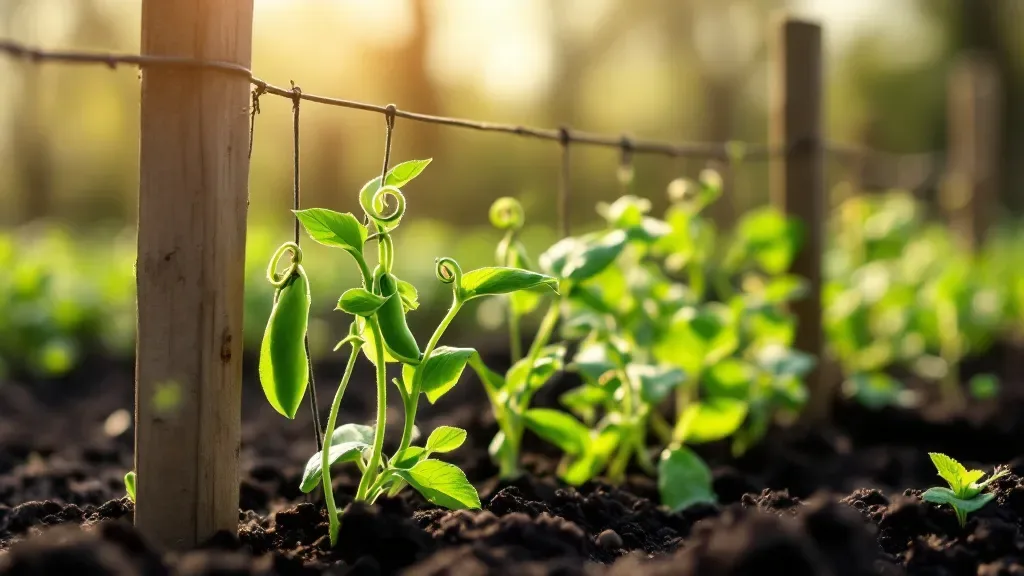
Peas want to go in the ground before almost anything else. A pea planting guide starts with soil rather than the calendar, because peas can sprout at 40 F and the date depends on when your soil gets there.
Published
Step 1: Take the soil temperature first
Peas germinate in cold soil. Kansas State University horticulturist Cynthia Domenghini says peas can sprout at 40 F. Peas generally emerge better above 40 F, according to Utah State.
Use a soil thermometer rather than a feeling. Kansas State says to measure at least 2.5 inches deep in late morning, and to average five days of readings before you decide. Frost is still possible, so watch the forecast too.
| Soil temperature | What the sources say |
|---|---|
| Above 40 F | Peas can sprout and emerge better (Kansas State, Utah State) |
| 55 to 65 F | Seedlings emerge in 7 to 10 days (Utah State) |
| Above 80 F | Peas do poorly (Utah State) |
Step 2: Sow as soon as the soil can be worked
Utah State University Extension says to start planting peas as soon as you can till the soil in spring. Peas are cool-weather plants. Clemson Extension says they can withstand frosts and light freezes, though the blossoms cannot.
Planting dates depend on where you live. In Utah, plant until April 1 in warm areas and until May 1 in cooler areas, says Utah State. Clemson lists March 1 to April 5 for the South Carolina Piedmont and February 1 to March 15 on the coast. These are one state's dates, so use your own soil reading to pick yours.
Step 3: Sow an inch deep and 1 to 2 inches apart
Plant seeds 1/2 to 1 inch deep and 1 to 2 inches apart, in rows 12 to 24 inches apart, advises Utah State. Clemson Extension says 1 to 1 1/2 inches deep, with rows 2 feet apart. Take an inch as the middle.
Peas go in a row, not in holes. A 15-foot row is 180 inches. At 1 to 2 inches apart, that is 90 to 180 seeds. Clemson also describes a double row of two lines 2 to 4 inches apart, which fits more plants beside one trellis.
A thick stand needs no thinning, so you can skip that chore.
Soaking the seed is optional. University of Maine Extension says a cup of lukewarm water overnight helps the seed absorb water and shortens the time it needs to germinate. A University of Maryland Extension post says a few hours in a container of water immediately before planting gives seeds a good start. Soak only what you will sow that day.
Step 4: Put the support up on sowing day
Pea plants hold on with tendrils, so they need something thin to grab. Clemson says to erect netting, trellis, wires or pea brush before or right after planting, to avoid disturbing roots later. Most varieties are self-supporting, Utah State says, but taller ones are more productive and easier to harvest when trellised.
Water on a pattern. Peas need regular water, but wet soil promotes root rot. Let the soil dry until half the available water is used, in Utah State's words. Clemson says the critical period for moisture is pod set and development, and to water in the early morning.
Step 5: Count to harvest, then sow again
Utah State puts maturity at 60 to 70 days. Clemson gives 55 to 64 days for early varieties and 65 to 70 for mid-season. Say you sow on March 15. Seedlings show in 7 to 10 days, around March 22 to 25, and pods follow between May 14 and May 24.
Sow again while the weather stays cool. Utah State suggests planting garden peas every 14 to 21 days, up to April 1 in warm parts of Utah and May 1 in cooler ones. Snap peas produce pods over a longer period, so one planting is enough.
| Step | What you do | Source figure |
|---|---|---|
| 1 | Check the soil | 40 F or more |
| 2 | Sow at first workable day | Until April 1 or May 1 in Utah |
| 3 | Space the seed | 1 to 2 inches apart, 1/2 to 1 1/2 inches deep |
| 4 | Support and water | Support at planting; water regularly |
| 5 | Count and resow | 60 to 70 days; every 14 to 21 days |
Step 6: Size the row for the table
Expect 2 to 3 pounds of shelled peas per 10 feet of row from garden types. The same page recommends 15 to 20 feet of row per person for fresh eating. That works out to 3 to 6 pounds of shelled peas per person, and 90 to 180 seeds for a 15-foot row.
Use a dated plan to lay out the rows and the resowing dates in one place.
Peas reward the gardener who is ready before the ground is.
Fall peas: count back 8 to 10 weeks from frost
A University of Connecticut fact sheet says peas can be sown again for a fall crop 8 to 10 weeks before the first projected frost. It also says varieties resistant to powdery mildew are best for fall planting.
Do the sum with your own first-frost date. Say it is October 15. Eight weeks is 56 days, which gives August 20. Ten weeks is 70 days, which gives August 6. Sow between those two dates, and the 60 to 70 days Utah State gives for maturity fits inside the window.
Pea planting guide limits: heat, fall sowing and when to skip the printable
Heat is the limit. Pea flowers are very sensitive to temperatures above 80 F, and dry conditions make plants shed them, Utah State warns. Fall peas yield much less than spring sowings, Utah State adds. Clemson lists August 15 to October 30 in the South Carolina Piedmont, yet also advises that fall plantings are not recommended there. Check your own extension office.
If your county extension already prints a pea planting date for your town and you grow only peas, use it and skip the kit. Free extension charts and free printables are enough for one crop. The kit earns its place when you want your own dates for every crop on one page, counted back from your own frost date. The Winter Plan will not tell you when your soil hits 40 F, so keep the thermometer. What it gives you is pages to write on: the pea sowing date goes on the spring countback chart, each 14 to 21 day resowing on the succession waves page, and the 60 to 70 day count to pods in the season calendar's day boxes.
FAQ
What month do you plant peas?
There is no single month, because peas go in as soon as the soil can be worked. Utah State says to plant until April 1 in warm areas and May 1 in cooler areas, and Clemson lists March 1 to April 5 for the South Carolina Piedmont. Use 40 F soil as your signal.
What is the best month to plant peas?
The best month is the one when your soil first reaches 40 F and can be worked. Kansas State says peas can sprout at 40 F. Utah State says seedlings emerge in 7 to 10 days in soil of 55 to 65 F and that peas do poorly above 80 F.
Do peas need to be watered every day?
No. Utah State says peas need regular watering, but soil should dry until half the available water is used before you water again, and overwatering promotes root rot. Clemson says to water deeply enough to moisten 6 inches of soil.
Do peas need to climb to grow?
No. Utah State says most pea varieties are self-supporting, though taller ones are more productive and easier to harvest if caged, trellised or fenced. Clemson says even dwarf varieties benefit from some support.
How many pea seeds do you put in one hole?
Peas are sown in a row rather than in holes. Utah State and Clemson both say to space seeds 1 to 2 inches apart, and Utah State says no thinning is needed if the stand is thick.
How long does it take for a pea plant to produce peas?
Utah State says peas need 60 to 70 days to mature, depending on variety, and garden peas are ready about 18 to 21 days after flowering. Clemson lists 55 to 64 days for early varieties and 65 to 70 for mid-season ones.
Conclusion
Sow peas as soon as the soil can be worked and reads 40 F or more, an inch deep and 1 to 2 inches apart. Put up the support at planting time, water evenly once the flowers open, and sow again every 14 to 21 days while the weather stays cool. Count 60 to 70 days from sowing to the first pods, and write the date down so you can plan your next sowing around it.
Sources
- Utah State University Extension, How to Grow Peas in Your Garden (2020), last checked October 5, 2026
- Kansas State University Research and Extension, Soil temperature is important for germination in the garden (2024), last checked October 5, 2026
- University of Maine Cooperative Extension, Should I soak my peas to help germination? (2020), last checked October 5, 2026
- University of Maryland Extension, Grow Peas, Please! (2024), last checked October 5, 2026
- University of Connecticut College of Agriculture, Health and Natural Resources, Peas (undated), last checked October 5, 2026
- Clemson Cooperative Extension Home and Garden Information Center, Garden Peas (2023), last checked October 5, 2026