Small Garden Planner: Crops That Earn Space
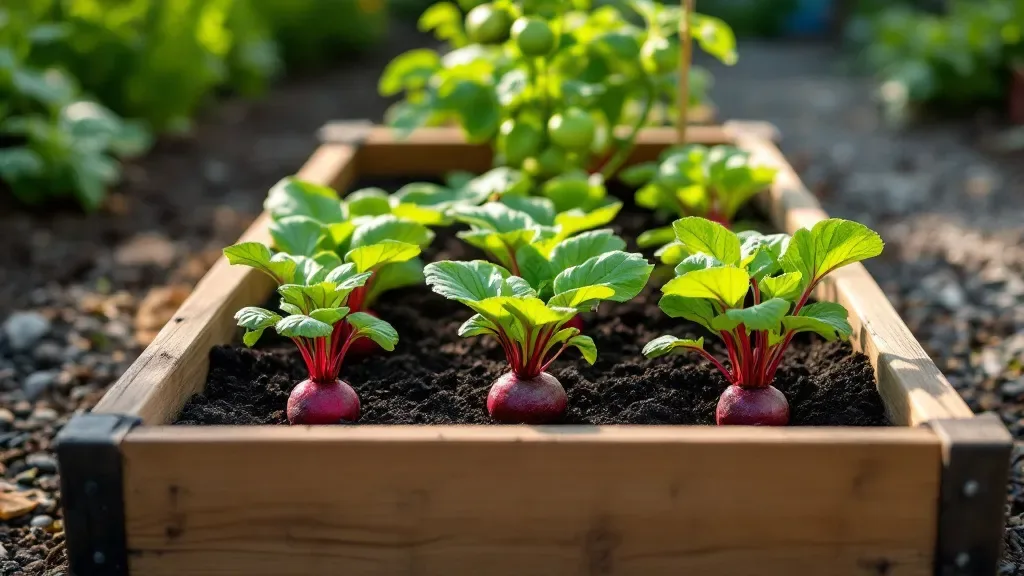
You have a few square feet and a long list of things you want to grow. A small garden planner gives every square foot of a small bed to a crop that earns it, and the sections below rank common vegetables by what they return per square foot.
Published
A small garden planner starts with the square footage
A small garden planner has one job. It decides what to do with a fixed number of square feet.
A 4 by 8 foot bed holds 32 square feet (4 × 8). Kansas State says even a 100-square-foot garden can produce a good portion of the vegetables for a family of four. So 32 square feet is small, but it is not nothing.
The University of Delaware's planning sheet gives the most useful advice for a tight plot. If space and time are limited, it says, choose crops that taste especially good fresh-picked and that are hard to buy where you live. The same sheet adds that it is better to do a good job with a small garden than a poor job with a large one.
In a small garden, space is the budget, and every crop is a purchase.
Five steps before the first seed
A Texas A&M AgriLife guide to planning a garden covers the order. Work through it for a small bed.
- Check the sun. Most vegetables need at least 6 hours of sunlight a day.
- Fix the size. Making the garden too large, says the Texas guide, is one of the most common mistakes of first-time gardeners, because a garden that is too large is too much work.
- Pick crops. Its list for a small garden has bush beans, chard, onions, radishes, tomatoes, turnips, lettuce, squash, eggplant, beets, broccoli, carrots and peppers. It says not to plant watermelons in a small garden, because they take too much room.
- Count plants. The next section turns the Texas A&M figures into a number for your household.
- Draw it on paper. Texas A&M says to make a drawing that shows the location and spacing of each vegetable.
How many plants for your household
The same Texas A&M guide gives an amount to plant per person for fresh eating. Multiply each line by the number of people at your table.
| Crop | Per person, fresh use | Two people |
|---|---|---|
| Tomato | 3 plants | 6 plants |
| Pepper | 3 plants | 6 plants |
| Broccoli | 4 plants | 8 plants |
| Summer squash | 2 hills | 4 hills |
| Cucumber | 2 hills | 4 hills |
| Bush green bean | 15 feet of row | 30 feet of row |
| Beet or carrot | 10 feet of row | 20 feet of row |
Six tomato plants will not fit in a 32 square foot bed beside everything else. So pick your top three crops for the full count, and give the rest a smaller share. Texas A&M also warns that over-planting is wasteful and takes too much work.
Crops ranked by pounds per square foot
Most planting charts give yield per row, which hides how much room a crop really takes. You can fix that with one division.
A Kansas State University planting guide lists the average crop expected from 10 feet of row. It also lists the average spacing between rows. Multiply 10 feet by the row spacing and you get the square feet that row takes up. Divide the pounds by those square feet.
| Crop | Pounds per 10 ft of row | Row spacing (in.) | Square feet used | Pounds per sq ft |
|---|---|---|---|---|
| Beets | 15 | 18 | 15 | 1.0 |
| Onions (sets) | 10 | 12 to 24 | 10 to 20 | 0.5 to 1.0 |
| Carrots | 10 | 18 | 15 | 0.67 |
| Swiss chard | 7.5 | 18 to 24 | 15 to 20 | 0.38 to 0.5 |
| Bush beans | 12 | 36 | 30 | 0.4 |
| Tomatoes | 10 | 36 to 48 | 30 to 40 | 0.25 to 0.33 |
| Summer squash | 15 | 48 to 72 | 40 to 60 | 0.25 to 0.38 |
| Peppers | 6 | 36 | 30 | 0.2 |
Beets return about 1 pound per square foot. Peppers return about 0.2. That is a five-fold gap, and it comes from Kansas State's own numbers.
Read the table as a ranking, not a forecast. The row spacing is for gardens with walking room, and a raised bed usually lets you plant tighter. Your own harvest will differ.
Peppers also keep producing for weeks. A 2026 Clemson Cooperative Extension fact sheet lists peppers, okra and beans as crops with multiple harvests that spread the picking over time. So a low pounds-per-foot number does not mean skip the pepper. It means give it one plant, not a row.
Fast crops give the same space a second job
Time is the other half of space. A crop that is ready in a month frees the bed for something else.
Clemson names arugula, lettuce, radishes, snap beans and squash as fast-maturing crops that make a small space productive. Delaware describes three ways to use the same ground twice: succession planting of one crop at different dates, interplanting quick crops next to long-season ones, and double-cropping after a harvest.
Kansas State's days to first harvest show how big the difference is.
| Crop | Days to first harvest (K-State) | What it can do for a small bed |
|---|---|---|
| Spring radishes | 25 to 40 | Fill the front edge, then clear it for a second sowing |
| Spinach | 25 to 40 | Early crop before heat-lovers need the room |
| Bush beans | 50 to 60 | Follow a spring crop in the same square |
| Summer squash | 45 to 55 | Needs 40 to 60 square feet per 10-foot row, so give it one plant |
Plan the bed in three bands
A 4 by 8 foot bed is easy to plan in bands. Put the tall crop on the side where it will not shade the others, as Delaware advises. Then work forward by height.
The bands add up: 1 + 2 + 1 = 4 feet.
Going up saves floor space. A Virginia Tech guide to trellises, stakes and cages names pole beans, peas, cucumbers, melons and tomatoes as good candidates. It says radishes, turnips and lettuce planted beneath vertically trained crops can be harvested before the taller crop gets too big. Cucumbers and cantaloupes can also grow in small gardens when trellised on a fence or other structure.
Interplanting works like this. Put the radishes in front of the trellis, pull them, and the ground is free before the vines spread.
For succession, Clemson describes relay planting as multiple small plantings several days or weeks apart, rather than one large planting. In the front foot, sow a short strip of radishes, then another strip when the first one is pulled. Grouping crops by maturity, the Texas guide says, makes it easier to replant after you remove an early crop such as lettuce or beets.
Draw the bed on paper before you buy seed. The Winter Plan in The Garden Year bundle prints beds like this one at true scale, with 1 inch standing for 1 foot, so a 4 by 8 foot bed is 4 by 8 inches on the page.
What to plant when the bed gets little sun
Most small plots are squeezed between a fence and a house. Check the hours of sun before you choose.
Iowa State University Extension says an edible garden should get at least 6 hours of direct sun a day. It also says vegetables grown for their leaves handle partial shade better than fruiting ones. Lettuce, spinach, kale, arugula and Swiss chard tolerate 4 to 6 hours. Bok choi, mustard greens and spinach tolerate 2 to 4 hours.
Iowa State's tables do not list tomatoes or cucumbers at any shade level. If your bed is shady, plant the leaf crops and put the tomato in a sunnier spot, such as a pot by the driveway.
What to plant in buckets and shallow soil
Containers count as a small garden too. Oregon State University Extension says most vegetables do best in containers that hold 2 to 5 gallons of soil and are at least 12 inches deep.
For a 5-gallon bucket, Oregon State recommends one sprouted seed or seedling of beans or peas. Tomatoes work if you choose a variety designed for containers, and peppers need a stake or cage. Beets need 12 inches of depth. Short carrot varieties need 12 inches as well.
Radishes are the exception. Containers 4 to 6 inches deep work well for them. If your soil is shallow, that is where to start.
Mistakes to avoid, and how to fix them mid-season
Sources name a few. Fixes beyond the sources are plain reasoning.
| Mistake | What the source says | Fix |
|---|---|---|
| Too big a plot | The Texas guide calls an oversized garden a common first-timer mistake | Plant only the part you can tend and leave the rest empty |
| Tall crop shades short ones | Delaware says tall crops should not shade small crops | Next season, move the tall crop to the north side of the bed |
| Too little sun | Iowa State says edible gardens need at least 6 hours of direct sun | Keep leaf crops in the shady part and move fruiting crops to a sunnier pot |
| Space left empty after a crop | The Texas guide says to replant after removing an early crop | Fill the gap with a quick crop such as radishes |
When a paper plan is more than you need
A printed planner is the wrong tool for some small gardens. If you grow in three buckets on a balcony, a sticky note with the crop and the sowing date is plenty. If you already keep a notebook you like, or a free extension chart already tells you what to sow, you do not need to buy anything.
Paper helps when you want to track a bed over several seasons. In The Garden Year, the Winter Plan holds the bed plans, the 41-crop chart and the succession waves, and the Season Record holds a planting log, a harvest tally and a yield-against-plan page. Dates count from your own last-frost date, and every kit has a table of last and first freeze dates (10, 50 and 90 percent) for 108 NOAA stations, from the 1991 to 2020 normals, so it works in any US zone. You draw the bed in winter, fill the succession waves in spring, tally the harvest through summer and check yield against plan at season end.
Your own scale is the best test of the table above. Weigh what you pick from the beet row and the pepper plants, then compare it with Kansas State's numbers.
FAQ
What are good vegetables to grow in a small garden?
Pick crops that pay back the space: beets, onions, carrots, Swiss chard and bush beans return the most per square foot at Kansas State's row spacing, and radishes and spinach are ready in 25 to 40 days so the space can be replanted. Add one tall crop such as tomatoes on the back edge.
What vegetables need little sunlight to grow?
Leaf crops. Iowa State says lettuce, spinach, kale, arugula and Swiss chard tolerate partial shade of 4 to 6 hours, and bok choi, mustard greens and spinach tolerate 2 to 4 hours. Tomatoes and cucumbers need full sun.
What vegetables grow well in 5 gallon buckets?
Oregon State says beans and peas do best with one sprouted seed or seedling in a 5-gallon container. Tomatoes grow in containers too if you pick varieties made for them, and peppers need a stake or cage.
What vegetables grow in 4 inches of soil?
Radishes. Oregon State says containers 4 to 6 inches deep work well for them. Beets and carrots need a container at least 12 inches deep.
Conclusion
Start with the front foot of your bed. Sow radishes or spinach there, give the middle two feet to beets, chard or bush beans, and put one tall crop on the back foot. Write the dates down, weigh what you pick, and next year give more room to whatever beat your guess.
Sources
- Kansas State University Research and Extension, Vegetable Garden Planting Guide MF315 (2023), last checked October 5, 2026
- Iowa State University Extension and Outreach, Growing Edible Plants in Shady Areas (2025), last checked October 5, 2026
- Oregon State University Extension Service, Container Gardening Basics (2021), last checked October 5, 2026
- University of Delaware Cooperative Extension, Planning a Vegetable Garden (2004), last checked October 5, 2026
- Clemson Cooperative Extension, Garden Yield and Planning Information (2026), last checked October 5, 2026
- Texas A&M AgriLife Extension, Planning a Garden, E-289 (2011), last checked October 5, 2026
- Virginia Tech Cooperative Extension, Vertical Gardening Using Trellises, Stakes, and Cages, HORT-189 (2022), last checked October 5, 2026