Spring Garden Planner: Six Dates, Week by Week
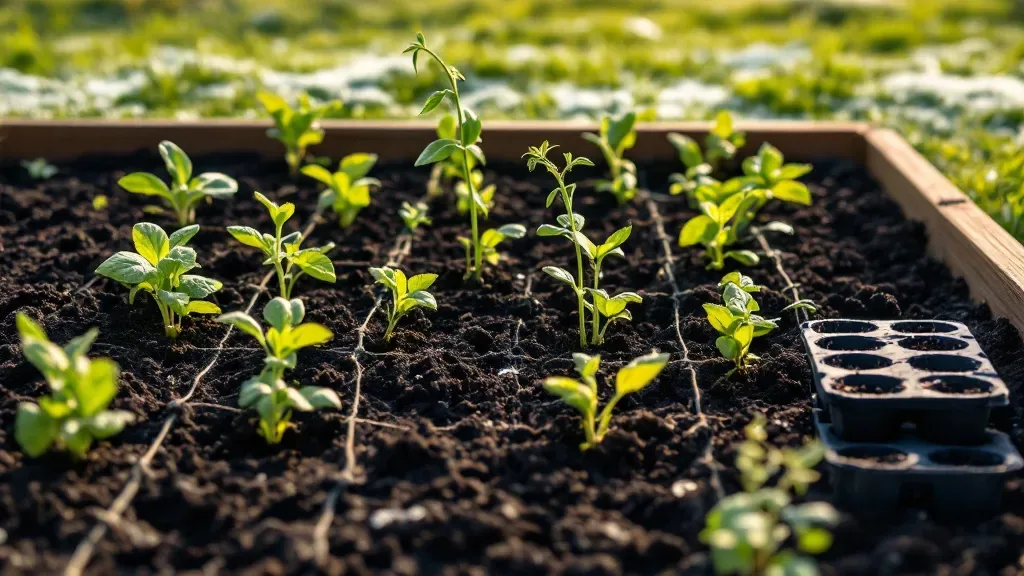
Spring feels crowded because everything seems to need doing at once. A spring garden planner is one date, your average last spring frost, plus six dated jobs counted backward and forward from it.
Published
Week 0 is the one date a spring plan needs
To build a spring garden planner, find your average last spring frost date and call it week 0. Every spring job is a number of weeks before or after that date. Your county extension office or a local frost table will give you the date. Write it down before you buy a single seed packet.
The examples below use April 20. Swap in your own date and the week numbers still hold.
Spring garden planner: six dated jobs from one frost date
Extension services sort vegetables by how much cold they take. Each group gets planted a set number of weeks from the frost date. A University of Vermont Extension guide puts very hardy vegetables four to six weeks before the frost-free date and frost-tolerant ones two to three weeks before. It plants tender vegetables on or after that date and warm-loving ones one to two weeks after.
Tomatoes need a head start indoors. A Clemson Cooperative Extension fact sheet says to sow tomato seed indoors six to eight weeks before the last frost date.
Put those together and spring comes down to six dated jobs.
| Week | Date if the last frost is April 20 | Job |
|---|---|---|
| -8 to -6 | Feb 23 to Mar 9 | Sow tomato seed indoors |
| -6 to -4 | Mar 9 to Mar 23 | Plant potato tubers and onion sets. Sow spinach, peas, lettuce, collards and turnips. Set out broccoli and cabbage transplants |
| -3 to -2 | Mar 30 to Apr 6 | Sow carrots, beets, radishes, mustard and parsnip. Set out cauliflower transplants |
| -1 | Apr 10 to 13 | Start hardening off the tomato plants |
| 0 | Apr 20 | Sow beans, sweet corn and summer squash. Plant tomato transplants |
| +1 to +2 | Apr 27 to May 4 | Plant cucumbers, melons, pumpkins, peppers, eggplant and sweet potatoes |
The dates are plain arithmetic. April 20 minus eight weeks is February 23, and minus six weeks is March 9. Hardening off starts about ten days before planting out, so April 10 for an April 20 planting.
Where two extension charts disagree
Charts from different states do not match to the day. A University of Maryland Extension sheet lists hardy vegetables at six weeks before the average last spring frost and semi-hardy ones at two to four weeks. The Vermont guide says two to three weeks for the same middle group.
Both are right for their own states, and your frost date decides which one fits you. If you are unsure, take the later week for your first sowing and check it against your own county's chart.
The Maryland sheet also gives a limit for summer crops. It says to plant them after the threat of frost is past, with soil at least 60 degrees F and overnight temperatures above 50. A warm week before week 0 is a reason to start hardening off, not a reason to plant beans.
A spring plan is a countdown to one date, so the date you trust matters more than any layout.
Shift all six dates when your frost date moves
Say your last frost falls on May 4 instead of April 20. That is 14 days later, so you add 14 days to every date in the table. Tomato seed moves from February 23 to March 9, and the warm-loving crops move from April 27 to May 11.
Check the Maryland sheet before you commit. It publishes its own planting dates, such as English peas from March 15 to May 1, so you can compare your count with a real state chart.
The weeks work the same on paper that you print. The spring week list in The Garden Year bundle is one page of weekly jobs from week -14 to week +3, counted from your own last frost date.
Protect early plantings from a late cold snap
Nobody can predict a late frost, so keep the cover ready before it comes. A 2019 University of Georgia Extension report quotes a horticulturist who says to collect frost-reduction materials ahead of time and place them close to the plants. Blankets, sheets, newspapers, baskets and straw all work. Stakes hold a wet blanket off tender seedlings.
Timing matters as much as the cloth. The same report says to cover plants before sunset and remove the covering just after sunrise. It warns against plastic sheeting, because plastic traps heat and can scorch plants by mid-morning.
A New Mexico State University guide says row covers give a frost protection factor of 2 to 7 degrees F, and heavier spun-bonded fabric gives more. So a cover helps on a night just below freezing and does not rescue a hard freeze.
Only week -6 to week -1 plantings sit outside before week 0. Tomatoes, beans and squash stay in the tray or the box until the date passes, so a late frost cannot reach them.
How much of each crop one person eats
A spring plan also needs counts. Kansas State's vegetable planting guide, revised in 2023, lists an approximate planting per person. It gives 3 to 5 plants each for tomatoes, peppers and broccoli, 3 to 4 cabbage plants, 10 feet of leaf lettuce, 3 to 5 feet of radishes and 2 to 3 hills of summer squash.
Multiply each figure by the people at your table. Two eaters need 6 to 10 tomato plants by that sum. The guide's own examples come from Kansas, so treat the numbers as a starting point and trim what your household leaves on the plate.
Three spring slips and how to fix them
Planting tender crops on one warm week is the first slip. The Maryland sheet wants soil at 60 degrees F or more and nights above 50. Fix it by waiting, and by using the warm week to harden off.
Skipping the hardening-off week is the second. The Vermont guide says to raise the time transplants spend outdoors gradually over a week to ten days. Fix it by starting at week -1.
A frost date set too early is the third. If the real date is May 4 and you counted from April 20, add 14 days to every row in the table and move what you have not yet sown.
When a free extension chart is the better spring plan
You may not need to buy anything. If your state extension publishes planting dates for your county, a pencil and that chart cover everything in the table above.
| Your situation | What fits |
|---|---|
| One state chart already lists your crops and dates | Print that chart and write on it |
| You want weekly jobs counted from your own frost date | A printed week list, like the one in the bundle |
| You want a weekly log page for seedlings | A countdown with one page per week |
A calendar app does phone reminders and shared editing better than any printed page, so pick the app if that is what you need.
Free charts give you the dates, and the bundle lays them out week by week. After you pay, you get the download link by email, and the zip holds US Letter and A4 PDFs to print at 100 percent (actual size) on a home printer. You write your frost date in the week 0 box first, check off the spring week list as each job is done, and log each week's seed starting on the countdown's weekly page.
FAQ
Is there a free garden planner template available?
Yes, for the dates. Land-grant extension services publish free planting charts, and the table in this article gives you the six spring dates to copy. Write your own last frost date in the week 0 box and count the other five from it.
Conclusion
Write your last frost date in the week 0 box and count the other five dates from it tonight. Then check each one against your state's extension chart, because local dates beat any example. When a job slips by a week, move it and keep going.
Sources
- University of Vermont Extension, Planting the Garden (undated), last checked October 5, 2026
- University of Maryland Extension, Vegetables for Spring and Fall Planting and Summer (undated), last checked October 5, 2026
- Clemson Cooperative Extension Home and Garden Information Center, Tomato (2022), last checked October 5, 2026
- University of Georgia CAES Field Report, Zealous gardeners can create a tool kit to protect early plantings from frost (2019), last checked October 5, 2026
- Kansas State University Research and Extension, Vegetable Garden Planting Guide, MF315 (2023), last checked October 5, 2026
- New Mexico State University Cooperative Extension Service, Row Cover Vegetable Production Techniques, Guide H-251 (undated), last checked October 5, 2026