Vegetable Planting Calendar: Build It in 4 Steps
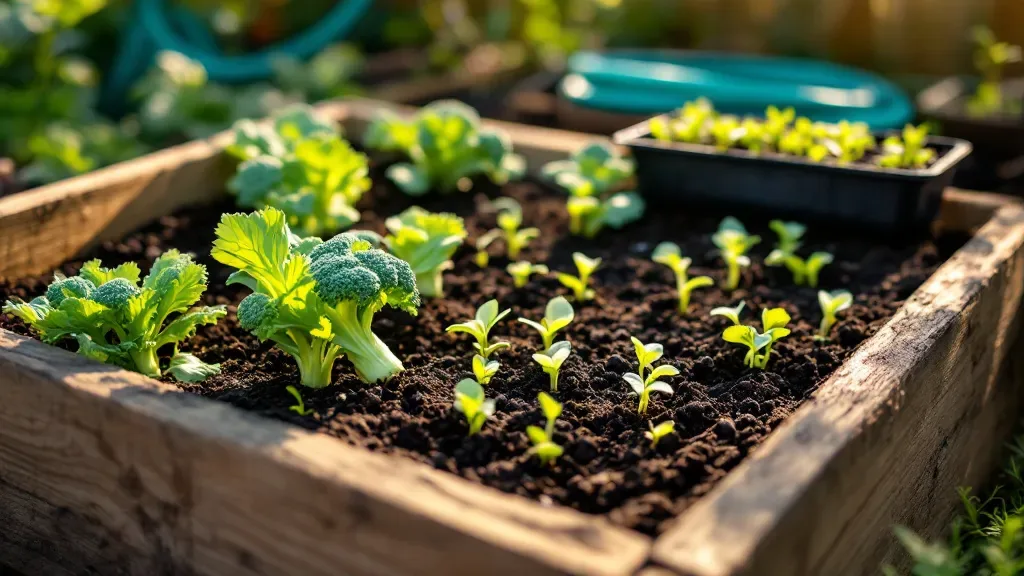
You want one calendar that tells you what to sow and plant each month. A vegetable planting calendar by month only works when it counts from your own frost dates, so you pick the last spring frost first and count weeks outward from it.
Published
Step 1: Pick the two frost dates that run your calendar
A calendar made of months fails because the same month means different weather in different towns. Frost dates fix that. The last spring frost is the one that matters most, and the first fall frost closes the season.
Use the average last frost for the weather station nearest you. A University of New Hampshire Extension fact sheet puts the rule bluntly. The sheet says not to seed or transplant frost-sensitive plants before that date.
Write both dates at the top of a blank page. The rest of this article uses two made-up dates so you can see the sums. The last spring frost is April 15 and the first fall frost is October 15.
| Step | What you do | What you end up with |
|---|---|---|
| 1 | Find your last spring and first fall frost | Two dates at the top of the page |
| 2 | Count each crop's weeks from the last frost | A start date and a set-out date per crop |
| 3 | Sort the dates under their months | One calendar, February to October |
| 4 | Count back from the first fall frost | Last dates for sowing summer and fall crops |
Step 2: Count each crop's weeks from the last frost
Extension services publish crop timing as weeks, because weeks hold up from year to year. The New Hampshire sheet lists them crop by crop. Broccoli takes 4 to 6 weeks from seed to transplant and is safe to set out 2 to 4 weeks before the last frost. Tomato takes 6 to 8 weeks and goes out 1 to 2 weeks after the last frost. Pepper takes 8 to 10 weeks and goes out 2 weeks after. Radish is seeded straight into the garden 2 to 4 weeks before the last frost. Bean is seeded after it.
With a last frost of April 15, those weeks become dates.
| Crop | Start seeds indoors | Set out or sow outside |
|---|---|---|
| Broccoli | February 4 to March 4 | March 18 to April 1 |
| Radish | Sow outside, no indoor start | March 18 to April 1 |
| Tomato | February 25 to March 18 | April 22 to April 29 |
| Pepper | February 18 to March 4 | April 29 |
| Bush bean | Sow outside, no indoor start | April 15 or later |
Here is the sum for broccoli. The set-out window runs from 4 weeks before April 15 (March 18) to 2 weeks before (April 1). Seeds start 4 to 6 weeks ahead of the set-out date, so the earliest start is 6 weeks before March 18 (February 4) and the latest is 4 weeks before April 1 (March 4).
Broccoli gets a shorter lead in a University of Illinois Extension article, 4 to 6 weeks before the average last frost. Two good sources can differ by a few weeks. Pick the middle of the range, and adjust after your first season.
A planting date is a count of weeks from a frost, and the month is just where that count lands.
The master chart in The Winter Plan lists 41 crops with their indoor, transplant and sow weeks counted from your own last-frost date, so you only fill in that one date.
Step 3: Lay out your vegetable planting calendar month by month
Now sort the dates under their months. This is the calendar most people go looking for, and you can write it in an evening.
| Month | What goes in (last frost April 15) |
|---|---|
| February | Broccoli seeds from February 4, pepper seeds from February 18, tomato seeds from February 25 |
| March | Last broccoli and pepper seeds by March 4, last tomato seeds by March 18. Broccoli and radish go outside from March 18 |
| April | Broccoli and radish outside until April 1. Beans from April 15. Tomatoes April 22 to 29, peppers April 29 |
| June | Fall broccoli seeds indoors from June 1 |
| July | Fall broccoli seeds until July 19. Fall transplants from July 27 |
| August | Broccoli out until August 16. Last bush beans August 16. Fall radish from August 16 |
| September | Fall radish until September 10. Spinach September 5 to 20 |
| October | First frost on October 15 |
May is empty on purpose. Spring planting is done and fall planting has not started. Use the gap for the garden itself, such as weeding, watering and harvesting.
Why one month's calendar fits only one frost date
Take a second gardener whose last spring frost is May 15, one month later. Every spring date moves by the same 30 days, and the months change with it.
| Job | Last frost April 15 | Last frost May 15 |
|---|---|---|
| Broccoli seeds start | February 4 | March 6 |
| Tomato seeds start | February 25 | March 27 |
| Broccoli set out | March 18 | April 17 |
| Tomatoes set out | April 22 | May 22 |
Each of the four jobs lands in the next month, and the two calendars share almost no dates. A printed calendar with fixed months can serve only one of these gardeners.
Step 4: Count back from your first fall frost
Fall dates run the other way. You start from the first fall frost and subtract the days a crop needs.
A Kansas State University Extension guide lists days to first harvest. Broccoli needs 60 to 80 days after transplanting, bush beans 50 to 60 days, fall radish 35 to 60 days, and spinach 25 to 40 days. The guide also says to allow 4 to 8 weeks indoors for broccoli seedlings, and that all of its windows are approximate.
With a first frost of October 15, subtract those days.
| Crop | Days to first harvest | Latest date to plant |
|---|---|---|
| Broccoli transplants | 60 to 80 | July 27 to August 16 |
| Bush beans | 50 to 60 | August 16 to August 26 |
| Fall radish | 35 to 60 | August 16 to September 10 |
| Spinach | 25 to 40 | September 5 to September 20 |
Treat the later date as a last call, and plant earlier when you can. Kansas State lists bush beans as tender, so a bean sown on the last date has no days to spare before frost.
The same sum answers the July question. Broccoli transplants and bush beans both fit in July with an October 15 frost. A tomato set out on July 1 has 106 days before frost, which suits an early variety only, because Kansas State lists 52 to 120 days from transplant to first harvest.
Seed timing for warm-season crops follows the same count. A University of Georgia article advises, in general, to sow seeds six to eight weeks before transplanting. Its example is a last frost of April 15 and tomato seeds in late February or early March, which matches the table above.
Repeat sowings for a steady harvest
Some crops give their harvest all at once. The New Hampshire fact sheet marks broccoli, bean, corn, lettuce and basil as having a short harvest season, which you can prolong with several smaller sequence plantings. A Virginia Cooperative Extension publication says successive plantings of beans give a longer harvest period and increase your yield.
On the calendar, a repeat sowing is one more row of dates. The sources give no single gap, so the gap is your choice. Take bush beans and a three-week gap. The first sowing goes in on the April 15 last frost, and the last one must be on or before the August 16 limit from Step 4.
| Sowing | Date (3-week gap) |
|---|---|
| 1 | April 15 |
| 2 | May 6 |
| 3 | May 27 |
| 4 | June 17 |
| 5 | July 8 |
| 6 | July 29 |
A seventh sowing would land on August 19, three days past the limit, so six sowings is the most that fit. Write each date under its month, and each bean row has its own harvest window.
A calendar will not fit every microclimate
If your state extension office publishes a planting calendar for your county, use it first. It was written by people who know your soil, and it costs nothing.
A month-by-month list also does not suit a year-round garden in a mild climate, where frost is not what sets your dates. Ask your county extension office for its sowing dates instead.
The Winter Plan is a fit when you want the weeks counted for you and a place to write the dates down. You would use its master chart when you pick crops in winter, its succession waves page when you plan repeat sowings, and the season calendar's day boxes as each month comes round. You still choose the crops and pencil in the dates yourself.
FAQ
What is the best month to start planting vegetables?
It depends on your last spring frost, not on the month. Hardy crops such as broccoli go out 2 to 4 weeks before that date, and indoor seeds start 4 to 10 weeks before it. With a last frost of April 15, the first seeds go in on February 4 and the first transplants go out on March 18.
Are there any vegetables that can be planted in July?
Yes. Count back from your first fall frost. With a first frost of October 15, broccoli transplants fit from July 27 to August 16, using the 60 to 80 days to first harvest that Kansas State lists. Bush beans at 50 to 60 days can still go in until about August 16.
Is July 1 too late to plant tomatoes?
With a first frost of October 15, July 1 leaves 106 days. Kansas State lists 52 to 120 days from transplant to first harvest for tomatoes, so an early variety fits and a late one does not. Check the days to maturity on your seed packet against your own frost date.
Conclusion
Two frost dates and a list of weeks are all a vegetable planting calendar needs. Write your last spring frost and your first fall frost at the top of a page, count each crop's weeks from them, and put the results under the right months. Check the dates against your own yard each spring, and move them by a week or two when the weather asks you to.
Sources
- University of New Hampshire Extension, Growing Vegetables: When to Plant Your Vegetable Garden (undated), last checked October 5, 2026
- Kansas State University Research and Extension, Vegetable Garden Planting Guide, MF315 (2023), last checked October 5, 2026
- Virginia Cooperative Extension, Virginia Tech, Planning the Vegetable Garden, 426-312 (2025), last checked October 5, 2026
- University of Illinois Extension, When should I start my seeds? (2023), last checked October 5, 2026
- University of Georgia College of Agricultural and Environmental Sciences, Starting your spring vegetable garden from seed (undated), last checked October 5, 2026