Vegetable Planting Calendar by Zip Code: 3 Steps
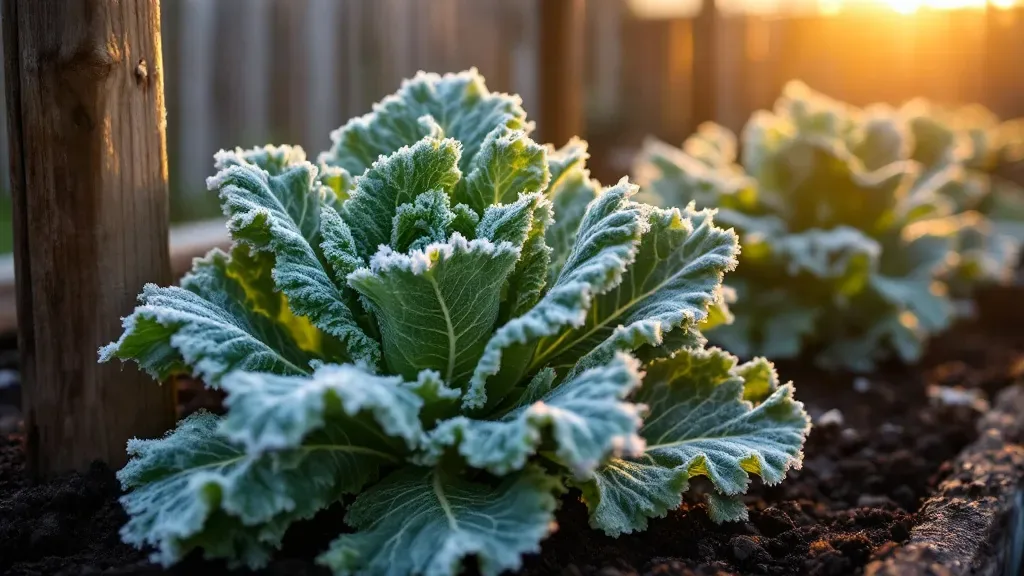
You know your zip code, and you want to know what to plant this month. A vegetable planting calendar by zip code starts with the frost dates of the weather station nearest you, because every sowing week is counted from those two dates.
Published
Step 1: Find the frost dates for your zip code
Your zip code points to a place, and a place has a nearest weather station. That station holds the two dates you need, the average last freeze in spring and the average first freeze in fall.
Do not use your hardiness zone for this. The USDA Plant Hardiness Zone Map is based on the average coldest winter temperature, and each zone is a 10-degree F band split into 5-degree half zones. A zone tells you which perennials survive winter. It does not tell you when to sow beans.
For frost dates, look for a table built on NOAA's 1991 to 2020 climate normals. The University of Maryland Extension publishes one for its state, derived from those normals. Its example for Frederick shows a 90 percent chance of 32 degrees F on March 29 and a 10 percent chance on April 19.
Read those percentages as risk. Purdue's frost map says there is a 10 percent chance that the last 32 degree freeze falls after its spring date, and about two weeks earlier that chance rises to 50 percent. So the 50 percent date is a coin flip, and the 10 percent date is the safer one. Many calendars treat the 50 percent date as the average last frost.
To look up your own place, the Maryland page points to two free lookups. Purdue's freeze date tool gives an average last freeze when you pick your county on a map, and a zip code frost-date lookup gives a personalized chart. Either way, you end up with the same two numbers.
- Enter your zip code in a lookup, or find the nearest town in your state extension's table.
- Copy the 50 percent date for the last spring freeze and the 50 percent date for the first fall freeze, both at 32 degrees F.
- Write both dates at the top of a blank page.
A planting date is a bet on the weather, and a good calendar tells you the odds.
Step 2: Turn one frost date into a vegetable planting calendar by zip code
Once you have the 50 percent last spring frost, every spring sowing date is a count of weeks from it. A 2020 Purdue Extension calendar for Indiana groups vegetables this way. Hardy crops such as broccoli, kale, peas and spinach go in 4 to 6 weeks before the last spring frost. Semi-hardy crops such as lettuce, carrots and beets go in 2 to 4 weeks before it. Tomato and bean go in after the average last frost. Cucumber, pepper, squash and melon wait at least two weeks after it.
For fall, count back from the first fall frost. The same Purdue sheet puts cool-season crops such as beets, kale, lettuce and spinach in at least 4 to 8 weeks before the first fall frost. It adds that you should consider each crop's days to maturity and choose faster varieties when you can.
Try it with an example last frost of May 1 and a first fall frost of October 15. Both dates are made up to show the sum.
| Step | Crop group | Rule | Your dates |
|---|---|---|---|
| Spring | Hardy (broccoli, kale, peas, spinach) | 4 to 6 weeks before last frost | March 20 to April 3 |
| Spring | Semi-hardy (lettuce, carrots, beets) | 2 to 4 weeks before last frost | April 3 to April 17 |
| Spring | Tender (tomato, bean) | After last frost | May 1 or later |
| Spring | Very tender (cucumber, pepper, squash) | 2 or more weeks after last frost | May 15 or later |
| Fall | Cool-season (beets, kale, lettuce, spinach) | At least 4 to 8 weeks before first frost | August 20 to September 17 |
Seeds you start indoors get their own count. A University of New Hampshire Extension fact sheet lists the weeks from sowing to transplant and the safe set-out time for each crop. Add the two and you have the sowing week. Tomato takes 6 to 8 weeks and goes out 1 to 2 weeks after the last frost, so the seeds go in 4 to 7 weeks before it.
| Crop | Weeks from seed to transplant | Safe to set out | Sow indoors |
|---|---|---|---|
| Broccoli | 4 to 6 | 2 to 4 weeks before last frost | 6 to 10 weeks before |
| Cabbage | 4 to 6 | 4 weeks before last frost | 8 to 10 weeks before |
| Tomato | 6 to 8 | 1 to 2 weeks after last frost | 4 to 7 weeks before |
| Pepper | 8 to 10 | 2 weeks after last frost | 6 to 8 weeks before |
| Eggplant | 8 to 10 | 2 to 3 weeks after last frost | 5 to 8 weeks before |
| Onion | 8 to 10 | 4 weeks before last frost | 12 to 14 weeks before |
The last column is our sum of the first two. Radish, bean and pea go straight into the ground, so they have no indoor count.
The countback charts in The Winter Plan do this same sum for 24 cool-season and 15 warm-season crops, so you can fill in your own date instead of doing it by hand.
Step 3: Adjust your calendar for your yard and your state
A calendar built from a station is a starting point. Your yard can run warmer or colder.
The Maryland page says the likelihood of frost varies between landscapes in the same town or even neighborhood, because of wind, elevation, nearby buildings and water. The USDA names the same effect. Blacktop and concrete make small heat islands, and hills and valleys make cool spots called frost pockets. Purdue's sheet says planting dates differ from one location to another for these reasons.
Distance matters too, and it can be large. A Utah State University Extension sheet for Washington County lists the average last frost for nine towns in one county. Saint George shows March 30, and Enterprise shows May 23. That gap is 54 days, or just under eight weeks. The growing season runs 216 days in Saint George and 132 days in Enterprise. A county calendar would be wrong for both towns.
| Town in Washington County, Utah | Average last frost | Average first frost | Growing days |
|---|---|---|---|
| Saint George | March 30 | November 1 | 216 |
| Hurricane | April 6 | October 30 | 207 |
| Veyo | April 27 | October 24 | 180 |
| Enterprise | May 23 | October 2 | 132 |
Your state matters as well. A Kansas State University guide says all planting windows are approximate and may need to move earlier or later with the weather, the variety and your location in the state.
Here is how to tune the result.
- Mark your first and last frost in a notebook each year. After two or three seasons, your own dates beat any table.
- Plant tender crops after the date, not on it. A 50 percent date means frost can still come the next week.
- Check the forecast the week you plant. The Maryland page advises watching weather reports after planting outdoors early in the season.
Zone 9a or 9b: what the letter changes
The letter marks a 5-degree F step in winter cold. The USDA says 7a and 7b, for example, are the colder and warmer halves of zone 7. So 8b is warmer than 8a, and 9a is colder than 9b.
The letter helps you pick perennials. It tells you nothing about sowing weeks, so go back to the station dates in Step 1.
When this method is the wrong tool
If your state extension office already publishes a calendar for your county, use it. Indiana, Kansas and Utah each do, and a local calendar written by people who know your soil will often fit better than a general method. A free table plus a pencil is all you need when you are happy to do the weeks yourself.
The printable kit does not look up your zip code for you. You pick the closest of its 108 stations, or you write in your own date, and if no station is near you, take the date from your county extension office. The method also needs a real frost season. If freezes are rare where you live, ask your county extension office, because frost dates will not drive your calendar.
The Winter Plan earns its place when you want the counting done on paper. You fill in the frost anchors page in winter, the spring week list from week minus 14 to week plus 3 as the weeks come round, and the fall countdown from F minus 19 to F plus 2 in late summer. Notes for next winter close the file.
FAQ
Where can I find a vegetable planting calendar?
Look for your state extension service. Indiana, Kansas and Utah extension offices each publish planting dates, and Maryland publishes frost dates. If your state's calendar is too broad, take the frost dates for your nearest weather station and count the sowing weeks yourself.
Which is warmer, zone 8a or 8b?
Zone 8b is the warmer half. The USDA divides each zone into 5-degree F half zones, with 'a' the colder half and 'b' the warmer half. The measure is the average coldest winter temperature.
Is zone 9a hotter than 9b?
No. Zone 9a is the colder half of zone 9. The zones rank winter lows, so the letter says nothing about summer heat or about your frost dates.
Conclusion
You do not need a calendar made for your zip code. You need two dates, the last spring frost and the first fall frost, and a few counting rules. Find them for the station nearest you, count outward in weeks, and shift the result by a few days for your own yard. Write the dates where you will see them every week.
Sources
- USDA Agricultural Research Service, How to Use the Maps, USDA Plant Hardiness Zone Map (2023), last checked October 5, 2026
- University of Maryland Extension, Spring Frost or Freeze Dates in Maryland (2024), last checked October 5, 2026
- University of New Hampshire Extension, Growing Vegetables: When to Plant Your Vegetable Garden (undated), last checked October 5, 2026
- Purdue University Department of Horticulture and Landscape Architecture, Indiana Vegetable Planting Calendar, HO-186-W (2020), last checked October 5, 2026
- Utah State University Extension, Washington County, Planting Dates (Spring) (undated), last checked October 5, 2026
- Kansas State University Research and Extension, Vegetable Garden Planting Guide, MF315 (2023), last checked October 5, 2026