Veggie Garden Planner: Crops, Yield and a Layout
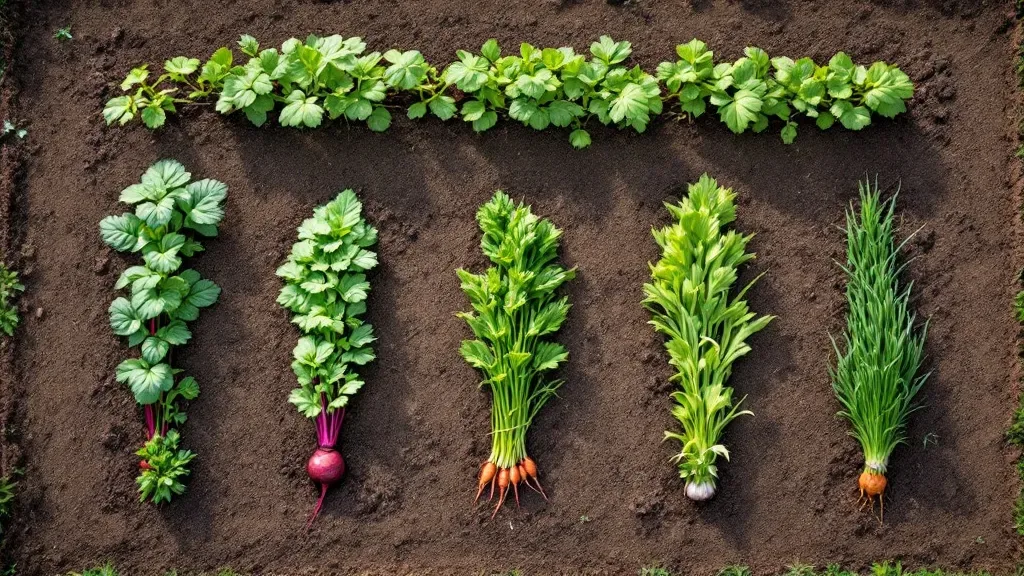
You have a patch of yard and more seed packets than space. A veggie garden planner is a one-page plan that picks your crops, sizes each row and puts every row on a map, and a first one can fit in 100 square feet.
Published
Start small: what a veggie garden planner decides first
A first plan has three jobs. It sets the size of the plot, picks the crops and puts each crop in a row.
Size comes first. A University of Delaware Cooperative Extension fact sheet says a small garden is best for beginners. It adds that most vegetables need 6 to 8 hours of sun, so pick the sunniest spot you have.
A Kansas State University planting guide says even a 100-square-foot garden can produce a good portion of the vegetables for a family of four. That is a plot 10 feet by 10 feet. You can mark it out in one afternoon.
A small garden you keep up beats a big garden you abandon in July.
Ask yourself how much time you really have. Master Gardeners at Washington State University Extension suggest asking what you want from the garden and how much dedication you can honestly give it. Write the answer at the top of your plan.
Pick crops by effort: sow in the ground, or start plants first
Effort in a vegetable garden mostly comes from how a crop starts. Some crops go straight into the soil as seed. Others need transplants you buy or start indoors.
The table uses the Kansas State planting guide for the planting method and days to first harvest. The last column shows whether the Delaware fact sheet lists the crop as easy to grow.
| Crop | Planted as | Days to first harvest | Delaware's easy list |
|---|---|---|---|
| Radishes, spring | Seed in the ground | 25 to 40 | Not listed |
| Summer squash | Seed in the ground | 45 to 55 | Yes |
| Leaf lettuce | Seed or transplant | 45 to 65 | Yes |
| Bush beans | Seed in the ground | 50 to 60 | Yes |
| Beets | Seed in the ground | 50 to 65 | Yes |
| Carrots | Seed in the ground | 54 to 80 | Yes |
| Tomatoes | Transplants | Allow 4 to 8 weeks to start indoors | Yes |
Beans are worth a note. The Washington State author says beans do best grown from seed, while most other crops are easier to buy as starts. A new garden that begins with starts skips the hardest part, which is getting seeds to come up.
Fast crops also help your confidence. Radishes can be ready in 25 days at the low end, and bush beans in 50.
Pick crops by yield: pounds per row and pounds per person
Yield tells you how much row each crop needs. The guide lists the average crop expected from 10 feet of row and the planting that suits one person. Multiply the two and you get a figure for one eater.
Bush beans are the example. The guide expects 12 pounds from 10 feet and suggests 15 to 16 feet per person. That is 1.5 to 1.6 rows of 10 feet, so 12 times 1.5 is 18 pounds and 12 times 1.6 is 19.2. One person's beans can weigh about 18 to 19 pounds.
| Crop | Pounds per 10 feet | Kansas State planting per person | Pounds per person (our sum) |
|---|---|---|---|
| Bush beans | 12 | 15 to 16 feet | 18 to 19.2 |
| Beets | 15 | 5 to 10 feet | 7.5 to 15 |
| Carrots | 10 | 5 to 10 feet | 5 to 10 |
| Kale and collards | 10 | 5 to 10 feet | 5 to 10 |
| Leaf lettuce | 5 | 10 feet | 5 |
The sums use the guide's averages. Your soil, weather and variety will move them up or down.
To size the rows for your household, multiply each per-person range by the number of eaters. For three people that gives 45 to 48 feet of bush beans (15 to 16 times 3), 15 to 30 feet of beets (5 to 10 times 3), 30 feet of leaf lettuce, and 9 to 15 tomato plants (3 to 5 times 3). Round down in year one, because the Washington State author found eight garlic cloves covered about six more than most households need.
Group crops by sun and water
A Virginia Cooperative Extension publication sorts crops by light. Beans, broccoli, cucumbers, eggplant, peppers, squash and tomatoes want 8 hours of direct sun. Beets, carrots, chard, kale, lettuce, radishes, spinach and turnips tolerate partial shade, with 6 hours. Put the 8-hour crops in your brightest ground and the 6-hour crops wherever a fence or tree shades the plot for part of the day.
Water is simpler. The same publication gives one rule for vegetables, 1 inch a week, and up to 2 inches for sandy soil, rainfall included. It sets no separate water classes, so group by sun and place the plot near a hose or spigot. A Texas A&M AgriLife publication adds that you can group crops by maturity, which makes it easier to replant after you pull an early crop such as lettuce or beets.
A starter layout: five 10-foot rows in 100 square feet
The layout below puts five crops in a 10 by 10 foot plot. Rows run east to west, and the tall crop sits on the north side. The Delaware fact sheet gives that rule for east to west rows, so tomatoes do not shade the shorter plants.
Row spacing comes from the Kansas State guide, using the low end of each range. Tomatoes and bush beans need 36 inches between rows, beets and carrots 18, and spring radishes 12. The sum is 36 + 36 + 18 + 18 + 12 = 120 inches, which is exactly 10 feet.
At the Kansas State averages the five rows give 10 + 12 + 15 + 10 = 47 pounds of tomatoes, beans, beets and carrots, plus 10 bunches of radishes. Treat that as a ceiling for a good year, not a promise.
Washington State's novice gardeners add a warning about timing. Their advice is to resist planting on the first sunny day, because plants set into cold soil just shiver and sit.
Spread the harvest from spring to fall
Delaware's fact sheet says a well-planned garden provides a continuous supply of vegetables from early spring to late fall, and that spinach planted in fall lives over winter and can be picked in early spring. Virginia's publication says to make a spring, summer and fall plan, and that successive plantings of beans give a longer harvest and increase yield.
In the starter layout, the radish row is the early crop and the tomato row is the late one. Radishes come in at 25 to 40 days, bush beans at 50 to 60, and tomato transplants keep going after that. Add a second bean sowing later, as Virginia suggests, and the plot keeps giving from spring into fall.
Mistakes that wreck a first veggie garden plan
Most first plans fail in three ways. The garden is too big, the planting is too early, or too much of one crop goes in.
The Washington State novice guide has an example of the third. The authors bought eight garlic cloves and found that was about six more than most households need. Count the people you feed before you buy seed.
Animals are the fourth. The same guide asks whether your space is protected from deer and rabbits. Put the fence on your plan before you draw the rows.
Mid-season, you can still fix a layout mistake. A Kansas State problem table lists these fixes.
| Symptom | Cause | Fix |
|---|---|---|
| Plants tall, spindly and unproductive | Excessive shade | Relocate to a sunny area and keep weeds down |
| Blossom drop | Hot, dry periods | Use mulch and water |
| Blossom drop | Low night temperatures | Avoid planting too early in spring |
| Stunted, sickly, purplish plants | Low temperature | Plant at the proper time |
| Dry brown blemish on the blossom end of a tomato | Blossom end rot | Keep soil moisture uniform, avoid overwatering and excess nitrogen |
Texas A&M also says that making a garden too large is one of the most common first-timer mistakes, because a garden that large is too much work. Start with the 100 square feet.
Dates are the part that most plans leave blank. A map shows where each row goes, but you also need the week to sow it. The Winter Plan in The Garden Year bundle counts those weeks from your own last-frost date, and you would fill in its grow list in winter and its bed plans when you draw the rows.
When this plan is the wrong fit
A 10 by 10 plot is a starting point, not the answer for everyone. If you want to feed a family of four through the winter, you will need more than one plan of this size and a way to store and preserve the harvest.
You may also not need to buy anything. If your state extension office already publishes a planting guide for your county, a sheet of graph paper and that guide can carry the layout above at no cost. The two fact sheets cited here are free to read.
Printable kits suit a gardener who wants to write on paper and keep a binder. The Season Record kit in the bundle gives you a planting log, a harvest tally and a yield-against-plan page to fill in as each row is sown and picked. If you plan on a phone and want reminders, an app is a better match.
FAQ
How to plan your vegetable garden layout for beginners?
Start with a small plot in a spot that gets 6 to 8 hours of sun. Run the rows east to west and put tall crops, such as tomatoes, on the north side so they do not shade short ones. Space the rows by the crop, for example 36 inches for bush beans and 18 inches for beets, then write a sowing date on every row.
What are some common mistakes to avoid in garden plans?
Planning a garden bigger than you have time to tend, planting too early while the soil is cold, and buying more of one crop than a household needs. A plan that names every row, its spacing and its date avoids all three.
Conclusion
Start with five rows in 100 square feet and pick crops you will actually eat. Sow the fast ones first, write the row spacing on the map, and leave the rest of the yard alone this year. Next winter you will know which rows earned their space, and the second plan will be easier than the first.
Sources
- Kansas State University Research and Extension, Vegetable Garden Planting Guide, MF315 (2023), last checked October 5, 2026
- University of Delaware Cooperative Extension, Consider a Vegetable Garden (2025), last checked October 5, 2026
- Virginia Cooperative Extension, Virginia Tech, Planning the Vegetable Garden, 426-312 (2025), last checked October 5, 2026
- Texas A&M AgriLife Extension, Easy Gardening: Planning a Garden E-289 (2011), last checked October 5, 2026
- Washington State University Extension (Skagit County Master Gardeners), Help for the Vegetable Garden Novice (2024), last checked October 5, 2026