Victory Garden Planner: History and Family Plan
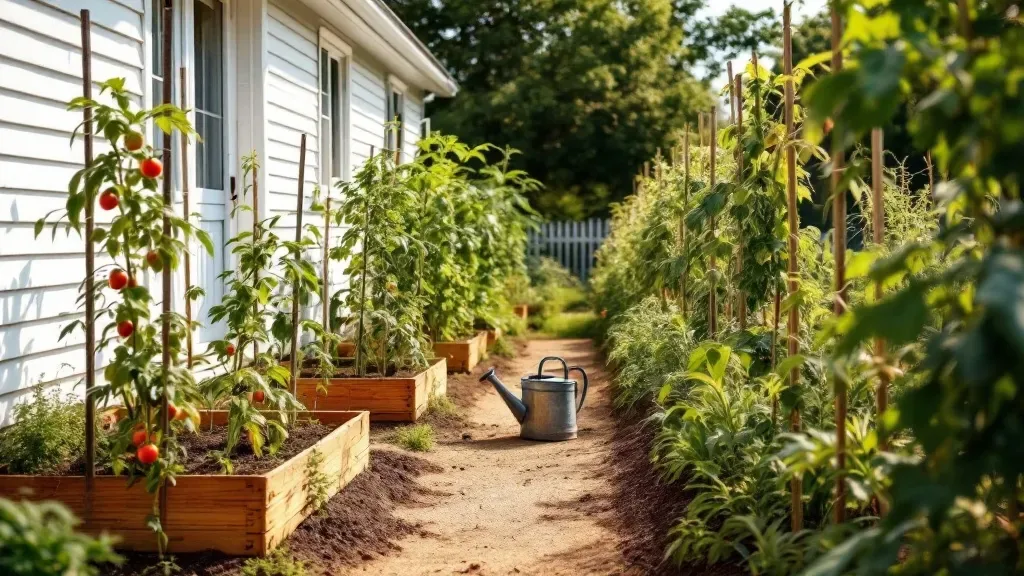
You want to plant a victory garden and you are not sure how big it should be. A victory garden planner is a drawn plan for growing vegetables at home, sized to the people you feed, in the way Americans did in two world wars.
Published
Victory garden history in brief
Victory gardens began in World War I. The Smithsonian Libraries and Archives says they were first called war gardens or liberty gardens, and that Charles Lathrop Pack, head of the National War Garden Commission, coined the term "victory garden" as the war was nearing its end.
In World War II the idea came back, much bigger. The National WWII Museum says Americans tended more than 20 million gardens between 1942 and 1945, in cities, on farms and even in Alaska. The museum cites USDA data that 42 percent of all produce grown in 1943 came from victory gardens.
The figures are worth reading closely. The same museum article says the 1943 harvest was 10 billion pounds of produce. It adds that by 1944 more than half of the Americans who planted gardens told the USDA they did so out of economic need.
Smithsonian Libraries and Archives describes the School Garden Army, where 2.5 million children were enrolled in 1919, producing food valued at 48 million dollars at the time.
A garden that feeds a household starts with the household, not with the yard.
What the wartime plots got right
The wartime gardens used small, ordinary spaces. The Smithsonian says millions of Americans turned front yards, backyards, schoolyards and vacant lots into vegetable gardens.
The museum lists the crops that filled them: tomatoes, wax beans, green onions, carrots, beets, celery, peas, cabbages and radishes. Rationing in May 1942 and climbing food prices pushed gardeners to look at their lawns as a way to save money, and families learned canning and preservation techniques.
Three habits carry over to a plan today. Grow what the household actually eats, use the space you have, and keep what you pick instead of letting it spoil.
Six steps from an empty yard to a drawn plan
A Virginia Cooperative Extension publication on planning a vegetable garden gives the order. Here it is as steps.
- Ask how much time you can give. Once planted, the garden needs weeding weekly, water in droughts and picking when ripe.
- Ask what your family eats and how much you will can, freeze, dry or store.
- Pick a level, well-drained site with at least 6 hours of sun, 8 to 10 ideally, near water.
- Count the mouths and use the per-person amounts below.
- Draw a map on paper with crop spacing, tall crops on the north side, and a spring, summer and fall plan.
- Plan the garden and order seed by January or February.
Build a victory garden planner for a family of four
A Texas A&M AgriLife Extension publication has an amounts-per-person table. The amount to plant depends on family size, expected production and whether you plan any freezing or canning, and it warns that over-planting is wasteful and takes too much work.
The table below takes nine vegetables from that publication and multiplies each per-person amount by four. Row crops are in feet of row. Tomatoes and peppers are plants, and squash and cucumbers are hills.
| Vegetable | Per person, fresh | Family of four, fresh | Family of four, preserving |
|---|---|---|---|
| Tomato | 3 plants | 12 plants | 20 plants |
| Pepper | 3 plants | 12 plants | 20 plants |
| Bush green bean | 15 feet | 60 feet | 80 feet |
| Carrot | 10 feet | 40 feet | 60 feet |
| Leaf lettuce | 10 feet | 40 feet | not listed |
| Beet | 10 feet | 40 feet | 80 feet |
| Radish | 5 feet | 20 feet | not listed |
| Summer squash | 2 hills | 8 hills | 12 hills |
| Cucumber | 2 hills | 8 hills | 20 hills |
The row crops add up to 200 feet of row for fresh eating: 60 feet of beans, 40 of carrots, 40 of lettuce, 40 of beets and 20 of radishes (60 + 40 + 40 + 40 + 20). That is the number to plan around.
Turn 200 feet of row into beds
Texas A&M says most vegetables need at least 3 feet of space between rows. At 3 feet a row, 200 feet of row takes 600 square feet (200 x 3).
Blocks shrink that. Colorado State University Extension says block-style layouts increase yields fivefold compared to row-style gardens, and its example fits a 24 foot row of carrots into a bed 3 feet by 2 feet, which is 6 square feet. That is 4 feet of row per square foot of bed.
| Layout | Space for 200 feet of row crops | How it is worked out |
|---|---|---|
| Single rows 3 feet apart | 600 square feet | 200 feet x 3 feet |
| Blocks at the carrot ratio | About 50 square feet | 200 feet / 4 feet per square foot |
| Two 4 by 8 foot beds | 64 square feet | 2 x (4 x 8) |
Apply the same ratio to your 200 feet and you get about 50 square feet (200 / 4). Treat that as a floor, because the ratio comes from a carrot example and your tomatoes and squash need more room than carrots do.
Colorado State says a bed four feet wide is ideal for most vegetable crops, and to design walkways 18 to 24 inches wide. A 4 by 8 foot bed holds 32 square feet (4 x 8), so two such beds cover the 50 square feet of row crops with room left over.
Size down when space is tight
Texas A&M lists vegetables for a small garden: bush beans, chard, onions, radishes, tomatoes, turnips, lettuce, squash, eggplant, beets, broccoli, carrots and peppers. It says cucumbers and cantaloupes can be grown in small gardens by trellising them on a fence or another structure.
Texas A&M also advises grouping tall vegetables such as okra, corn and tomatoes on the north side of the garden, where they will not shade shorter crops like bush beans. Put the tomatoes at the back of your drawing and the beans in front.
Which crops return the most food for the space
Virginia Tech lists 15 vegetables of top economic value, ranked on pounds per square foot, retail value and time in the garden. They are beans, beets, broccoli, carrots, cucumbers, edible pod peas, green onions, head lettuce, leaf lettuce, storage onions and shallots, peppers, summer squash, Swiss chard, tomatoes and turnips. The list gives no per-crop weights, and neither it nor the Kansas State guide ranks crops by calories.
For pounds, the Kansas State guide gives the average crop from 10 feet of row and the space between rows. Divide the pounds by the row area, 10 feet times the low end of the row spacing.
| Crop | Pounds per 10-foot row | Row area | Pounds per square foot |
|---|---|---|---|
| Beets | 15 | 10 ft x 1.5 ft = 15 sq ft | 1.00 |
| Carrots | 10 | 15 sq ft | 0.67 |
| Cabbage | 15 | 10 ft x 3 ft = 30 sq ft | 0.50 |
| Bush beans | 12 | 30 sq ft | 0.40 |
| Summer squash | 15 | 10 ft x 4 ft = 40 sq ft | 0.38 |
| Tomatoes | 10 | 30 sq ft | 0.33 |
Root crops win per square foot. Tomatoes score lowest here, yet they keep bearing for months and the sum counts only one row. Treat the table as row-based averages for Kansas, not a promise.
Plan the preserving
Virginia's first planning question is how much produce you want to can, freeze, dry or store. A University of Delaware fact sheet says family garden size depends on the number in the family, the time you have and the amount of canning, freezing and storing you do. It adds that vegetables picked over seven or eight months cut the preserving you must do.
The Texas A&M table shows the cost. Beans, carrots and beets take 60 + 40 + 40 = 140 feet for fresh eating and 80 + 60 + 80 = 220 feet for preserving, 80 feet more. Tomatoes go from 12 plants to 20. Sources here do not cover canning or storage methods, so check an extension canning guide before you fill jars.
Mistakes in a family plan, and fixes mid-season
Texas A&M calls a garden that is too large one of the most common mistakes of enthusiastic first-time gardeners, and warns that over-planting is wasteful. Washington State Master Gardeners add that plants set into cold soil on the first sunny day just shiver and sit. A Kansas State problem table lists fixes you can make mid-season.
| Symptom | Cause | Fix |
|---|---|---|
| Plants tall, spindly and unproductive | Excessive shade | Relocate to a sunny area and keep weeds down |
| Blossom drop | Hot, dry periods | Use mulch and water |
| Blossom end rot on tomato | Uneven soil moisture | Keep moisture uniform, avoid overwatering and excess nitrogen |
Keep a record, and when a printed planner is the wrong pick
A victory garden planner on paper only works if you write on it. Note the dates you planted and what you picked, so next year's amounts come from your table and not from a guess.
Some gardeners do not need a bought planner. If your county extension office already publishes a planting guide that fits your area, graph paper and the Texas A&M table above will carry you through a first year.
A printed set fits if you want dated plans and a place to record the harvest. The Garden Year bundle holds four kits. You would use the Winter Plan's grow list and seed order calculator in winter, and its bed plans at true scale, where 1 inch is 1 foot, when you draw the beds. During the season the Season Record's planting log goes with each sowing, the harvest tally with each picking week, and the preserving log with each batch. The yield-against-plan page closes the year, and the carry-forward page sets up the next one.
FAQ
Conclusion
Start from the number of mouths at your table, not from the size of your lawn. Pick the 9 vegetables your family eats most, multiply the extension per-person amounts by the people you feed, and draw 4 foot wide beds to hold them. Plant fewer feet than you think you need in year one, and write down what comes in so year two is bigger and better aimed.
Sources
- The National WWII Museum, Victory Gardens: Food for the Fight (2024), last checked October 5, 2026
- Smithsonian Libraries and Archives, Cultivating America's Gardens: Gardening for the Common Good (undated), last checked October 5, 2026
- Texas A&M AgriLife Extension, Easy Gardening: Planning a Garden E-289 (2011), last checked October 5, 2026
- Kansas State University Research and Extension, Vegetable Garden Planting Guide, MF315 (2023), last checked October 5, 2026
- Virginia Cooperative Extension, Virginia Tech, Planning the Vegetable Garden, 426-312 (2025), last checked October 5, 2026
- University of Delaware Cooperative Extension, Consider a Vegetable Garden (2025), last checked October 5, 2026
- Washington State University Extension (Skagit County Master Gardeners), Help for the Vegetable Garden Novice (2024), last checked October 5, 2026
- Colorado State University Extension, Block Style Layout in Raised Bed Vegetable Gardens (2023), last checked October 5, 2026