What to Plant in a Vertical Garden: Match Crop to Support
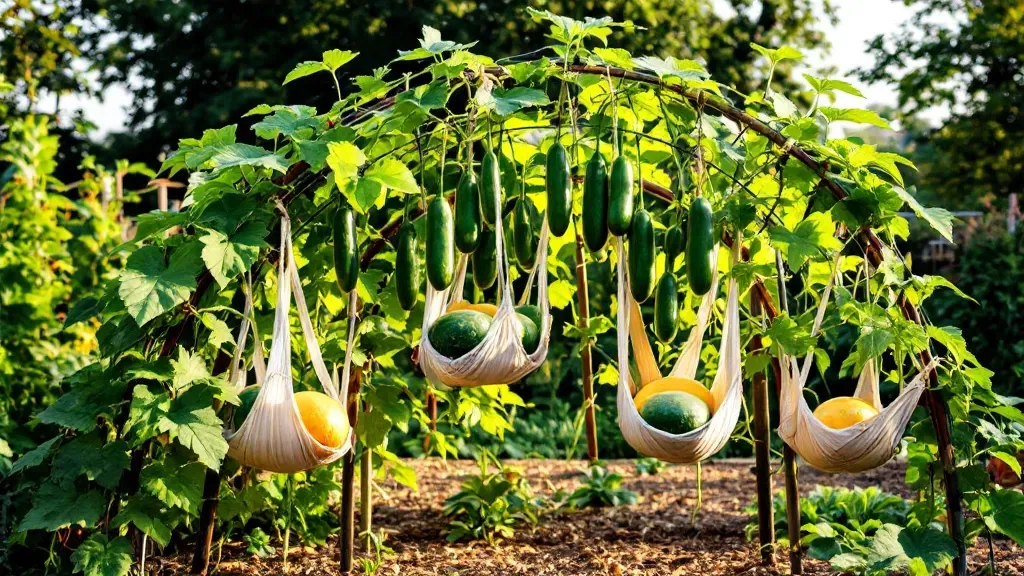
You want to grow up instead of out. What to plant in a vertical garden comes down to five vining crops, pole beans, peas, cucumbers, melons and tomatoes, and each one needs a support that matches the weight of its fruit.
Published
Step 1: Choose what to plant in a vertical garden by how it climbs
Start with the crops that already want to go up. Virginia Cooperative Extension says pole beans, peas, cucumbers, melons and tomatoes are excellent candidates, and that plants with long sprawling vines perform well on vertical supports.
University of Illinois Extension lists the same group and says peas and pole beans make tendrils and attach themselves to stakes. Tomatoes do not, so you tie them to their support as they grow.
You can also skip the build. South Dakota State University Extension says bush types of squash and a few cucumbers are quite productive and take up a lot less space.
| Step | What you decide | What the extension sources say |
|---|---|---|
| 1 | Which crops climb | Pole beans, peas, cucumbers, melons and tomatoes (Virginia Cooperative Extension) |
| 2 | How strong the support is | Light for cucumbers, a stake for tomatoes, a cage or sturdy trellis plus slings for melons |
| 3 | How tall the support is | 6-foot stakes for determinate tomatoes, 8-foot for indeterminate, driven 2 feet deep |
| 4 | Where the wall stands | Low sun-loving crops go on the south side of the tall ones |
Every climbing crop has a weight, and the support has to be chosen for the heaviest fruit it will carry.
Step 2: Match the support to the weight of the fruit
Cucumbers are the easy case. South Dakota State says they respond well to a trellis and, because they do not grow too large, do not need a real heavy support system. A light support is enough.
Heavier fruit needs more. Per Virginia Cooperative Extension, tomatoes and peppers can be tied singly to individual stakes. It says caging suits heavier crops, including melons and summer or winter squash, that may overburden a trellis or stake with the weight of the produce.
The same South Dakota State page adds that larger fruiting cucurbits such as squash or pumpkins will likely need extra support for the plants and even individual support for each fruit.
| Crop | How it holds on | Support that fits |
|---|---|---|
| Peas | Tendrils | Chicken wire, an old cattle panel or dead branches |
| Pole beans | Attach themselves to stakes | A stake or trellis that stands 6 feet or more above the soil |
| Cucumbers | Climb a trellis | A light trellis |
| Tomatoes | Tied by you | A stake or a cattle panel trellis |
| Peppers | Tied by you | A single stake each |
| Melons and winter squash | Heavy fruit | A cage or strong trellis, plus a sling for each fruit |
Step 3: Size the support, using stake math
A stake only helps the part that stands above the ground. In Virginia's guide, 6-foot stakes driven 2 feet deep are tall enough for determinate tomatoes, and 8-foot stakes suit indeterminate ones. Subtract the 2 feet that go into the soil: a 6-foot stake leaves 4 feet standing, and an 8-foot stake leaves 6 feet (8 − 2).
The 6 feet matters for beans. Pole beans, says South Dakota State, can easily grow 6 feet tall or more, depending on the variety. A 6-foot stake leaves only 4 feet standing, so a pole bean variety that tops out at 6 feet needs the 8-foot stake or a taller panel.
Wire panels work for several crops at once. A Clemson Cooperative Extension gardener makes each trellis from one 4 by 16 foot cattle fence panel, and cuts the middle 4 feet of wire out so that two 4 by 8 foot panels remain. Clemson grows pole beans and cucumbers on trellises across the walkways between beds.
Step 4: Put the tall wall where it shades nothing
A full trellis throws a long shadow. Small sun-loving crops such as bush beans, eggplant and peppers belong on the south side of taller crops, so they get full sun (Virginia Cooperative Extension). Put the climbing wall along the north edge of the bed and the low crops in front of it.
Getting plants up and off the ground gives better light and air, and South Dakota State says that reduces diseases such as powdery mildew and makes picking easier.
A paper map shows where the north edge is before you build. The Winter Plan has a yard and sun map on a dot grid, and bed plans at true scale where you can draw the trellis as a line along the back.
Herbs, greens, pockets and boxes: depth, sun, water and feed
Wall pockets and stacked boxes suit the small crops, not the vines. A Cornell Cooperative Extension container guide lists a minimum container depth for each crop. It was written for pots and boxes, so treat it as the best sourced guide for pockets too.
| Crop | Minimum container depth (Cornell) |
|---|---|
| Lettuce | 4 inches |
| Asian greens, radishes | 4 to 6 inches |
| Green beans | 6 inches |
| Peas | 6 to 12 inches |
| Basil, parsley, spinach, kale | 8 inches |
Leafy herbs and greens fit the shady, lower part of a wall. In the same guide, quick-growing small herbs, leafy greens and radishes can be planted around slower fruiting vegetables such as tomatoes. Virginia Cooperative Extension adds that lettuce may benefit from the cooler temperatures in the shade of a taller companion.
Sun sets how high on the wall each crop goes. Flowering crops such as tomatoes and beans need at least 6 hours of sun a day, per Cornell. Edible leaves such as lettuce, collards and kale need at least 4 hours, and edible roots such as beets and carrots need at least 3 hours.
Water and food need more attention than in a bed, because a small box holds little soil. Push a finger in, as Cornell advises. If the first inch or so is dry, water until it runs out of the drainage holes, and expect to water every day in summer heat. The guide adds that the nutrients in the mix at planting will not feed a container plant all season, so mix a soluble or liquid fertilizer to the label directions and add it once a week after the plant is established. Skip pure garden soil, which Cornell says compacts too quickly.
Four mistakes that cost a season
Four errors repeat in the sources above. Each has a quick fix.
- A light net under melons or winter squash. Move to a cage or strong trellis, and add a sling for each fruit.
- A 6-foot stake for a variety that grows 6 feet or more. Buy 8-foot stakes and drive them 2 feet deep.
- Peppers or bush beans on the north side of a wall. Move them to the south side.
- Tomatoes left to flop. Tie them to the support as they grow, because they do not attach themselves.
When going vertical is the wrong choice
Climbing crops are not always worth the build. If you have open ground, a bush variety of squash or cucumber needs no trellis and, per South Dakota State, can be quite productive. If you grow two pots on a balcony, a note on the fridge is a better plan than a printed one. Free extension sheets and the tables above are enough for one trellis in one bed.
A printed plan helps once you manage several beds. The Winter Plan counts from your own last-frost date, and its table of last and first freeze dates (10, 50 and 90 %) for 108 NOAA stations makes it work in any US zone. You draw the trellis on a bed plan in winter, tick jobs on the spring week list as the weeks pass, and write on the notes for next winter page which support held.
FAQ
What plants are good for a vertical garden?
Virginia Cooperative Extension calls pole beans, peas, cucumbers, melons and tomatoes excellent candidates for vertical supports. Plants that make long sprawling vines do well when trained upward. Bush beans, eggplant and peppers stay low and belong on the south side of the tall crops.
What grows well in a vertical garden?
Pole beans, peas, cucumbers, melons and tomatoes. Peas and pole beans attach themselves to stakes, tomatoes need to be tied, and melons need a stronger support and a sling for each fruit.
What are common mistakes in vertical gardening?
Using a support that is too light for heavy fruit such as melons and winter squash, skipping slings for hanging fruit, buying stakes too short for the crop, and planting low sun-loving crops on the north side of a tall wall where they lose light.
Conclusion
Start with one crop and one support. Pick pole beans or cucumbers on a 4 by 8 foot panel, which is the lightest build, and put it on the north edge of the bed. Add a tomato or a melon only after you have a stake or cage sized for its weight, and write the support next to the crop in your plan.
Sources
- Virginia Cooperative Extension, Vertical Gardening Using Trellises, Stakes, and Cages HORT-189 (2022), last checked October 5, 2026
- South Dakota State University Extension, Tips to Make More Efficient Use of Your Garden Space (2019), last checked October 5, 2026
- University of Illinois Extension, Starting a Garden: Supporting Plants (2020), last checked October 5, 2026
- Cornell Cooperative Extension, Vegetable and Herb Gardening in Containers (2016), last checked October 5, 2026
- Clemson Cooperative Extension, Grow Tomatoes Vertically (2019), last checked October 5, 2026