When to Plant: Count From Last Frost
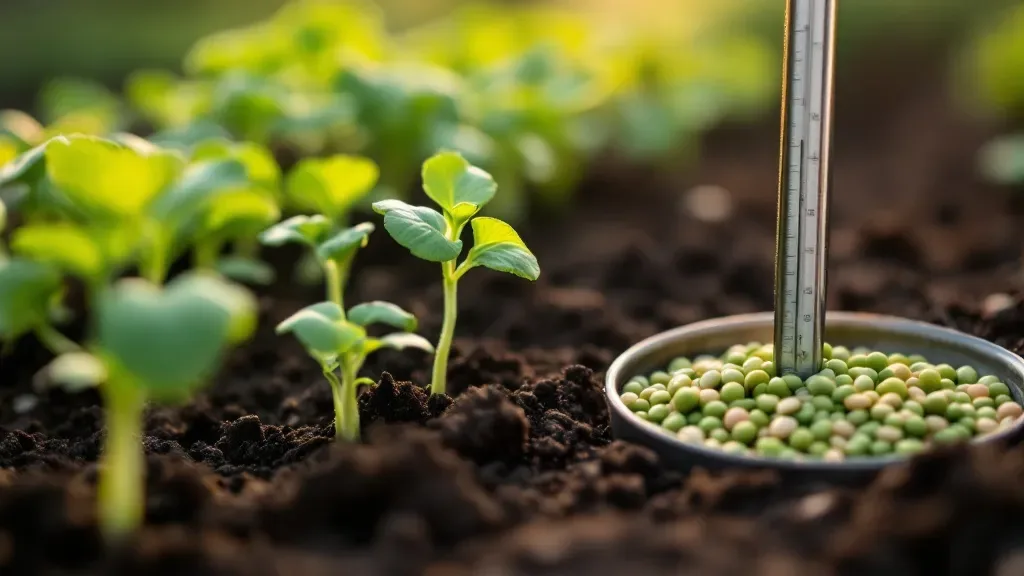
You have seed packets and a bare bed, and no idea which week to start. When to plant any vegetable comes down to one date, your average last spring frost, and a count of weeks before or after it.
Published
Step 1: Find your average last spring frost date
Every planting date in a vegetable garden counts from one anchor. That anchor is the average date of the last frost in spring where you live.
Your state extension service publishes it, usually by county or nearby weather station. Write it at the top of a page. A gardener whose date is May 15 and a gardener whose date is April 22 use the same rules and get very different calendars.
Two dates matter, the last spring frost and the first fall frost. North Carolina State Extension says the National Centers for Environmental Information, part of NOAA, prepares tables of the probable dates of the last frost, freeze and hard freeze in spring and the first of each in fall for locations across the United States. Its median is the 50 percent date. A 10 percent level means the condition is expected in 1 out of 10 years, so pick the 10 percent date for crops that cannot take a frost.
Treat the date as an average. A 2018 University of Illinois Extension article says the average frost-free date in its area is April 22, and that the actual date varies two weeks or more in either direction. Plan the early sowings for a normal year and keep a bedsheet or row cover for a cold snap.
| Step | What you do | What you need |
|---|---|---|
| 1 | Find your average last spring frost date | Your county or nearest weather station |
| 2 | Sort crops into four cold-hardiness groups | The crop list below |
| 3 | Match each group to its week offset | Weeks before or after the frost date |
| 4 | Turn offsets into calendar dates | A calendar and the frost date |
| 5 | Check the soil before you sow | A soil thermometer |
Step 2: Sort your crops into four cold-hardiness groups
Vegetables differ in how much cold they take. A Colorado State University Extension planting guide, published in 2018 and reviewed in 2024, sorts them into four groups.
| Group | Crops named by Colorado State | Minimum soil temperature |
|---|---|---|
| Hardy | Broccoli, cabbage, kohlrabi, onions, lettuce, peas, radish, spinach, turnips | 40 F |
| Semi-hardy | Beets, carrots, cauliflower, parsley, parsnips, potatoes, Swiss chard | 40 to 50 F |
| Tender | Beans, celery, corn, cucumbers, New Zealand spinach, summer squash | 55 F |
| Very tender | Lima beans, cantaloupe, eggplant, peppers, pumpkin, winter squash, tomato, watermelon | 60 F |
Learn the groups and you no longer need a separate rule for each crop. A new crop only needs a group.
A planting date is a distance from your last frost date.
Step 3: Match each group to its week count for when to plant
The same Colorado State guide gives the count for each group. Hardy vegetables can go in as early as 2 to 4 weeks before the average last spring frost. Semi-hardy vegetables can go in as early as 0 to 2 weeks before it.
Tender vegetables sown from seed go in around the frost date. The guide says cucumbers and summer squash set out as transplants without frost protection should wait until the chance of frost is over. Very tender vegetables typically go in 2 or more weeks after the average last spring frost.
South Dakota State University Extension gives the same window for the cool-season group. A 2019 South Dakota State article says cool-season vegetables can be planted 2 to 4 weeks before the average last spring frost, and that their seeds can germinate in soil at 40 F or cooler.
Step 4: Turn the weeks into calendar dates
Take a last frost date of May 15 and count. Four weeks back is April 17, two weeks back is May 1, and two weeks forward is May 29.
| Group | Counting rule | Dates for a May 15 last frost |
|---|---|---|
| Hardy | 4 to 2 weeks before | April 17 to May 1 |
| Semi-hardy | 2 to 0 weeks before | May 1 to May 15 |
| Tender | Around the frost date | About May 15 |
| Very tender | 2 or more weeks after | May 29 or later |
From the first pea row to the last tomato transplant, six weeks pass. That is 42 days in which a May 15 garden is being planted, and it is why one planting weekend never fits the whole garden.
Regions differ, so treat your own dates as a start. The Illinois article puts tender vegetables at April 25 to May 10 where the average frost-free date is April 22. That window starts 3 days after the frost date and ends 18 days after it, so watch your local forecast too.
Step 5: Check the soil before you sow
The calendar says when a crop may go in. The soil says whether it will come up. Colorado State advises planting when soil reaches the minimum temperature for the group, measured at 8 a.m. and 4 inches deep.
A cold, wet bed can hold back even a hardy crop. South Dakota State says cool-season vegetables can be planted when the soil is dry enough to work. Wait for a dry spell before you dig.
Sow in the bed or start a tray indoors
Colorado State says cole crops (cabbage, cauliflower, broccoli and Brussels sprouts) germinate better in warmer soil, so they are typically started from transplants in spring. It says vine crops (cucumbers, squash, melons) have roots that are extremely intolerant of being disturbed, and do best from direct seeding.
A Montana State Extension guide gives the lead time for the crops that start in a tray. Tomatoes need 6 to 10 weeks to reach transplant size and peppers 6 to 8, while snap beans are direct seeded. Count back from the planting date you worked out in Step 4. For a May 29 tomato transplant, 10 weeks back is March 20 and 6 weeks back is April 17.
If you miss the window
A late start is not the end of the season. A UConn Extension article says to look at the days to maturity on the packet and count from your first fall frost to see whether a crop still fits. It adds that some summer crops with short days to maturity, such as zucchini and cucumbers, can be started from seed right in warm summer soil.
The same article suggests planting every couple of weeks for a staggered harvest. It warns that temperatures over 85 may cause delayed germination or bolting once cool-season plants emerge.
Cases where one local chart is all you need
Free guides cover the rule. Colorado State, South Dakota State and your own state extension publish them, and the four-group count above is enough to plan a small garden by hand. If you grow a dozen crops and already own a county chart that fits, keep your money.
The Winter Plan suits the gardener who wants the sums finished for any frost date, with plan and record pages in one file. In early spring you work down its spring week list, from 14 weeks before the frost date to 3 weeks after, and write real dates into the season calendar's day boxes. In late summer the fall countdown page does the same for your first frost, and notes for next winter is where you record what worked.
FAQ
What month should I start planting vegetables?
It depends on your average last spring frost date. Hardy crops such as peas, spinach and lettuce can go in as early as 2 to 4 weeks before that date, and tomatoes and peppers wait until 2 weeks or more after it. With a last frost around May 15, that is mid-April for the first sowing and the end of May for tomatoes.
In what order should you plant a garden?
Plant by cold hardiness. Hardy crops go first, 2 to 4 weeks before your average last spring frost. Semi-hardy crops follow, then tender crops around the last frost date, and very tender crops such as tomatoes, peppers and squash 2 or more weeks after it.
What is the first thing I should plant in my garden?
Start with a hardy crop. Colorado State lists broccoli, cabbage, lettuce, onions, peas, radish, spinach and turnips, and says they can go in as early as 2 to 4 weeks before the average last spring frost, once the soil is 40 F.
Conclusion
Find your average last spring frost date, put each crop in one of four groups, and count the weeks. Peas and spinach can go in 2 to 4 weeks before that date, and tomatoes wait 2 weeks or more after it. Push a thermometer into the soil before you open a seed packet, and write the dates down so next year starts from what worked.
Sources
- Colorado State University Extension, Vegetable Planting Guide (2018, reviewed 2024), last checked October 5, 2026
- South Dakota State University Extension, Early Spring Gardeners Prepare to Plant Cool Season Vegetables (2019), last checked October 5, 2026
- University of Illinois Extension, Time Your Vegetable Plantings by Cold Hardiness (2018), last checked October 5, 2026
- North Carolina State Extension, Interpreting Freeze/Frost Probabilities from the National Centers for Environmental Information (2020, revised 2024), last checked October 5, 2026
- UConn Home and Garden Education Center, It's Not Too Late! Plant Now for Fall Harvests (2025), last checked October 5, 2026
- Montana State University Extension, Can I Grow That Here? Vegetable Seed and Transplant Schedules, MontGuide MT199308AG (2013), last checked October 5, 2026