When to Plant Jalapeno Seeds: 4 Steps
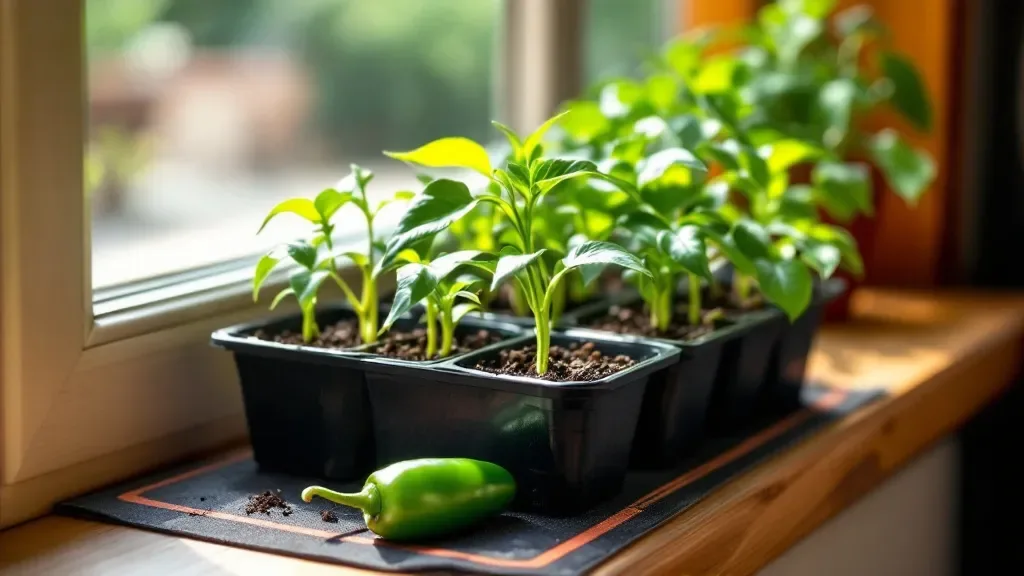
You have a packet of jalapeno seeds and a last frost date. When to plant jalapeno seeds indoors comes down to counting back 8 to 10 weeks from that date, according to University of Maryland Extension.
Published
Step 1: Pick the week your jalapenos go outside
Everything counts back from one date, the day the seedlings go into the garden. Jalapenos are peppers, and peppers are warm-season plants that stall in cold ground.
The extension services give different warmth marks, so choose one and stick to it. A University of Maryland Extension guide says planting before the soil reaches 65 F makes plants "just sit there." The West Virginia University guide says to transplant after nighttime lows stay above 50 F. A University of New Hampshire Extension answer gives the same 50 F night mark, once frost has passed.
| Source | Outdoor mark for peppers |
|---|---|
| Maryland Extension | Soil at 65 F or warmer |
| West Virginia Extension | Night lows above 50 F |
| New Hampshire Extension | Frost risk over, nights above 50 F |
| Iowa State Extension | After frost danger is past; mid-May in central Iowa |
Your last frost date is the first marker. A soil thermometer and a look at the night forecast are the second and third. If the nights are cold on your planned day, wait a few days.
Step 2: Count back to when to plant jalapeno seeds indoors
The extension answers for the indoor start run from 6 to 10 weeks. Maryland says to start seed indoors 8 to 10 weeks before the average frost-free date. A Clemson Extension pepper guide says six to eight weeks before the last frost. About eight weeks before planting outside is the West Virginia answer, and New Hampshire says eight weeks before the last frost, a couple of weeks ahead of tomatoes.
The table counts back from a made-up last frost of May 10.
| Count | Weeks before May 10 | Sow on |
|---|---|---|
| Maryland, early end | 10 | March 1 |
| Maryland, New Hampshire, West Virginia | 8 | March 15 |
| Clemson, late end | 6 | March 29 |
The sums are plain. May 10 minus 70 days is March 1. Minus 56 days is March 15. Minus 42 days is March 29. The services spread four weeks apart for the same frost date.
Choose the earlier end if you have a heat mat, a bright light and room for pots. Choose the later end if space is tight. Seedlings started far too early outgrow their cells before the ground is warm.
The picture shows the same example on one line.
If you want these weeks marked against your own last frost date, The Winter Plan has a spring countback chart and a week ruler for that.
Step 3: Germinate warm, then grow under bright light
Warmth gets pepper seed up. West Virginia Extension says to keep the flat at 80 to 90 F on a heating mat until seedlings emerge. New Hampshire Extension gives 85 to 90 F for the potting mix, and says peppers sprout best at that level.
Once the seedlings show, move them under bright light. The West Virginia guide says a soil temperature of 70 F is ideal after emergence. A seedling that stretches toward the window needs more light.
Know how long the whole job takes. Clemson says to expect 100 to 120 days from seed to harvest. Sown on March 15, that lands between June 23 and July 13.
Sow each seed 1/4 inch deep, says the West Virginia guide, in flats of sterile, soilless germination mix.
Step 4: Harden off, then plant out in warm nights
Hardening off means getting the seedlings used to sun and wind before they stay outside. The West Virginia guide says to expose them gradually to more sunlight over a week or two, and to bring them in if nights drop below 55 F.
Plant out on the day the outdoor mark from Step 1 is met. Space the plants and water them well. An Iowa State Extension guide says to plant peppers 18 inches apart in the row. The guides disagree a little, so pick a number in the overlap.
| Source | In-row spacing |
|---|---|
| Maryland Extension | 12 to 24 inches |
| West Virginia Extension | 15 to 18 inches |
| Iowa State Extension | 18 inches |
Eighteen inches sits inside all three. For water, give peppers 1 to 2 inches a week, which is a weekly amount to spread out, not a daily soak.
Peppers do not return on their own. Clemson calls them warm-season annuals, so you sow new seed each spring and write down the dates you used.
A late start in warm soil usually beats an early start in cold soil.
Overview
| Step | What to do | What to watch for |
|---|---|---|
| 1 | Pick the outdoor week from last frost, 50 F nights or 65 F soil | Services differ, so choose one mark |
| 2 | Count back 8 weeks from last frost for the seed tray | Extension answers run 6 to 10 weeks |
| 3 | Germinate at 80 to 90 F, then grow under bright light | Seed to harvest takes 100 to 120 days |
| 4 | Harden off for a week or two, then plant out 18 inches apart | Bring trays in below 55 F nights |
If your season is short or cool
Peppers need time. Clemson says they require a long growing season and grow very slowly during cool periods. A New Hampshire Extension answer says many of the most popular hot pepper varieties take at least 75 days to reach maturity.
Four moves help when summer is short.
- Count from the other end. The frost table in a kit, or your county extension office, gives an average first fall freeze. Make sure 100 to 120 days from seed, or 70 to 85 from transplant, fit before it.
- Warm the bed. Black plastic mulch warms the soil around peppers, according to West Virginia and New Hampshire Extension.
- Choose smaller fruit. Smaller-fruited peppers tolerate both cool and hot weather better than big bells, says West Virginia.
- Rescue the last plants. Whole plants can be pulled just before a killing frost and hung upside down in a warmer place, such as a garage, to ripen, says Maryland.
Wait for the soil mark in Step 1 even when the season is short. Peppers set out before the soil reaches 65 F just sit there, warns Maryland.
A free county chart is enough for jalapenos
When you buy jalapeno transplants at a nursery, skip Steps 2 and 3. You only need the outdoor date and the hardening plan.
If your county extension office already publishes a pepper start week for your area, use that. A free chart with your own county's dates is as good as anything printed here, and a free printable log does the writing-down. The Winter Plan earns its price only if you want the weeks counted from your own frost date in one file: the download is a zip of US Letter and A4 PDFs sent to your email as a download link, printed at 100 percent (actual size) on a home printer. The germination test page comes before you sow old seed, and the notes for next winter page holds the dates you really used.
FAQ
When should I start my jalapeño seeds indoors?
Start them 8 to 10 weeks before your average last frost, says University of Maryland Extension. Clemson says 6 to 8 weeks, and New Hampshire and West Virginia both say about 8.
What is the best way to germinate jalapeño seeds?
Keep the tray on a heat mat. West Virginia Extension says to hold the flat at 80 to 90 F until the seedlings emerge, and New Hampshire Extension gives 85 to 90 F.
How long does it take for jalapeños to grow from seed?
Clemson Extension says to expect 100 to 120 days from seed to harvest. Counted from transplanting, the same guide says 70 to 85 days.
How far should jalapeño plants be from each other?
The extension guides give a range. Iowa State says 18 inches in the row, West Virginia says 15 to 18 inches, and Maryland says 12 to 24 inches.
Does jalapeno come back every year?
Not in a vegetable bed. Clemson Extension calls peppers warm-season annuals, so you sow new seed each spring.
Conclusion
Pick your outdoor week first, then count back 8 weeks for the tray and forward to the first warm nights for the bed. Write both dates down before you open the packet. If your count lands between two extension answers, take the earlier one when you have a heat mat and light, and the later one when space is tight.
Sources
- University of Maryland Extension, Growing Peppers in a Home Garden (2024), last checked October 5, 2026
- University of New Hampshire Extension, What is the best way to start growing my own hot peppers? (2019), last checked October 5, 2026
- Clemson Cooperative Extension Home and Garden Information Center, Pepper (2023), last checked October 5, 2026
- West Virginia University Extension, Growing Peppers in West Virginia (2023), last checked October 5, 2026
- Iowa State University Extension and Outreach, Growing Peppers in the Home Garden (undated), last checked October 5, 2026