When to Plant Onion Seeds: Dates From Your Frost Date
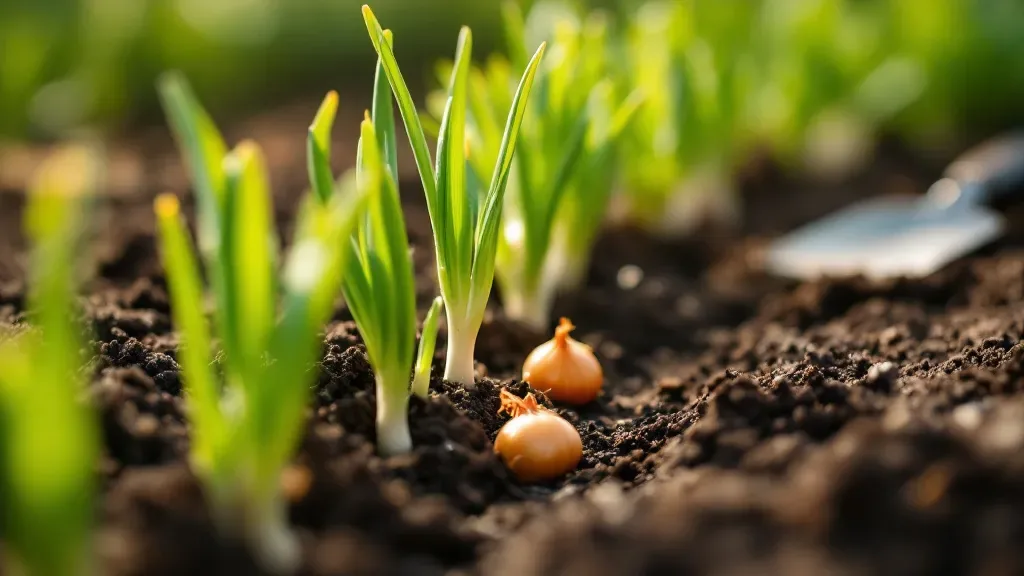
You have a packet of onion seeds and a last-frost date, and you want one sowing date. When to plant onion seeds depends on the method: indoors 12 to 14 weeks before your last frost, or outdoors as soon as the soil can be worked.
Published
Step 1: Pick seeds, sets or transplants
Seeds, sets and transplants all make an onion, but each one wants a different date. Pick the method first, because it decides every other number on the page.
Seeds can go straight into the garden or into trays indoors. Sets are small bulbs you push into the soil, so they need no indoor setup. Transplants are seedlings you start yourself or buy.
South Dakota State University Extension says onions grown from sets will usually be somewhat smaller than onions grown from seedling transplants. The same page says sets tend to flower instead of forming a bulb, and it recommends choosing sets smaller than 1 inch across.
Onions are a cool-season crop, so the planting date is set by the end of winter, not the start of summer.
| Method | When it goes out | How deep | Spacing |
|---|---|---|---|
| Seeds sown outdoors | As soon as the soil can be worked | 1/4 to 1/2 inch | Thin to 3 to 4 inches |
| Sets | Several weeks before your average last frost | 1 inch | 2 to 4 inches |
| Transplants | About 4 weeks before your last frost | Set out as seedlings | 4 inches |
Step 2: Count back to find when to plant onion seeds
Everything in the table above counts from one date, the average last frost in spring. Find yours first, then do the sums below.
For seeds you start indoors, a University of New Hampshire Extension fact sheet gives two numbers. Onion seedlings take 8 to 10 weeks from seed to transplant size, and they are safe to set out 4 weeks before the last frost.
Add the two and you get the answer to the main question. Sow onion seeds indoors 12 to 14 weeks before your last frost. With a last frost on May 15, that is February 6 to February 20.
If you sow outdoors, skip the sums. A University of Nebraska-Lincoln Extension page says to plant onion seeds as soon as the soil can be worked, usually mid to late March in Nebraska. A Utah State University Extension guide gives late March or early April for the same job in Utah.
A printable week ruler from -14 to +20 helps here, and The Winter Plan draws one around your own frost date so you can pencil in onion seeds, sets and transplants together.
Step 3: Plant sets and seeds at the right depth
Depth is the second thing that goes wrong. Sets go deeper than seeds, and seeds need only a thin cover.
A University of Maryland Extension guide says sets should be covered with 1 inch of soil and seeds sown a quarter to a half inch deep. The South Dakota guide puts sets 2 to 4 inches apart, and Nebraska says to thin direct-sown seedlings to 3 to 4 inches once they have 5 to 10 leaves.
Spacing sets the bulb size you get. Maryland says thin to 2 inches for green onions, 4 inches for moderate bulbs and 8 inches for large bulbs.
Step 4: Give onions sun and steady water
Onions want light. Maryland says full sun is at least 6 hours of direct light a day and that onions prefer 8 to 10 hours. A sunny spot with rich, well-drained soil and at least 8 hours of sun is the advice from South Dakota State University.
Water follows the same idea of steady and even. Onions need about 1 inch of water a week, according to the same SDSU guide, more in hot, dry, windy spells and less in cool spring weather. Maryland adds that moisture matters most once bulbs begin to enlarge.
| Step | What you do | Check |
|---|---|---|
| 1 | Choose seeds, sets or transplants | Sets under 1 inch across |
| 2 | Count back from your last frost | Seeds in at -14 to -12 weeks |
| 3 | Plant to depth and spacing | Sets 1 inch deep |
| 4 | Sun and water | 6 or more hours, about 1 inch a week |
| 5 | Match the day-length type to your latitude | Long-day in the north, short-day in the deep South |
Step 5: Choose long-day, short-day or intermediate onions
Onions form bulbs when the days reach a certain length, so the right type depends on how far north you garden. Per a University of Maryland guide, a long-day onion sets bulbs at 15 to 16 hours of daylight and suits northern summers. Short-day types set bulbs at about 12 hours and are used in the deep South for winter production.
A Clemson Extension fact sheet says short-day varieties suit all of South Carolina, intermediate types can go in the Upstate, and long-day onions cannot be grown successfully in the South. In South Dakota, short-day varieties are best avoided, because they will not form bulbs under the long days of summer. A New Hampshire Extension answer says long-day onions, which start bulbing at 14 or more hours of sun, are best for its gardens.
| Type | Bulbs form at | Where it suits |
|---|---|---|
| Short-day | About 12 hours of daylight | Deep South, South Carolina |
| Intermediate | Between the two | Mid-Atlantic, Upstate South Carolina |
| Long-day | 14 to 16 hours of daylight | Northern states |
Mid-Atlantic gardeners can try all groups, Maryland adds, though long-day and intermediate types will probably do best. Check the day-length type on the seed packet or plant tag before you buy.
Why onions bolt or stay small
Bolting means the plant sends up a flower stalk instead of fattening a bulb. Planting too early, with exposure to cold temperatures, can cause seed stalks, says Maryland. Clemson says onions bolt after a long cold period that follows good growth, and that larger plants bolt more often. Drought and heat stress can also trigger it, adds South Dakota State. New Hampshire says onions that flower have mushy bulbs that can no longer be eaten.
Small bulbs have their own causes. New Hampshire lists planting too late, planting too close, and short-day types grown in the north, which start bulbs while still small with few leaves. It also says too much nitrogen delays bulb formation. Clemson names late planting and dry soil, and bulb size follows the amount of water applied, per Maryland.
Fall sowing for an overwintered crop
Spring is not the only option. A Utah State University Extension guide says onion seeds can also be planted in mid to late August for overwintering. That date comes from a cold-winter state, so check your own extension office before you copy it.
For most gardeners the spring plan above is the safer one. The August route is worth a trial row beside it, with the planting date written down.
When this method is the wrong tool
If your county extension office publishes an onion calendar for your area, use that. Local trials know your soil and your daylight better than any general formula.
The fact sheets behind these counts come from Nebraska, New Hampshire, South Dakota, Maryland, South Carolina and Utah, so a gardener in a very different climate should check a nearby source.
Free sources cover the dates too. A county onion calendar and a free printed log do the job, and The Winter Plan only adds the count from your own frost date with space to write. The download link is emailed after paying, and the zip holds US Letter and A4 PDFs for a home printer at 100 percent (actual size). The spring week list holds the tray and set-out jobs, and the notes for next winter page takes the dates you really used.
FAQ
Do onions need full sun to grow?
Yes. A University of Maryland Extension guide says full sun means at least 6 hours of direct light a day and that onions prefer 8 to 10 hours. South Dakota State University suggests at least 8 hours.
How deep do onion sets need to be planted?
About 1 inch deep and 2 to 4 inches apart, according to South Dakota State University Extension. Plant them several weeks before your average last-frost date.
What are common onion seed planting mistakes?
New Hampshire Extension names late planting, which gives small bulbs, and planting too close, where onions compete and stay small. It adds that too much nitrogen delays bulb formation, and that larger sets are more likely to flower.
What is the best month to plant onion sets?
No month fits every garden. Count from your own last-frost date instead and put sets in several weeks before it, about 1 inch deep.
Conclusion
Count back from your own last-frost date and the onion calendar mostly writes itself. Start seeds indoors 12 to 14 weeks ahead, set transplants out about 4 weeks ahead, and put sets in several weeks ahead, 1 inch deep. Give them 6 or more hours of sun, keep the soil evenly moist, and write the real dates down so next year you can move them by a week.
Sources
- University of Nebraska-Lincoln Extension, Growing Onions - Sets, Plants or Seeds? (2020), last checked October 5, 2026
- University of New Hampshire Extension, Growing Vegetables: When to Plant Your Vegetable Garden (undated), last checked October 5, 2026
- South Dakota State University Extension, Onions: How to Grow It (2024), last checked October 5, 2026
- University of Maryland Extension, Growing Onions in the Home Garden (2026), last checked October 5, 2026
- Utah State University Extension, How to Grow Onions in Your Garden (2020), last checked October 5, 2026
- Clemson Cooperative Extension Home and Garden Information Center, Onion, Leek, Shallot and Garlic (undated), last checked October 5, 2026
- University of New Hampshire Extension, How do I get my onions to grow bigger? (2020), last checked October 5, 2026