When to Plant Tomato Seeds Indoors: 5 Steps
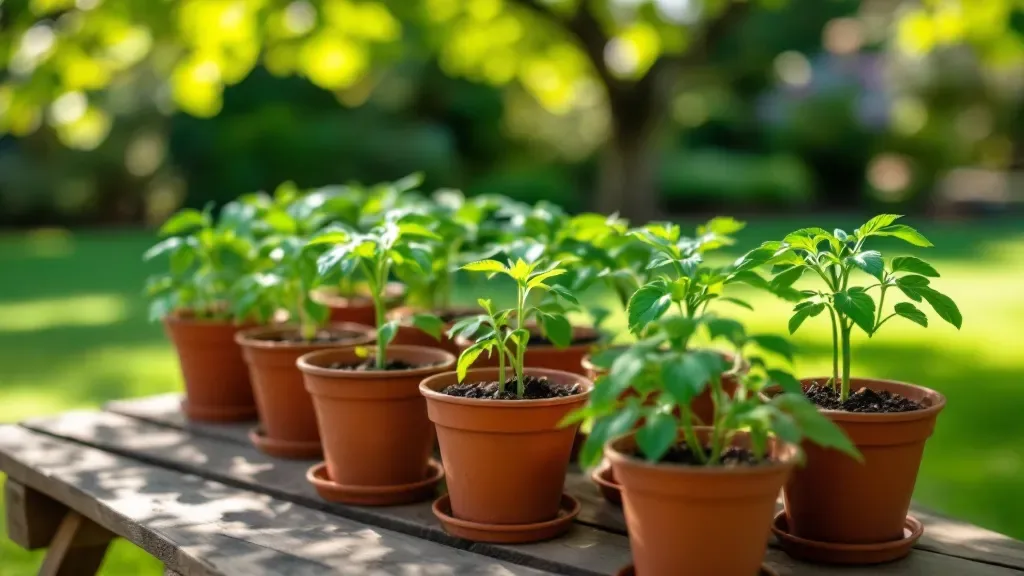
You have the seed packets and no idea which week to open them. When to plant tomato seeds indoors depends on your last frost date, and the usual answer is 6 to 8 weeks before it.
Published
Step 1: Pick the day your tomatoes go outside
Everything counts back from one date, the day the seedlings go into the garden. Tomatoes are warm-season plants, so that day comes after frost danger ends.
A Utah State University Extension tomato guide from 2020 says to transplant tomatoes when soils are warmer than 60 F or after all frost danger has passed. Your last frost date is the first marker. A soil thermometer is the second.
The date varies a lot inside one state. A 2024 Iowa State Extension answer says southern Iowa gardeners can plant tomatoes outdoors in late April, while northern counties should wait until mid-May. Use your own last frost date, not a neighbor's state.
Step 2: Count back to when to plant tomato seeds indoors
Two extension services count back in slightly different ways. The Clemson Extension tomato factsheet says to sow seed indoors six to eight weeks before the last frost date in your area. Utah State Extension agrees and says to allow 6 to 8 weeks to grow transplants. Iowa State counts from the planting date instead and says 5 to 6 weeks before the day you plan to plant outdoors.
The table shows both counts with a made-up example. Say your last frost date is May 10.
| Count | Start from | Weeks back | Sow between |
|---|---|---|---|
| Clemson and Utah State | Last frost, May 10 | 8 to 6 | March 15 and March 29 |
| Iowa State, planting out a week after frost | Planting day, May 17 | 6 to 5 | April 5 and April 12 |
The sums are plain. May 10 minus 8 weeks is March 15. May 10 minus 6 weeks is March 29. May 17 minus 6 weeks is April 5, and minus 5 weeks is April 12.
Choose the earlier count if you have grow lights and room for the pots. Choose the later one if space is tight. Seedlings started too early outgrow their pots, and late ones reach the garden small.
You can lay these dates on one line. The picture below shows the example.
If you want these weeks marked against your own frost date, The Winter Plan has a spring countback chart and a week ruler for that.
Step 3: Grow stocky seedlings, not tall ones
Warmth gets the seed up. Seed germinates at 80 F, says Utah State Extension, until the seed root emerges. The seedlings then go into sterile seeding mix and grow at 65 to 70 F.
Light keeps them short. The same guide suggests cool fluorescent tubes 2 to 3 inches above the plants, lit 14 to 16 hours a day. A seedling stretching toward a window is a sign it needs more light.
Know what you are growing toward. Transplants should have 5 to 7 leaves, says Utah State, and a well-developed root system. Clemson asks for stocky transplants about 6 to 10 inches tall. Iowa State says ideal transplants are short, stocky plants.
Pots matter too. A University of Maryland Extension fact sheet gives 9 to 16 square inches of surface per plant for tomato, eggplant and pepper. That is a pot about 3 to 4 inches across, by my arithmetic (3 x 3 = 9, 4 x 4 = 16). Utah State says to move seedlings to a larger container once their leaves start overlapping or their roots form a thick mat at the bottom. It says to plant each seedling at the same depth it grew in the flat, and tomatoes can go deeper.
If your seedlings go leggy, Utah State blames poor light first, and warm nights too. It suggests lights within several inches of the seedlings, leaves that do not overlap, less fertilizer and cooler air. Maryland says to brush the tops of tomato transplants gently with your hand or a stick to control height and add stockiness. If they are tall at planting time, Maryland says to dig a trench and lay the stem on its side with 2 or 3 sets of leaves above ground, and the buried stem grows roots.
A big seedling is not a better one. A sturdy short plant beats a tall one that has been leaning toward the window for weeks.
Step 4: Harden off over two weeks
Hardening off means getting the seedlings used to sun, wind and cooler air before they stay outside. Utah State's 2025 guide to seedling culture and transplanting says it can begin soon after seedlings emerge. It should start no later than about two weeks before transplanting.
Start gently. Clemson says to begin in bright, indirect sunlight under a tree or on a covered porch. The first exposure can be a few hours, says Utah State, with more outdoor time each day. Clemson adds that you should water less often in the last week.
A simple two-week plan follows from those steps.
- Week 1: set the trays in bright shade for a few hours, a little longer each day.
- Week 2: leave them out longer and move them toward brighter light, then bring them in as the day cools.
- Water less often than you did indoors, starting about a week before planting.
The seedling you harden off carefully is the one that does not sulk in the bed.
Step 5: Plant out when the soil is warm
On planting day, check the soil, not only the calendar. Tomatoes belong in the ground, says Utah State, when the soil is warmer than 60 F or after all frost danger has passed.
Clemson Extension says tomatoes grow best at 70 to 80 F in the day and 60 to 70 F at night. A cold snap can slow them even without frost. If one is forecast, wait a few days.
Plant a little deeper than the pot. Tomatoes can root along the stem, notes Utah State. Water the new transplants well and shade them for the first afternoon if the sun is strong.
Overview
| Step | What to do | What to watch for |
|---|---|---|
| 1 | Pick the outdoor date from your last frost and the 60 F soil mark | Frost dates differ within a state |
| 2 | Count back 6 to 8 weeks from last frost for the seed tray | Iowa State counts 5 to 6 weeks from planting day |
| 3 | Germinate at 80 F, then grow at 65 to 70 F under strong light | Tall, thin seedlings mean not enough light |
| 4 | Harden off for at least two weeks | Begin in shade, add time each day |
| 5 | Plant out once the soil is above 60 F | A cold week can stall plants after frost has passed |
When this count is the wrong tool
When you buy tomato transplants at a nursery, skip Steps 2 and 3. You only need the outdoor date and the hardening plan.
If your county extension office already publishes a planting calendar that lists your tomato start week, use that. A free chart with your own county's dates is as good as anything printed here, and free printable logs exist for the writing. A paid kit such as The Winter Plan makes sense if you want the dates counted from your own frost date and a bed plan to draw on in the same file. It arrives by email as a download link to a zip of US Letter and A4 PDFs. Print at 100 percent (actual size) so the 4 x 8 foot grid keeps its scale. The spring week list takes the sow and harden-off tasks, and the notes for next winter page keeps what you would shift.
FAQ
When should I start tomato seedlings indoors?
Sow the seed 6 to 8 weeks before your last frost date, according to Clemson Extension. Iowa State counts from the day you plan to plant outdoors instead and says 5 to 6 weeks before that date.
How big should tomato seedlings be before transplanting outside?
Utah State Extension says transplants should have 5 to 7 leaves and a well-developed root system. Clemson Extension asks for stocky plants about 6 to 10 inches tall.
When should you harden off tomato seedlings?
Utah State Extension says hardening off can begin soon after the seedlings emerge and should start at least two weeks before you plant them in the garden.
What temperature to plant out tomato seedlings?
Utah State Extension says to transplant tomatoes when the soil is warmer than 60 F or after all danger of frost has passed.
How to get tomato seeds to germinate quickly?
Keep them warm. Utah State Extension germinates tomato seed at 80 F until the seed root emerges, then moves the seedlings to sterile seeding mix at 65 to 70 F.
Conclusion
Pick your outdoor date first, then count back six to eight weeks for the seed tray and forward two weeks of hardening. Write the three dates on a calendar before you open a packet. If the soil is still under 60 F when the day arrives, wait a few days, because tomatoes forgive a late start more easily than a cold one.
Sources
- Utah State University Extension, How to Grow Tomatoes in Your Garden (2020), last checked October 5, 2026
- Utah State University Extension, Starting Vegetable Seeds Indoors: IV. Seedling Culture and Transplanting (2025), last checked October 5, 2026
- Clemson Cooperative Extension Home and Garden Information Center, Tomato (2022), last checked October 5, 2026
- Iowa State University Extension and Outreach, When should I sow tomato seeds indoors? (2024), last checked October 5, 2026
- University of Maryland Extension, Starting Vegetable Seeds Indoors (2026), last checked October 5, 2026