When to Start Seedlings: Count Back From Frost
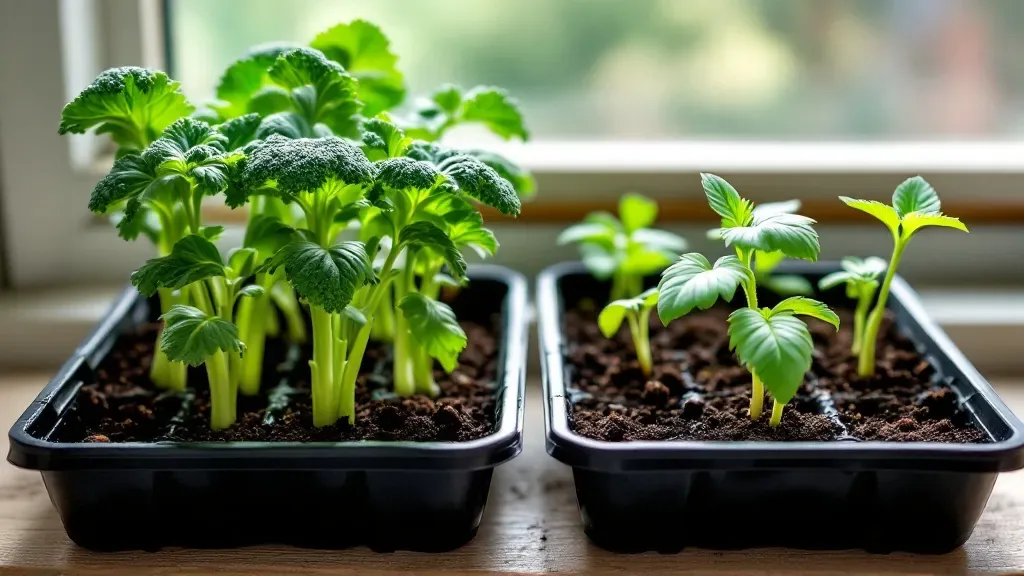
You have the seed packets, a bright windowsill and no idea which week to begin. When to start seedlings comes down to one date, your average last frost, and a count of weeks backward from it.
Published
Overview: Five Steps From Frost Date to Sow Date
| Step | What you do | What you end with |
|---|---|---|
| Step 1 | Look up your average last frost date | One date, called week 0 |
| Step 2 | Count back to each crop's set-out date | The week each seedling goes outside |
| Step 3 | Count back again by the weeks indoors | The week each seed goes in the tray |
| Step 4 | Sort out the crops that skip the tray | A short direct-sow list |
| Step 5 | Check the packet and your region | Dates you can trust |
Step 1: Find Your Average Last Frost Date
Every start date in this guide hangs on one date. Your average last frost is the usual spring date after which frost stops. Your county extension office or state climatologist can give you yours.
Two extension sources show how far this date moves. Oregon State University Extension uses May 31 for central Oregon. A University of Illinois Extension article says last frost in central Illinois is usually around early May. That is about four weeks apart, which is why a calendar from another state misleads you.
An average date is not a promise. Frost can still land after it in some years. Write your date at the top of a sheet of paper and call it week 0.
Planting dates belong to your frost date, not to the calendar on the wall.
Step 2: Count Back to the Set-Out Date
The set-out date is the day a seedling goes into the garden. The central Oregon table gives each crop a number of weeks before or after the frost-free date. A minus sign means before it.
Hardy crops go out early. Cabbage goes out 5 weeks before the frost-free date, broccoli 4 weeks before and lettuce 2 weeks before. Tomatoes go out at week 0. Cucumbers go out 1 week after, and peppers and squash 2 weeks after.
The table's own example uses lettuce. With a frost-free date of May 31, lettuce goes out 2 weeks earlier, on May 17.
Step 3: When to Start Seedlings Indoors, Crop by Crop
Now count back a second time. The same table lists the weeks each crop needs to grow indoors before it is set out. Lettuce needs 5. Counting 5 weeks back from May 17 puts the sow date at April 12.
You can shortcut the two counts by adding them. Lettuce is -2 for set-out and -5 for indoors, so seeds go in 7 weeks before the frost-free date. The table below does that sum for eight crops, using Oregon State's numbers.
| Crop | Set out (weeks from frost-free date) | Weeks indoors | Sow indoors (weeks from frost-free date) |
|---|---|---|---|
| Onions | -6 | 10 | -16 |
| Cabbage | -5 | 6 | -11 |
| Broccoli | -4 | 6 | -10 |
| Lettuce | -2 | 5 | -7 |
| Tomatoes | 0 | 8 | -8 |
| Peppers | +2 | 8 | -6 |
| Cucumbers | +1 | 3 | -2 |
| Squash | +2 | 3 | -1 |
Read the last column top to bottom. Onions start 16 weeks ahead of the frost-free date and squash only 1 week ahead. That is a 15-week spread inside one spring.
The order surprises most beginners. Cool-season crops go into trays first, even though they are the ones you can plant in cold weather. Broccoli starts 10 weeks before the frost-free date and peppers only 6. On May 31, that means broccoli on March 22, tomatoes on April 5 and peppers on April 19.
If you want the count done for you, The Seed-Starting Countdown lays out weeks -14 to +3 from your own last-frost date, with an indoor-start chart for 22 crops.
Step 4: Skip the Tray for Crops That Hate Moving
Some seeds do better in the ground. An Iowa State University Extension guide says direct seeding suits crops that are quick to mature, like radishes, and crops that are not easy to transplant, like carrots and beets. It adds that transplants of some species languish for weeks after moving and sometimes die.
Iowa State's list of vegetables frequently direct-seeded includes beans, beets, carrots, corn, peas, radishes, spinach and turnips. Cucumbers, lettuce and squash are on that list too. The Oregon table still gives them an indoor start, so those crops work either way.
Starting them indoors buys you a head start. Iowa State says most vegetables will not produce as soon in the garden as those started indoors and set out as transplants.
Timing for direct sowing follows the same frost date. Sow warm-season crops such as beans, melons, squash and sweet corn after the danger of frost has passed. Cool-season crops such as lettuce, beets, peas and spinach can go in two to three weeks earlier. Iowa State warns that seeds sown into soil that is too cold may rot or be eaten before they germinate.
Step 5: Check the Packet and Your Region
Your seed packet is the last word on its own variety. The Illinois article tells you to read the packet first, and says it tells you the planting depth and when to start the seeds, for example 4 to 6 weeks before your average last frost.
Sources can disagree, so check one crop. Oregon State puts broccoli 10 weeks before the frost-free date by the sum above. The Illinois article quotes a packet that says 4 to 6 weeks before the average last frost. Illinois Extension's own calendar starts broccoli in early-to-mid March, roughly 7 to 9 weeks before an early-May frost.
When the counts differ, sow in two batches. Put a first tray in at the longer count and a second two weeks later. You keep the sturdier plants and learn which count suits your windowsill.
Region matters too. For central Illinois, Illinois Extension lists February for celery, leeks and onions. Early-to-mid March is for broccoli, cabbage, cauliflower, kale and lettuce. Mid-to-late March is for tomatoes, peppers, basil and Swiss chard, which is roughly 5 to 7 weeks before an early-May frost. Cucumbers, melons, pumpkins and squash wait until mid-to-late April. In northern Illinois you start two weeks later, and in southern Illinois two weeks earlier.
Fall plants run on the same logic. Illinois Extension says cool-season broccoli, cauliflower, cabbage and kale can be started indoors in early July and planted outdoors from late July to early August.
What seedlings need after they sprout
Light matters more than most gardeners expect. Utah State Extension says a growing seedling benefits from 12 to 14 or more hours of light a day, and that natural light through a window is insufficient and gives weaker seedlings than supplemental lighting. It hangs lights 2 to 3 inches above the plants.
Clemson Extension is stricter. Its fact sheet says transplants need 16 to 18 hours of bright light, from 48-inch, 40-watt fluorescent tubes placed 2 to 4 inches above the seedlings on a timer. It adds that windowsill plants reach for light and become tall and leggy.
For warmth, most vegetables prefer night temperatures of 60 to 65 F, with days about 10 degrees higher, according to Utah State. A cooler tray stretches less, which matches Purdue's advice below.
Harden off before the set-out date
Hardening off means getting indoor plants used to wind, sun and cold. Nebraska Extension says to harden plants off gradually over 7 to 10 days. Start with 2 to 3 hours in a shaded, sheltered spot, add time and sun each day, and once plants reach 10 to 12 hours outside, leave them out continuously for a couple of days before transplanting.
Begin at least two weeks before you transplant, says Utah State, while Clemson gives two to three weeks. A Utah State warning matters too, since exposing hardy and semi-hardy seedlings to temperatures below 40 F can cause premature flowering.
If you started too early
Seedlings that outgrow their date get tall, thin and pale. Purdue Extension says transplants grown in the low light of most homes stretch in search of light, and that warm temperatures make it worse. Its fix for tomatoes is to set the plants deeper when you plant them out, burying the stem and removing leaves below soil level. If the stem is long, plant it at an angle so the roots do not sit too deep.
Purdue's prevention list is short. Start seeds later, give maximum light and keep seedlings cool. That also explains the two-batch trick above, since the later tray is the one that stays small enough.
When free extension tables are enough
Free extension tables and free printables exist, and they are enough when you start a handful of crops and your county publishes a table on your frost date. The weeks in this article come from Oregon and Illinois, so check them against a source near you.
The Seed-Starting Countdown fits the gardener who runs many trays, since plan and record pages share one file. Each week from -14 to frost week has a log page with the trays to start and the tasks due. Two weeks before set-out you use its 14-day hardening-off table, on planting day the transplant day log, and when seedlings stretch or collapse the trouble log lists the damping-off and leggy fixes.
FAQ
When to start tomato seeds indoors?
Count back from your average last frost date. Oregon State Extension gives tomatoes 8 weeks indoors and sets them out at the frost-free date, so sow about 8 weeks before that date. In central Illinois, where last frost is usually around early May, Illinois Extension lists mid-to-late March.
What month should I start my seeds indoors?
The month depends on your last frost date, so count back from it. For central Illinois, Illinois Extension lists February for onions and leeks, early-to-mid March for broccoli, cabbage and lettuce, mid-to-late March for tomatoes and peppers, and mid-to-late April for cucumbers, melons and squash. Northern Illinois starts two weeks later and southern Illinois two weeks earlier.
What seeds should not be started indoors?
Iowa State Extension says carrots and beets are not easy to transplant, and fast crops such as radishes can go straight into the garden. Its list of frequently direct-seeded vegetables also includes beans, corn, peas, spinach and turnips.
Can I put seeds straight into soil?
Yes. Iowa State Extension calls this direct seeding. Sow warm-season crops such as beans, melons, squash and sweet corn after the danger of frost has passed, and cool-season crops two to three weeks earlier. Seeds sown into soil that is too cold may rot or be eaten before they come up.
Conclusion
Pick your average last frost date, call it week 0, and count back. Start onions first, then cabbage and broccoli, then tomatoes and peppers, and leave cucumbers and squash for the last tray. Check the seed packet for each variety, write the week numbers on your plan, and move every date when your frost date moves.
Sources
- Oregon State University Extension Service, When to start seeds indoors in central Oregon (2018, reviewed 2024), last checked October 5, 2026
- University of Illinois Extension, When should I start my seeds? (2023), last checked October 5, 2026
- Iowa State University Extension and Outreach, Direct Seeding Vegetables and Annuals - Preparation and Care (2025), last checked October 5, 2026
- Utah State University Extension, Starting Vegetable Seeds Indoors: Seeding, Culture, and Transplanting (2025), last checked October 5, 2026
- Clemson Cooperative Extension, Starting Seeds Indoors, HGIC (2020), last checked October 5, 2026
- Nebraska Extension in Lancaster County, Hardening Off Transplants (2020), last checked October 5, 2026
- Purdue Extension, Indiana Yard and Garden, Leggy Tomatoes (2003), last checked October 5, 2026