Zone 6 Planting Calendar: Every USDA Zone Dated
You know your zone, and you want dates instead of a number. A zone 6 planting calendar is a list of sowing and transplanting windows counted from your last spring frost and first fall frost, and the tables below date zone 6 in full and show how the windows move for every other zone.
Published
Step 1: Read what your zone number tells you
A hardiness zone is a winter-cold label. The USDA Plant Hardiness Zone Map is based on the average annual extreme minimum winter temperature, shown in 10-degree F zones from 1 to 13. Each zone splits into half zones, a and b, which are 5-degree F steps. So 6b is the warmer half of zone 6, and zone 8 without a letter is the whole band that holds 8a and 8b.
A New Mexico State University Extension circular puts the limit plainly. Zones help you choose plants that survive your winter, and picking those plants is only the first step. You then have to schedule planting so crops have time to mature.
A zone is a label for your winter low, and a planting date comes from the frost near you.
The dates come from frost records. Your last spring frost and first fall frost are the two numbers every sowing week is counted from.
| Step | What to do | Where the answer comes from |
|---|---|---|
| 1 | Learn your zone and its half | USDA map, 5-degree F halves |
| 2 | Look up the frost window for your zone | State extension tables |
| 3 | Count each crop's dates from the window | Crop tables, zone 6 below |
| 4 | Check the window against your yard | Station or county data |
Step 2: Look up the frost window for your zone
Extension services publish frost windows by state, so no single table covers the country. These rows come from five land-grant sources. The date ranges are averages, which Virginia Tech labels as a 50 percent chance.
| Zone | Last spring frost | First fall frost | Where the figure comes from |
|---|---|---|---|
| 4a | May 1 | Oct 1 | Hamilton County, New York |
| 5a | After May 29 | not listed | New Mexico |
| 5b | May 15 to 29 | not listed | New Mexico |
| 6a | May 5 to 15 | Oct 5 to 15 | Virginia |
| 6b | April 25 to May 5 | Oct 5 to 15 | Virginia |
| 7a | April 15 to 25 | Oct 15 to 25 | Virginia |
| 7b | April 5 to 15 | Oct 25 to Nov 5 | Virginia |
| 8a | April 1 to 15 | Nov 1 to 15 | Virginia |
| 8b | March 15 to April 1 | Nov 15 to 25 | Virginia |
| 9b | About March 1 | About Dec 15 | Davis, California |
The 4a row comes from Cornell Cooperative Extension in Hamilton County, the 5a and 5b rows from a New Mexico State circular, and the 6a to 8b rows from a Virginia Tech guide. The 9b row is a line from a UC Davis garden blog that says Davis, in zone 9b, has its last frost around March 1 and first frost around December 15.
The half zone matters less than you might expect. In Virginia, 6a and 6b share the same first fall frost, October 5 to 15, and their last spring frost differs by 10 days. The same New Mexico circular counts 126 frost-free days in zone 5a and 267 in zone 8b, a little more than double.
Same zone, different state
A zone does not give the same date in every state. Two land-grant tables list zones 6a through 8b, one for Virginia and one for New Mexico.
| Zone | Last frost in Virginia | Last frost in New Mexico | Gap between the later ends |
|---|---|---|---|
| 6a | May 5 to 15 | April 29 to May 15 | 0 days |
| 6b | April 25 to May 5 | April 14 to 29 | 6 days |
| 7a | April 15 to 25 | March 30 to April 14 | 11 days |
| 7b | April 5 to 15 | March 15 to 30 | 16 days |
| 8a | April 1 to 15 | Feb 28 to March 30 | 16 days |
| 8b | March 15 to April 1 | Before Feb 28 | 32 days |
Take the table for the state you live in. If your state has none, use the nearest station and treat the zone as a rough guide only.
Step 3: Build your zone 6 planting calendar from the last frost
Zone 6b in Virginia has its last spring frost between April 25 and May 5. Count from the middle, April 30. Virginia Tech's crop dates then give peas a start of March 10, which is 51 days before. Carrots start March 20, 41 days before. Broccoli transplants go out April 1, 29 days before. Tomato transplants wait until May 10, 10 days after.
| Crop | Zone 6a spring | Zone 6b spring | Zone 6b fall |
|---|---|---|---|
| Garden peas | March 20 to April 10 | March 10 to April 10 | not recommended |
| Spinach | March 20 to May 1 | March 10 to April 20 | Aug 20 to Oct 1 |
| Carrots | April 1 to May 10 | March 20 to May 1 | July 10 to Aug 1 |
| Broccoli (transplants) | April 10 to May 20 | April 1 to May 10 | July 20 to Aug 20 |
| Snap beans | May 15 to June 15 | May 5 to June 25 | June 25 to July 25 |
| Tomatoes (transplants) | May 10 to June 10 | May 10 to June 10 | June 10 to July 10 |
| Garlic | not recommended | not recommended | Sept 1 to Oct 1 |
Tomatoes are the one crop everyone asks about. Virginia Tech sets the transplant window at May 10 to June 10 in zones 6a and 6b. A Montana State Extension guide says tomatoes reach transplant size in 6 to 10 weeks. Count back from May 10, and you start seeds indoors between March 1 and March 29.
Start seeds indoors in zone 6
Work back from the transplant dates in the table. The weeks a seedling needs to reach transplant size come from Montana State, and the dates come from Virginia Tech. The mix is mine, so treat the result as a window, not a rule.
| Crop | Transplant date, Virginia Tech | Weeks to transplant size, Montana State | Start seeds between |
|---|---|---|---|
| Broccoli, zone 6a | April 10 | 6 to 8 | Feb 13 and Feb 27 |
| Tomatoes | May 10 | 6 to 10 | March 1 and March 29 |
| Peppers | May 10 | 6 to 8 | March 15 and March 29 |
| Cucumbers | May 10 | 4 | April 12 |
Fall sowing runs on the other end of the calendar. In zone 6b, spinach and radish can go in until October 1, baby lettuce and mustard until September 20, and garlic from September 1 to October 1. These are Virginia's dates, so shift them if your first frost comes earlier or later.
The frost tables and countback charts in The Winter Plan do this same count for 24 cool-season and 15 warm-season crops from the last-frost date you write in.
Zone 7a to 8b planting guide: what moves with each half zone
Zone 7a runs from an April 15 to 25 last frost to an October 15 to 25 first frost in Virginia. Each half zone after that moves the spring windows earlier, as the table shows.
| Spring dates, Virginia | Zone 7a | Zone 7b | Zone 8a | Zone 8b |
|---|---|---|---|---|
| Garden peas | March 1 to April 1 | Feb 20 to April 1 | Feb 20 to April 1 | Feb 10 to April 1 |
| Spinach | March 1 to April 10 | Feb 10 to April 1 | Feb 10 to March 20 | Feb 10 to March 20 |
| Broccoli (transplants) | March 20 to May 1 | March 10 to April 20 | March 1 to April 10 | Feb 20 to April 10 |
| Tomatoes (transplants) | April 20 to June 20 | April 10 to June 20 | April 10 to July 1 | April 1 to July 1 |
Zone 7a is colder than 7b. In the table, 7a tomato transplants start April 20, and 7b starts April 10.
Zone 3 to 5 and zone 9 to 11: planting schedule notes
Colder zones leave less room. Montana State Extension describes the limited season in Montana's zones 3 to 5. Its planting guide says to count the days between your two frost dates before you pick a crop. A tomato that needs 70 days after transplanting will not finish in a season shorter than that. Extension services publish frost dates by county or station, not for zone 3 as a whole, so use the county nearest you.
Warmer zones flip the problem. The University of Florida says frosts and freezes occur occasionally in Central Florida and rarely in South Florida, and that vegetables there can grow year-round if you pay attention to planting dates. In frost-free places such as these, your calendar runs on heat and the rainy season, not on frost.
Step 4: Check the window against your own yard
A table gives you a starting point. Your yard can run earlier or later.
The Virginia Tech guide says Roanoke County has four hardiness zones with a 30-day planting difference between them, and that south slopes run warmer and north slopes cooler. A New Mexico circular says individual gardens can vary as much as 20 days from the zone's average because of elevation, site exposure or air drainage.
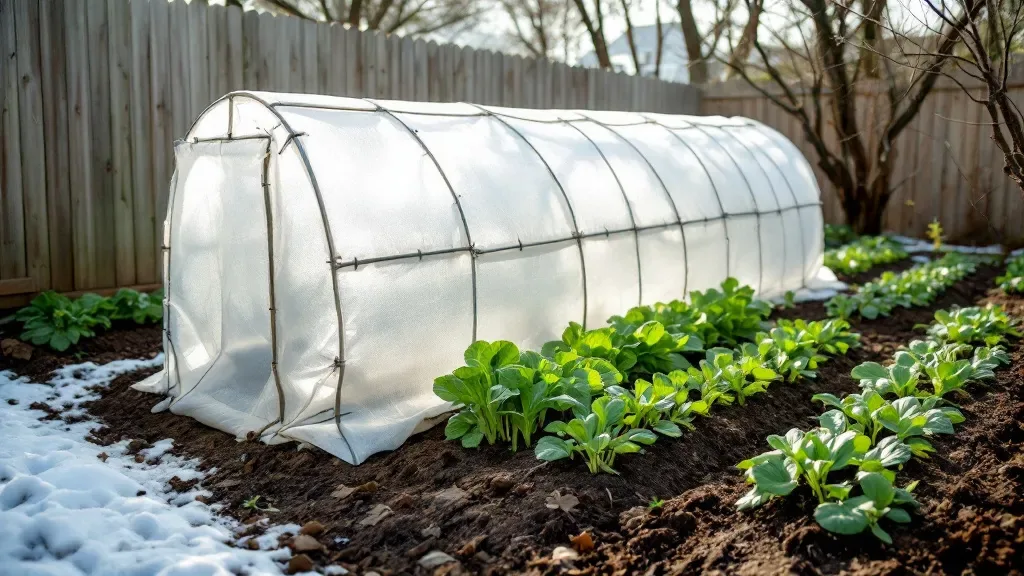
A cold spring needs no new calendar. Virginia Tech says to favor earlier or later dates within a range based on local data or experience, and that row cover fabric and cold frames may extend the planting and harvest window by two to four weeks in spring and fall. Keep tomato and pepper seedlings in their trays until the date, and hold off the beans.
An early fall frost works the other way. The advice from Montana is to count the days between your two frost dates and compare them with the days to maturity on the packet. Pick the faster variety, or cover the bed.
So write down your own first and last frost each year, and shift your dates after two or three seasons. Plant tender crops after the date, not on it, because a 50 percent date means frost can still arrive the next week.
When your county's own calendar beats a zone table
If your state extension office publishes a calendar for your county, use that one. It was written by people who know your soil and your frost, and a table averaged over a whole zone cannot match it. Free printable calendars cover the basics too.
The Winter Plan fits when you want the sums done on paper and kept beside your garden notes. You pick the closest of its 108 stations, or write in your own date if none is near. Spring week jobs and the dates you write into the season calendar sit in the same file, and its notes for next winter page is where the first season's corrections go.
FAQ
What does zone 6 mean for gardening?
Zone 6 is a winter-cold band on the USDA map, based on the average coldest winter temperature. It tells you which perennials survive winter. For sowing dates you also need your last spring frost and first fall frost.
Which is colder, 6a or 6b?
Zone 6a is colder. The USDA splits each zone into 5-degree F halves, with a the colder half and b the warmer half. In Virginia Tech's table, 6a has its last spring frost May 5 to 15 and 6b has it April 25 to May 5.
What's the difference between zone 8 and zone 8a?
Zone 8 is the whole 10-degree F band, and 8a is its colder half. Zone 8b is the warmer half. Virginia Tech dates the last spring frost April 1 to 15 for 8a and March 15 to April 1 for 8b.
When to start tomatoes in zone 6?
Virginia Tech's planting guide puts tomato transplants in the ground May 10 to June 10 in both zone 6a and 6b. Montana State Extension says tomatoes reach transplant size in 6 to 10 weeks, so start seeds indoors from about March 1 to March 29 for a May 10 transplant date.
What can I plant in September in zone 6b?
Virginia Tech's fall dates for zone 6b still allow spinach and radish to October 1, baby lettuce and mustard to September 20, and garlic from September 1 to October 1. Dates are for Virginia, so shift them for your own frost.
Where can I find a vegetable planting calendar?
Your state extension service. Virginia Tech and New Mexico State publish calendars by hardiness zone, and Cornell Cooperative Extension publishes first-planting dates by county. Pick the one nearest you, then check it against your own last frost.
Conclusion
Your zone number tells you which perennials survive winter, and your frost dates tell you when to sow. Look up the frost window for your zone, then check it against the station or county nearest your yard. Count your sowing dates from the middle of that window, and move the tender crops later. Write the dates on a calendar you will see every week, and correct them after your first season.
Sources
- USDA Agricultural Research Service, How to Use the Maps, USDA Plant Hardiness Zone Map (2023), last checked October 5, 2026
- Virginia Tech Virginia Cooperative Extension, Virginia's Home Garden Vegetable Planting Guide, publication 426-331 (undated), last checked October 5, 2026
- New Mexico State University Cooperative Extension Service, Growing Zones and Planting Information for Home Vegetable Gardens in New Mexico, CR-457B (2026), last checked October 5, 2026
- Cornell Cooperative Extension Hamilton County, First Planting Dates (2019), last checked October 5, 2026
- UC Davis Green Care Lab, Elizabeth's Annual Planting Schedule (2022), last checked October 5, 2026
- Montana State University Extension, Can I Grow That Here? Vegetable Garden Planting Guide, MontGuide MT199308AG (2013), last checked October 5, 2026
- Montana State University Extension, Selecting and Growing Cold-hardy Vegetables in Montana (undated), last checked October 5, 2026
- University of Arizona Cooperative Extension, Vegetable Planting and Harvest Times 3000 to 6000 ft Elevations, Bulletin 30 (undated), last checked October 5, 2026
- University of Florida IFAS Extension, Florida Vegetable Gardening Guide, SP 103 (2025), last checked October 5, 2026